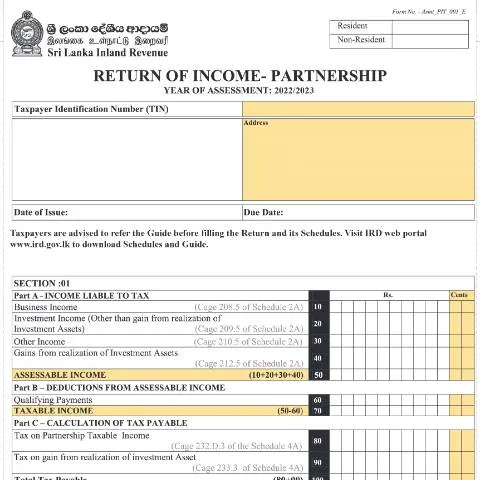
Understanding Form Asmt_PIT_001_2022: A Key Document in Partnership Tax Compliance
Navigating the world of taxes as a partnership in Sri Lanka can be intricate, particularly when it comes to the essential Return of Income - Form Asmt_PIT_001_2022. This document plays a pivotal role in the taxation process for partnerships, influencing both legal obligations and financial responsibilities. Failure to understand or correctly complete this form can result in significant consequences, making it crucial for taxpayers to approach it with diligence and care.
The Structure of the Return: Dissecting the Key Sections
Filling out the Return of Income requires careful attention to detail, as each section of the form serves a distinct purpose and is subject to its own rules. Below is a breakdown of the important sections to consider:
- Section 1: Income Liable to Tax
- Part A details various income sources, including business and investment income. Accurate reporting here is essential, as it directly impacts the taxable income.
- Each income source must be classified correctly, with specific guidelines referenced from Schedule 2A.
- Section B: Deductions from Assessable Income
- This section allows for qualifying payments to be deducted from the total assessable income, potentially reducing tax liability.
- Taxpayers are encouraged to gather proper documentation supporting each deduction claimed.
- Section C: Tax Calculation
- This portion calculates the total tax payable based on the assessable income and any eligible deductions.
- Understanding how to apply the correct tax rates is crucial for ensuring compliance.
Navigating the Timeline: Important Dates and Deadlines
Being aware of critical deadlines is essential for successful tax submission. The timeline for filing the Return of Income involves several key dates:
- Date of Issue: This is the date when the form is released for the current assessment year.
- Due Date: Submissions must be made by the 30th of November of the assessment year. Timely submission is crucial to avoid penalties.
- Post-Submission: After submission, taxpayers should expect correspondence from the Inland Revenue Department regarding any required follow-ups or clarifications.
Handling Common Scenarios: Returns, Errors, and Missing Information
Taxpayers may encounter various scenarios when completing and submitting the form. Understanding the appropriate steps to take can alleviate stress:
- In Case of Errors: If an error is discovered post-submission, taxpayers should initiate a correction process immediately, providing documentation to explain the discrepancy.
- Missing Documents: If specific documentation is lacking, the taxpayer must compile the necessary paperwork as requested by the authorities to avoid penalties.
Required Documentation: Preparing Your Submission
Gathering the correct documentation is vital for a smooth filing process. The following items are typically required when submitting the Return of Income:
- Financial Statements: These provide a detailed view of the partnership’s financial health.
- Tax Computations: A clear calculation of the taxable income must be attached.
- Certificates from Approved Accountants: If an accountant is involved, their certification needs to be included.
- National Identity Card (NIC): This is crucial for identification and verification processes.
The Importance of Accurate Completion: Avoiding Consequences
Completing the Return of Income accurately is not just a matter of compliance; it's a way to secure the partnership’s financial standing. Any inaccuracies could lead to significant penalties, including:
- Financial penalties for late submissions or misreporting.
- Increased scrutiny from tax authorities, leading to potential audits.
- Legal ramifications for non-compliance with tax laws.
What Sets Form Asmt_PIT_001_2022 Apart from Other Tax Forms?
This specific form is tailored for partnerships, distinguishing it from other forms that cater to individual taxpayers or corporations. Key differentiators include:
- Specificity to Partnerships: The form requires details specific to partnership structures and income sources.
- Different Calculation Methods: The tax computation methodologies differ compared to individual tax returns, making it essential for partnerships to use this specific form.
Conclusion: Ensuring Compliance Through Proper Understanding
It is imperative for partnerships in Sri Lanka to approach the Return of Income - Form Asmt_PIT_001_2022 with a comprehensive understanding. By meticulously completing each section, adhering to deadlines, and preparing the necessary documentation, partnerships can navigate their tax obligations effectively, ensuring compliance and minimizing risks of penalties. Through diligence and attention to detail, taxpayers can safeguard their financial interests while fulfilling their legal responsibilities.
Understanding the Tax Year and Filing Deadlines
In Sri Lanka, the tax year for individuals under the Personal Income Tax (PIT) regime runs from April 1 to March 31 of the following year. This fiscal calendar aligns with the government's budgetary planning and is critical for ensuring compliance with tax regulations. Taxpayers must submit their Return of Income within the prescribed periods, which are typically defined by the Department of Inland Revenue (DIR).
The DIR has established specific deadlines for the submission of the Return of Income, which varies based on the taxpayer's status. For individuals who derive income other than from business activities, the return must usually be filed by July 31 following the end of the tax year. However, for individuals engaged in business, the deadline extends to November 30, allowing additional time to prepare financial statements and compute taxable income. Failure to meet these deadlines can result in penalties under the provisions of the Inland Revenue Act.
It is essential for taxpayers to be aware of the fiscal calendar, as well as any announcements from the DIR regarding extensions or changes to the filing deadlines. Keeping abreast of these dates ensures that taxpayers can plan and prepare adequately, thereby minimizing the risk of incurring fines or interest on late payments.
Navigating the E-filing Process for Returns
With the advent of digital governance in Sri Lanka, e-filing has become the standard procedure for submitting the Return of Income. The Electronic Transaction Act facilitates this process, allowing taxpayers to complete and submit their forms online through the designated portal provided by the Inland Revenue Department. The online platform is designed to streamline the submission process, making it more efficient and less prone to errors associated with manual filing.
To utilize the e-filing system, taxpayers must first register on the DIR portal, where they will need to provide their National Identity Card (NIC) number and other pertinent personal information. After successful registration, users will gain access to a user-friendly interface where they can complete the Return of Income form. The system includes helpful features such as auto-calculation of tax liabilities based on the data entered and prompts for any required documentation. It is advisable for taxpayers to keep their financial records up-to-date and accessible, as they may need to reference these documents while completing the online form.
Moreover, e-filing allows for a quicker response time from the DIR regarding assessments and inquiries. Taxpayers can also track the status of their submissions through the portal, ensuring transparency in the process. However, it is crucial to maintain a digital copy of the filed return and any correspondence with the DIR for future reference and potential audits. In instances where taxpayers encounter difficulties during the e-filing process, the DIR provides support services to assist with technical issues and questions regarding the submission of returns.
Common Challenges and Solutions in Filing Returns
Filing the Return of Income can present various challenges for taxpayers, especially for those who are unfamiliar with the intricacies of personal income tax regulations. One common issue is the accurate reporting of income sources. Many individuals may have multiple streams of income, including salaries, dividends, and rental income, which can complicate the calculation of taxable income. Taxpayers must ensure that they report all sources accurately and understand the specific exemptions or deductions applicable to each category of income.
Another challenge is the understanding of allowable deductions and their implications on taxable income. For instance, taxpayers can claim deductions for expenses related to employment, such as transport and medical expenses, provided they meet certain criteria. However, taxpayers often overlook these deductions, leading to a higher-than-necessary tax liability. It is advisable for individuals to consult with tax professionals or refer to the guidelines provided by the DIR to optimize their tax returns.
Additionally, misunderstanding the requirements for supporting documentation can pose a challenge during the assessment phase. The DIR may request additional documents to verify income claims or deductions, and failure to provide adequate documentation can result in disputes or increased tax liabilities. Taxpayers are encouraged to maintain organized records of all financial transactions and receipts to facilitate a smoother assessment process.
In summary, while there are challenges associated with filing the Return of Income in Sri Lanka, proactive measures such as thorough record-keeping, staying informed about tax regulations, and seeking guidance when needed can significantly ease this process. Taxpayers should view the filing of their return not only as a compliance obligation but also as an opportunity to manage their finances responsibly.