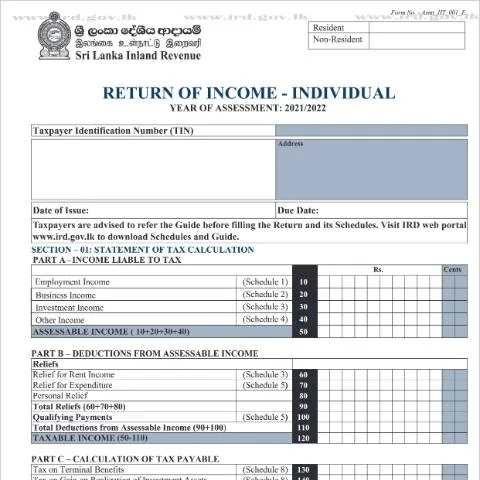
Understanding the Return of Income - Asmt_IIT_001_E
In the complex landscape of Sri Lankan taxation, the Return of Income form, officially designated as Asmt_IIT_001_E, plays a crucial role for individuals. It's not just another bureaucratic hurdle; it is a vital component in ensuring compliance with the Inland Revenue Department’s regulations. For individuals filing their taxes in Sri Lanka, understanding the nuances of this document is key to a smooth filing experience.
The Historic Context and Regulatory Framework
The Return of Income is shaped by a rich tapestry of legislative frameworks established over the years. The Inland Revenue Act governs the submission of income returns, underpinning the necessity for taxpayers to disclose their earnings accurately. This act has undergone several amendments to adapt to the evolving economic environment, ensuring that all forms of income are adequately reported.
- Inland Revenue Act No. 24 of 2017 - The primary legislation guiding income tax submissions.
- Electronic Transactions Act - Enables the use of digital forms, reflecting Sri Lanka’s push towards digital governance.
- Taxpayer Identification - The National Identity Card (NIC) serves as a central document for identification during tax submissions.
This historical context highlights the ongoing commitment of the Sri Lankan government to maintain transparency and accountability within the tax system. The Return of Income form is thus not merely a requirement but a reflection of a broader effort to modernize public administration.
Channels of Submission: Digital versus Paper
The mode of submitting the Return of Income is essential for ensuring timely and accurate filings. Here, we explore the available channels:
| Submission Channel | Advantages | Considerations |
|---|---|---|
| Online (Forms.gov.lk) |
|
Requires a stable internet connection |
| Paper Submission |
|
Longer processing times; possible delays in acknowledgment |
| In-Person at Revenue Offices |
|
Limited operating hours; may require waiting in line |
Choosing the right submission channel depends on individual preferences and circumstances, each with its unique advantages and considerations.
Key Differences: Return of Income vs. Other Forms
Understanding how the Return of Income differs from other similar documents can prevent confusion. Taxpayers often encounter various forms, such as:
- Declaration of Assets - Focused on disclosing wealth rather than income.
- Pay As You Earn (PAYE) Forms - Specifically for salaried individuals, summarizing taxes withheld by employers.
The Return of Income demands a comprehensive overview of all income streams, including business earnings, investments, and any other applicable sources.
Completing the Form: Essential Elements
When tackling the Return of Income form, certain details demand meticulous attention:
- Personal Identification: Ensure your NIC number is accurately recorded as it’s central for processing.
- Income Sources: Categorize each income stream, whether it be salary, rental, or capital gains, ensuring no source is omitted.
- Deductible Expenses: Document any allowable deductions clearly to optimize tax liability.
Filling out the form incorrectly can lead to delays or rejections, underscoring the importance of accuracy and completeness.
What Happens After Submission?
Upon submitting the Return of Income, various possibilities unfold. The Inland Revenue Department processes the form and may take several actions:
- Acceptance: If everything checks out, you’ll receive a confirmation and your tax status will be updated.
- Request for Clarification: If any information is unclear, the department may contact you for further details.
- Rejection: In cases of discrepancies or missing information, the return might be rejected. In such cases, the taxpayer is notified, and corrective actions must be taken.
Being proactive in responding to any inquiries from the department is crucial to resolving issues swiftly.
Addressing Rejections and Errors
Encountering rejection due to errors is a source of stress for many taxpayers. Addressing these challenges requires a structured approach:
- Understanding the Rejection: Carefully read the feedback provided by the Inland Revenue Department.
- Correcting Errors: If there’s a clerical error, amend the details on your Return of Income and submit the correction promptly.
- Documenting Communication: Keep records of all correspondence with the tax authorities for future reference.
Failing to address issues promptly can lead to penalties or complications in future filings, emphasizing the importance of diligence.
Engaging with the System: Rights and Obligations
Filing the Return of Income is not merely a bureaucratic exercise; it opens avenues for rights and responsibilities. For individuals, these include:
- Right to Appeal: In case of dissatisfaction with assessments, taxpayers have the right to appeal the decision.
- Obligation to Comply: Timely and accurate filing is a legal obligation; failure to comply may result in fines or legal repercussions.
- Transparency and Accountability: Taxpayers are entitled to requests for explanations regarding their assessments and rights to access their records.
This engagement with the tax system underscores the importance of an informed citizenry, prepared to navigate the complexities of tax obligations.
The Bigger Picture: How Individual Returns Impact Public Finance
Every individual's Return of Income contributes to the national revenue, funding public services and infrastructure. Understanding this connection fosters a greater sense of responsibility among taxpayers:
- Funding Public Services: Taxes collected are fundamental for healthcare, education, and social services.
- Supporting Infrastructure Development: Revenues are reinvested into roads, public transport, and utilities, enhancing overall quality of life.
- Promoting National Stability: A robust tax reporting system ensures a stable economy and promotes fairness among citizens.
Appreciating the role of individual contributions helps foster a culture of compliance and civic responsibility.
Understanding the Return of Income Process
The Return of Income process in Sri Lanka is a crucial component for individuals and entities to fulfill their tax obligations under the Income Tax Act. This process is primarily managed by the Department of Inland Revenue (DIR), which administers the assessment, collection, and enforcement of income tax laws. The Return of Income, formally known as the Assessment Form [Asmt_IIT_001_E], must be submitted by those who earn taxable income. The form serves as a declaration of one’s income for the financial year, allowing the DIR to determine the appropriate tax liability.
Taxpayers are required to file their Return of Income annually, typically within a specified period after the end of the financial year, which runs from April 1 to March 31 in Sri Lanka. The filing deadline varies depending on whether the taxpayer is an individual, company, or partnership. For individual taxpayers, the submission deadline is generally on or before July 31, while companies have until November 30 to file their returns. It is imperative to adhere to these timelines to avoid penalties and interest on late submissions.
The Return of Income form requires detailed disclosures about various income sources, including but not limited to salary, business income, and investment returns. Taxpayers must also account for allowable deductions and reliefs, which can significantly affect their taxable income. Understanding the nuances of these deductions, such as those related to education expenses, medical expenses, and contributions to pension plans, can lead to substantial tax savings. Furthermore, it is advisable to maintain accurate records of income and expenses, as the DIR may require supporting documentation during audits or reviews.
The Importance of Accurate Reporting in the Return of Income
Accurate reporting within the Return of Income is essential not only for compliance with tax laws but also for establishing taxpayer credibility with the DIR. Inaccuracies or omissions can result in audits, penalties, and potential legal ramifications. Individuals and businesses must ensure that all income streams are reported fully and that any deductions claimed are valid and substantiated by appropriate documentation.
In the case of self-employed individuals or businesses, the process of accounting for income can be more complex, as it often involves estimating projected income and making provisions for tax payments throughout the year. The DIR allows for provisional tax assessments based on previous years' income, which can help mitigate the burden of a large tax bill at year-end. It is advisable to consult with a tax professional to navigate these complexities and to ensure compliance with the latest tax regulations and practices.
Moreover, the increase in digitalization of tax services in Sri Lanka has streamlined the submission process for the Return of Income. The ICTA has initiated various e-services that enable taxpayers to file their returns electronically. The introduction of the electronic version of Form [Asmt_IIT_001_E] allows for a more efficient submission process, reducing the need for in-person visits to the DIR offices. Taxpayers can access the necessary digital forms through the official website, ensuring they have the most up-to-date information and requirements at their fingertips.
Common Challenges and Solutions in Filing the Return of Income
While the Return of Income filing process has been simplified, several challenges persist among taxpayers in Sri Lanka. One common issue is the lack of awareness regarding the specific information required in the return. Many taxpayers struggle with understanding the various sections of Form [Asmt_IIT_001_E] and may inadvertently provide incomplete or incorrect information. This can lead to delays in processing and potential audits.
To combat this, taxpayers should utilize the resources available through the DIR, including guidance documents, FAQs, and helpline services. Attending workshops or seminars offered by tax professionals or the DIR can also enhance understanding and help taxpayers navigate the complexities of the Return of Income.
Another challenge is the timely gathering of necessary documentation. Taxpayers often face hurdles in obtaining certificates of income, bank statements, and proof of allowable expenses. To ensure a smooth filing process, it is advisable to start gathering documentation well in advance of the filing deadline. Establishing an organized system for record-keeping throughout the year can save stress and potential errors at tax time.
Lastly, the increasing frequency of audits and inquiries from the DIR can be intimidating for taxpayers. It is crucial to maintain transparency and accuracy in all submissions to reduce the likelihood of being flagged for further investigation. Should a taxpayer find themselves under audit, seeking professional guidance can provide clarity and support in addressing any issues raised by the DIR.