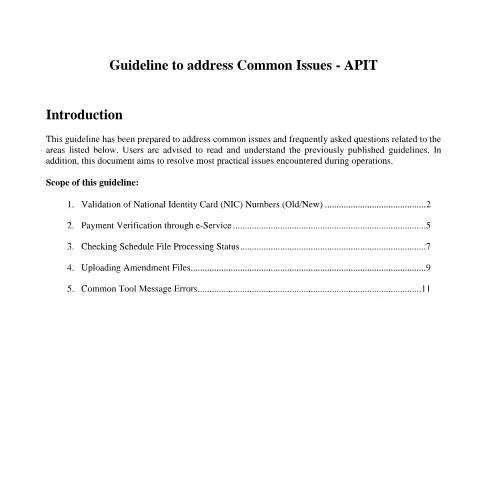
Navigating the Guideline to Address Common Issues - APIT
The Guideline to Address Common Issues - APIT serves as a pivotal resource for individuals and entities engaged with the Pay As You Earn (PAYE) and Advance Personal Income Tax (APIT) obligations in Sri Lanka. This document offers a comprehensive examination of common challenges and queries that taxpayers may encounter during their reporting processes. Understanding this guideline is critical, as it not only presents solutions but also clarifies procedures that are essential for compliance.
Scope and Limitations of the Guideline
This guideline outlines various aspects of PAYE and APIT operations, specifically focusing on validation procedures, payment verification, schedule file processing, and common error messages. Importantly, users must acknowledge the limitations inherent in the document. While it aims to address a range of practical issues, it does not encompass every possible scenario that may arise in tax compliance. Consequently, users are encouraged to reference earlier publications from the relevant authorities to obtain a holistic understanding of their obligations.
Key Areas Covered
- Validation of National Identity Card (NIC) Numbers
- Payment Verification through e-Service
- Checking Schedule File Processing Status
- Uploading Amendment Files
- Common Tool Message Errors
Understanding National Identity Card (NIC) Validation
NIC validation is a fundamental requirement in tax processes, and this guideline delineates the procedures for validating both new and old NIC numbers. Accurate validation ensures that taxpayer information is correct, which is paramount for compliance and avoiding penalties.
New NIC Number Validation Steps
- Complete the schedule information using the designated template.
- Change the “Employee NIC” column format to Number, ensuring no decimal values are present.
- Convert the file to CSV format using the appropriate button.
- Name the file according to specified formats and utilize the latest verification tool for validation.
- If discrepancies are found, corrections must be made in the original file before re-validation.
Important Notes: Users must refrain from opening the CSV file post-conversion until the upload is complete, and it is explicitly stated that new NIC numbers must not be entered in the “Employee Passport No.” column.
Old NIC Number Validation Considerations
While validation issues with old NIC numbers are rare, they can occur due to algorithm mismatches by the Department of Persons Registration. In such instances:
- Verify the NIC number manually against the physical document.
- Ensure there are no spaces or incorrect characters in the number.
- In cases of persistent validation failure, consider advising the employee to obtain a new NIC.
Payment Verification: An Essential Procedure
Prior to filing the Annual Statement, taxpayers must ensure that all monthly payments are accurately recorded. This step is crucial for the integrity of tax records and for compliance with the assessment periods.
Steps for Effective Payment Verification
- Select the tax type as PAYE/APIT within the e-Service dashboard.
- Enter the applicable taxable period and click on the Payment icon.
- Review the displayed payment information for accuracy.
If discrepancies arise, taxpayers should submit a correction request to the Commissioner of Payment & Reconciliation Unit along with supporting documents, such as pay-in slips. Moreover, it may be beneficial to contact the appropriate regional office for resolution.
Monitoring Schedule File Processing Status
Once the Annual Statement and associated schedules have been submitted, it is imperative to monitor the processing status to confirm successful uploads. This status check prevents administrative errors and ensures compliance with reporting requirements.
Procedure for Checking Processing Status
- Navigate to “Upload Schedules / Documents” under the “Return / Schedule Management” menu.
- Access the Schedule File Processing Status link, selecting the relevant tax type.
- Input the period code and initiate a search.
The system may categorize the processing status as follows:
| Status | Description |
|---|---|
| Success | The file was processed without issues. |
| Rejected | The file did not meet the necessary criteria for processing. |
| Processed with Errors | The file was processed but contained errors needing correction. |
| Pending Processing | The file is still under review and has not been processed yet. |
It is strongly recommended to verify all schedules using the latest verification tool prior to uploads to mitigate potential errors.
Uploading Amendment Files: Ensuring Accuracy
In some instances, amendments to submitted schedules may be necessary. The guideline provides clear steps to guide users through the process of uploading amendment files, ensuring that all corrections are properly documented and processed.
Steps for Successful Uploading of Amendment Files
- Prepare the amendment file following the original file’s structure.
- Ensure the amendment details are accurately represented.
- Upload the amendment file through the designated portal, adhering to the naming conventions established in the guideline.
It is crucial to maintain consistency and accuracy in amendments to prevent further complications in tax filings.
Common Tool Message Errors: Decoding Challenges
Throughout the process of tax compliance, users may encounter various tool message errors that can lead to confusion. Understanding these messages is vital for timely and accurate compliance.
Addressing Common Error Messages
- NIC Validation Error: Indicates that the NIC number entered does not match the system's records.
- File Format Error: Occurs when the uploaded file does not conform to the required format specifications.
- Processing Error: Signifies that there were issues during the file processing phase which may require user intervention.
Understanding these messages and their implications can save considerable time and prevent compliance issues.
Target Audience: Who Benefits Most from This Guideline?
This guideline is aimed at a varied audience involved in the PAYE and APIT processes, including:
- Employers: Responsible for accurate tax deductions and reporting.
- Accountants: Tasked with ensuring compliance on behalf of clients and businesses.
- Tax Professionals: Who assist taxpayers in navigating the complexities of the tax system.
- Government Officials: Who rely on accurate taxpayer information for compliance and enforcement.
For these stakeholders, the proper understanding and application of this guideline is not only beneficial but essential for effective tax management.
Leveraging the Guideline in Practice
To maximize the utility of the Guideline to Address Common Issues - APIT, users should approach their tax compliance proactively. This involves regularly reviewing the guideline and incorporating its best practices into daily operations. By doing so, taxpayers can ensure compliance while minimizing the risk of errors and penalties.
Incorporating this guideline into routine practices enhances understanding, promotes best practices, and ultimately leads to greater confidence in fulfilling tax obligations. As the tax landscape continues to evolve, staying informed through such documents is crucial for all stakeholders.
Understanding the Application Process for APIT Registration
The registration process for the Automated Process Improvement Team (APIT) in Sri Lanka can be intricate, given the various procedural requirements and documentation involved. It is essential for applicants to understand not only the forms required but also the potential challenges they might face during submission. First and foremost, ensure that you possess a valid National Identity Card (NIC), as it serves as the primary identification document throughout the registration process.
When preparing your application, take heed of the specific requirements laid out by the relevant authorities. Documentation typically includes proof of residency, any previous business registrations, and tax compliance certificates. Be vigilant about the accuracy of your documents; discrepancies can lead to significant delays. If you encounter issues with your documentation, it may be prudent to seek assistance from local administrative offices or professionals familiar with the APIT processes.
Moreover, ensure that you familiarize yourself with the timelines set by the Department of Registration of Companies (DRC) and any updates provided via the ICTA’s digital services portal. The shift towards digitization means that applicants can often resolve issues more efficiently through online channels, but it remains critical to keep track of submission dates and document validity.
Common Challenges and Their Resolutions
Applicants frequently face a range of challenges during the APIT registration process. Understanding these common issues and knowing how to address them can save applicants time and resources. Here are some prevalent challenges:
- Incomplete Documentation: One of the main reasons applications are rejected is due to incomplete documentation. It is vital to cross-check the documentation requirements specified by the DRC before submission. Maintaining a checklist can help ensure that all necessary documents are included.
- Technical Issues with Online Submission: With the push for digitalization, technical issues can arise when submitting applications online. Ensure a stable internet connection and utilize compatible browsers. If you encounter a system-generated error, taking a screenshot may assist technical support staff in resolving your issue efficiently.
- Delayed Responses from Authorities: During peak registration periods, responses from government authorities may lag. Consider setting reminders for follow-ups and stay in touch with relevant departments. Utilizing the official communication channels listed on the ICTA and PubAd websites can also facilitate quicker responses.
In some cases, certain exceptions are applicable, particularly for small businesses or startups. Applicants can inquire about expedited processing or support programs that may be available through the Department of Small and Medium Enterprise Development.
Navigating Post-Application Procedures and Appeals
Once your application has been submitted to the APIT, your responsibilities do not end there. Understanding the next steps in the post-application phase is crucial for a successful outcome. If your application is approved, ensure that you follow through with any post-registration requirements, such as obtaining necessary licenses, permits, or certifications related to your business activities.
In scenarios where your application is rejected, it is vital to understand the appeals process. Applicants have the right to appeal decisions made by the DRC. This process typically involves submitting a formal appeal letter detailing your case and providing any additional documentation that may support your request. It is advisable to adhere strictly to the format prescribed by the DRC and to submit your appeal within the stipulated time frame.
You may also consider consulting with legal experts who specialize in administrative law to assist you with the appeal process. Maintaining a clear record of all correspondence and submissions throughout the registration and appeals process can significantly bolster your case.
Ultimately, navigating the intricacies of the APIT registration process in Sri Lanka requires diligence, patience, and a proactive approach to problem-solving. By being well-prepared and informed, applicants can enhance their chances of a smooth registration experience.