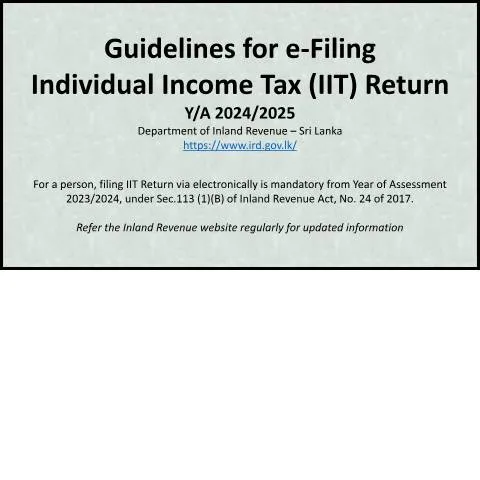
Navigating the Digital Waters: The Essentials of Filing Individual Income Tax Online
As Sri Lanka moves towards a more digitized approach to governance, the importance of understanding the Guide to File Individual Return of Income Online becomes crucial for taxpayers. This document serves as a comprehensive roadmap for individuals who need to fulfill their tax obligations efficiently and accurately. It sheds light on the procedural nuances and requirements that must be adhered to when filing an Individual Income Tax (IIT) return electronically.
Understanding the Scope of the Guide
This guide delineates the framework within which individuals must operate to file their IIT returns for the Year of Assessment 2024/2025 and beyond. The emphasis is on the mandatory nature of electronic filing, as stipulated under Sec.113 (1)(B) of the Inland Revenue Act, No. 24 of 2017. By making the electronic filing process obligatory, the Sri Lankan government streamlines tax collection and enhances transparency.
Among the key features highlighted in the guide are:
- Eligibility criteria for individuals required to file returns.
- The step-by-step process for accessing the e-filing system.
- Information on necessary credentials like the Taxpayer Identification Number (TIN) and Personal Identification Number (PIN).
- Guidance on common issues encountered during the filing process.
Who Should Refer to This Guide?
The guide primarily targets individual taxpayers in Sri Lanka who are obligated to file their IIT returns. This includes:
- Employees receiving a salary from an employer.
- Self-employed individuals.
- Professionals engaged in various fields.
- Individuals with income from investments or property.
It is imperative for these individuals to familiarize themselves with the details provided in this document, particularly if they are new to the e-filing process. The guide is indispensable for first-time filers, as it provides clarity on requirements and procedures.
Step-by-Step Access to the E-Filing System
One of the key aspects of the guide is the detailed process for accessing the e-filing platform. Here is a concise breakdown:
- Visit the official Inland Revenue Department website at https://www.ird.gov.lk.
- Navigate to the e-Services section.
- Choose Access to e-Services.
- Select Individual Taxpayer and click on Proceed to Login.
- Input your TIN, PIN, and the CAPTCHA code accurately.
Ensuring the correct entry of your TIN and PIN is critical as errors can lead to login issues. If you have forgotten your PIN or face a lockout scenario, follow the designated procedure to recover or request a new PIN. This systematic approach guarantees a smoother experience in accessing the e-filing platform.
Key Terminology and Concepts
Understanding specific terms and concepts introduced in the guide is vital for successful compliance. Here are some essential definitions:
| Term | Description |
|---|---|
| Taxpayer Identification Number (TIN) | A unique identifier assigned to individuals for tax purposes. |
| Personal Identification Number (PIN) | A confidential number used in conjunction with the TIN to access the e-filing portal. |
| Individual Income Tax (IIT) | The tax levied on the income earned by individuals. |
| Year of Assessment (Y/A) | The period for which income is assessed for tax purposes. |
Familiarity with these terms will facilitate a better understanding of the filing process and the associated obligations.
Common Procedural Questions and Clarifications
While the guide offers a wealth of information, it is natural for individuals to have questions regarding specific aspects of the filing process. Here are some frequent queries:
- What if I am not yet registered for IIT? If you have not registered, the guide outlines how to initiate the registration process. Ensure that you follow the steps provided meticulously for a seamless registration experience.
- How do I view my payment voucher number? This can be done through the e-services section once you log in, ensuring all credentials are entered accurately.
- What happens if I encounter technical issues during filing? The guide advises users to seek assistance via the contact information provided on the website. Prompt action can prevent delays in the filing process.
Articulation with Other Documents and Processes
The filing of an IIT return is not an isolated activity; it intersects with various processes and documents. Understanding these connections can enhance compliance:
- Taxpayer Registration: Before filing, ensure that you are registered as a taxpayer. This is a prerequisite step that must be completed.
- Payment Documentation: Maintain records of all payment vouchers as they may be required for future reference or audits.
- Additional Schedules: Certain income types may require supplementary schedules to be submitted alongside your IIT return. Familiarity with these requirements is beneficial.
By recognizing these connections, taxpayers can better navigate the complexities of tax compliance.
Limitations and Considerations of the Guide
While the guide serves as an invaluable resource, it is crucial to acknowledge its limitations. Notably:
- This guide is primarily focused on the individual taxpayer's obligations and does not encompass corporate or business tax requirements.
- Updates to legislation or procedural changes may not be immediately reflected. Therefore, regular visits to the Inland Revenue Department website are recommended for the latest information.
- The guide does not serve as legal advice. Taxpayers with complex financial situations may benefit from consulting a tax professional.
Understanding these limitations ensures that individuals can approach their tax obligations with realistic expectations and comprehensive knowledge.
Final Thoughts: Empowering Yourself Through Knowledge
As you prepare to file your Individual Income Tax return, remember that the Guide to File Individual Return of Income Online is your ally in navigating the intricacies of the process. By understanding its contents, adhering to the prescribed procedures, and remaining informed about your obligations, you are taking significant steps towards fulfilling your tax responsibilities accurately and ethically.
Understanding Tax Residency in Sri Lanka
Tax residency is a crucial aspect of filing an individual income return in Sri Lanka. It determines your tax obligations and the income that is subject to taxation. According to Sri Lankan tax law, an individual is considered a tax resident if they reside in the country for 183 days or more during a tax year or if they have a permanent home in Sri Lanka and reside there for at least 90 days during the tax year and have been a resident for at least three out of the previous four years. For expatriates and foreign nationals, understanding whether you qualify as a tax resident is essential, as this will dictate whether you are taxed on your worldwide income or just your income sourced within Sri Lanka. Always refer to the latest guidelines from the Inland Revenue Department (IRD) for specifics that may relate to your individual circumstances.
Navigating Special Deductions and Allowances
While filing your individual income tax return online, it's important to take full advantage of the deductions and allowances available under Sri Lankan tax law. Deductions can significantly reduce your taxable income, which in turn reduces your tax liability. Common deductions include contributions to approved pension funds, donations to charitable organizations, and medical expenses that exceed a certain threshold. The IRD provides detailed schedules on what qualifies for deductions, and it is advisable to maintain accurate records of your expenses to ensure you can substantiate your claims. Moreover, consider specific allowances for dependents, education expenses, and any applicable tax relief that may be available based on your specific situation. Each year, the IRD may update the allowable deductions and allowances, so reviewing these changes is critical during tax season.
Importance of Keeping Accurate Records
Maintaining meticulous financial records is indispensable when filing your individual income return online. The IRD may require supporting documents for various claims made in your return, and having these organized can save you time and potential disputes. Key documents include payslips, bank statements, invoices for deductible expenses, and records of any income earned outside Sri Lanka if you are a tax resident. Implementing a well-structured filing system for these documents ensures that you can easily provide evidence of your income and deductions if requested by the IRD. Additionally, keeping digital copies of your records is advisable, particularly if you opt for online filing, as it allows for easier access and submission. Remember, the integrity of your records can safeguard you against penalties for inaccuracies in your return.