Understanding the Framework of the APIT Guidelines
The "Guideline for Preparing and Verifying of APIT Schedules" lays out crucial instructions for employers who are required to submit information related to the Advance Personal Income Tax (APIT) as part of the Pay As You Earn (PAYE) system in Sri Lanka. This document is essential for ensuring compliance with income tax regulations and accurate reporting of employee income. An in-depth understanding of these guidelines is vital for smooth tax processing and adherence to legal requirements.
The Importance of APIT Schedules
APIT Schedules play a pivotal role in the PAYE system as they help in the correct reporting of employees' earnings and the corresponding tax deductions made on their behalf. These schedules provide the necessary details that the Department of Inland Revenue (IRD) requires for assessing the accuracy of taxes withheld from employees' salaries.
- Ensuring Accuracy: Properly prepared APIT Schedules minimize discrepancies in tax submissions.
- Compliance: Adhering to the guidelines ensures that employers remain compliant with Sri Lankan tax laws.
- Facilitating Audits: Well-documented tax submissions can support employers during audits and inquiries by the IRD.
Step-by-Step Navigation of the Guideline
Employers will find it beneficial to approach the guideline methodically. Below is a breakdown of essential steps to effectively utilize the APIT guidelines:
1. Downloading Required Templates
The first step in preparing APIT Schedules involves accessing the IRD portal:
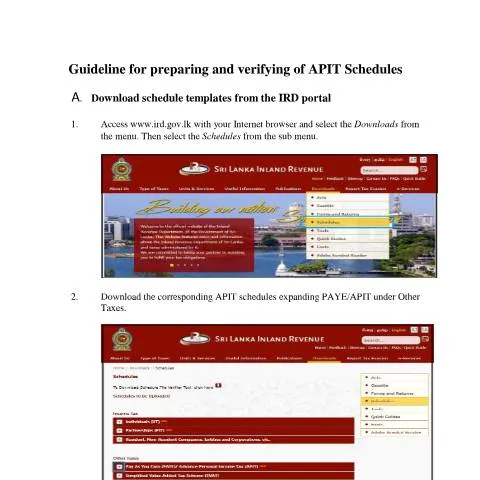
- Visit www.ird.gov.lk and navigate to the "Downloads" section.
- Select "Schedules" from the submenu, then expand the "PAYE/APIT" section under "Other Taxes."
- Choose the relevant APIT schedule according to the specified period.
By downloading the correct schedule template, employers ensure they are using the most current format required by the IRD.
2. Opening and Editing Schedule Files
Upon downloading the APIT schedule, users will encounter specific prompts to follow:
- Open the downloaded file with a .xlsm extension, which is a Microsoft Excel Macro-Enabled Worksheet.
- When prompted by "Protected View," select "Enable Editing" to modify the file.
- Respond to any "Security Warning" by clicking "Enable Content."
Adhering to these steps is critical for maintaining the integrity of the workbook and ensuring that macros work appropriately.
Key Elements within the APIT Schedules
The content of the schedules must be meticulously filled out to reflect accurate employee information:
Essential Data Fields Explained
| Field | Description | Character Limit |
|---|---|---|
| Employee NIC | National Identity Card number, unique to each employee | — |
| Name of Employee with Initials | Full name in English | 1-100 characters |
| Employment From/To Date | Start and end dates of employment in MM/DD/YYYY format | — |
| Total Tax Deducted | Sum of taxes deducted during the reporting period | Maximum 15 digits including 2 decimals |
Each field serves a specific purpose and contributes to the overall tax assessment process. Employers must fill these fields accurately to avoid potential penalties.
Common Pitfalls and Misinterpretations
Employers should be aware of common mistakes that can arise when preparing APIT Schedules:
1. Incorrect Date Formats
A frequent error involves the date entry, which must strictly adhere to the format MM/DD/YYYY. Misformatting can lead to incorrect tax computations and possible compliance issues.
2. Failure to Remove Decimals from NIC Column
Employees’ NIC numbers must be entered as whole numbers without decimal points. This simple error can lead to complications in verifying employee identities during tax assessments.
Interdependencies with Other Tax Documents
The APIT guidelines must be understood in context with other related documents. For example, employers may also need to refer to:
1. Employee Tax Deduction Certificates
These certificates, issued to employees, summarize the total tax withheld. They should mirror the data submitted in the APIT Schedules to ensure consistency and accuracy.
2. Payroll Records
Maintaining accurate payroll records is crucial as they form the basis for all reported data in the APIT Schedules. Employers should ensure that their payroll systems sync seamlessly with the tax reporting requirements.
Target Audience and Scenarios for Utilization
The guidelines are primarily aimed at:
- Companies and organizations employing individuals who earn taxable income.
- Payroll departments responsible for ensuring accurate tax withholding and reporting.
- Tax consultants aiding organizations in compliance with PAYE regulations.
Every entity in Sri Lanka that engages employees in paid work must familiarize itself with these guidelines to remain compliant with local tax laws.
Final Remarks on Effective Compliance
Utilizing the "Guideline for Preparing and Verifying of APIT Schedules" effectively is crucial for avoiding penalties associated with non-compliance. Employers should take the time to thoroughly understand each component laid out in the guidelines, ensuring a seamless process for tax reporting.
By following the outlined steps and remaining vigilant regarding the common pitfalls, organizations can ensure that they are adequately fulfilling their responsibilities under the PAYE system. This proactive approach ultimately supports the integrity of the Sri Lankan tax system and the financial well-being of employees.
Understanding APIT Schedules: Importance and Structure
The APIT (Annual Performance Incentive Tax) schedules play a significant role in the tax assessment process in Sri Lanka. These documents are crucial for both individuals and organizations, as they help in determining the eligible tax deductions and credits based on performance metrics. Understanding the structure of APIT schedules is paramount for accurate financial reporting and compliance with the Sri Lankan tax regulations.
The APIT schedules typically consist of three main sections: Income Assessment, Performance Metrics, and Tax Calculation. Each section requires meticulous attention to detail. The Income Assessment section must list all sources of income, ensuring that all revenue streams are accounted for. The Performance Metrics section assesses the performance indicators that influence tax incentives, such as sales growth or employee retention. Finally, the Tax Calculation section summarizes the total tax due after applying any eligible deductions or credits. Properly preparing these schedules ensures compliance and maximizes potential tax benefits.
Common Errors and How to Avoid Them in APIT Schedule Preparation
One of the frequent challenges faced in the preparation of APIT schedules is the occurrence of common errors. Identifying these pitfalls in advance can save taxpayers significant time and resources. Some prevalent mistakes include incorrect income reporting, miscalculation of deductions, and failing to incorporate all qualifying performance metrics.
To avoid mistakes, it is advisable to maintain meticulous records throughout the year, including invoices, receipts, and other financial documents. Furthermore, utilizing digital tools and software that adhere to the guidelines laid out by the ICTA can streamline the data entry process and minimize errors. It is also beneficial to regularly consult the latest tax updates published by the Department of Revenue (DRC) to ensure compliance with any changes in legislation that could impact the APIT schedules.
The Role of Audits in APIT Schedule Validation
Audits serve as a critical mechanism in validating the authenticity and accuracy of APIT schedules. The Department of Revenue may conduct audits to ascertain that taxpayers have appropriately reported their income and claimed deductions. An audit examines the supporting documentation, financial records, and the overall compliance of submitted APIT schedules.
During an audit, it is crucial for taxpayers to have organized documentation readily available. This includes prior year APIT schedules, bank statements, and supporting evidence for all performance metrics claimed. In preparation for an audit, conducting a self-assessment prior to submission can help identify any discrepancies or issues that may arise. Taxpayers should also be prompt in responding to audit inquiries to facilitate a smooth process. Engaging with a qualified tax advisor who understands the intricacies of Sri Lankan tax laws can further enhance the audit preparation process and mitigate potential penalties.