Skip to content
Taxes

Understanding the 2020/2021 Income Tax Deductions Certificate

Official documentTaxes
PreviewDocument preview: Understanding the 2020/2021 Income Tax Deductions Certificate — Taxes (CERFA n°APIT_T10)
Official document

What would you like to do?

Complete the fields, sign, then download.

Understanding the Certificate of Income Tax Deductions: A Comprehensive Guide

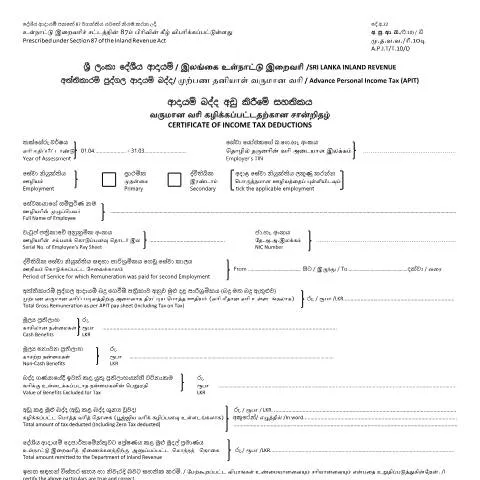
The Certificate of Income Tax Deductions, officially designated as Certificate of Income Tax Deductions - 2020/2021 (A.P.I.T/T.10/D), serves as a critical document for employees in Sri Lanka. Issued by the Advance Personal Income Tax (APIT), this certificate is a testament to the income tax that has been deducted from an employee's earnings within a specific assessment year. This document carries substantial legal weight, providing both employees and employers with essential verification of tax compliance and employment details.

This certificate is not merely a formality; it is a legally binding document under the provisions of the Inland Revenue Act. It affirms the amounts of tax deducted during the assessment period from 1st April to 31st March of the following year. The certificate is vital for several reasons:

  • Proof of Tax Compliance: It acts as formal evidence that the employee has fulfilled their tax obligations for the financial year.
  • Employment Verification: The document substantiates the employee's relationship with the employer and the income earned, which may be necessary for loan applications, visas, or other significant financial commitments.
  • Tax Return Documentation: It is imperative for employees to attach this certificate to their income tax returns, ensuring that any tax deducted is recognized by the Department of Inland Revenue.

In essence, the certificate serves as a critical element in the tax framework of Sri Lanka, ensuring transparency and accountability between employers and employees.

Step-by-Step Process to Obtain the Certificate

Securing the Certificate of Income Tax Deductions involves a series of well-defined steps. This process primarily falls under the responsibilities of the employer, but employees must also be aware of their roles. Here’s a detailed breakdown:

  1. Employer's Responsibility: The employer must maintain detailed payroll records, ensuring that all deductions are accurately documented for each employee.
  2. Preparation of the Certificate: At the end of the assessment year, the employer is required to compile the necessary information, including total gross remuneration, tax deducted, and other relevant details.
  3. Submission to APIT: Employers must submit the compiled data to the Advance Personal Income Tax department. This is usually done electronically via the designated government portal forms.gov.lk.
  4. Issuance of the Certificate: Once the submission is approved, the APIT will generate the Certificate of Income Tax Deductions, which is then provided to the employee.

Employees can request their certificate from their employer if not received automatically, emphasizing the importance of proactive communication regarding tax documentation.

Eligibility Criteria for Obtaining the Certificate

While the certificate is a standard document for all salaried employees, certain criteria must be met to obtain it:

  1. Employment Status: The individual must be under the employment of a registered employer who is compliant with the Inland Revenue regulations.
  2. Tax Liability: The employee must have had income tax deducted throughout the year, including periods of leaves or absences.
  3. Proper Documentation: Employees should ensure that their personal details, such as the National Identity Card (NIC) number and employment details, are correctly maintained in the employer’s records.

Employees in multiple employment situations can obtain separate certificates from each employer, reflecting the income and tax deductions applicable for each position.

Common Uses of the Certificate

The Certificate of Income Tax Deductions is employed in various practical scenarios, often extending beyond mere tax filing:

  • Loan Applications: Financial institutions require this certificate as proof of income and tax compliance before approving loans or mortgages.
  • Visa Applications: When applying for visas, especially for countries requiring proof of financial stability, this document is paramount.
  • Government Subsidies: Certain government programs and subsidies may mandate tax compliance proof, for which this certificate serves as a valid document.

Furthermore, it is often requested in court proceedings related to financial disputes or verification of income in divorce cases, showcasing its multifaceted utility in personal and professional scenarios.

Resolving Issues: Lost or Incorrect Certificates

In the unfortunate event of a lost or inaccurately filled certificate, swift action is crucial. Here are the steps to take:

  1. Notify the Employer: Immediately inform your employer about the loss or error. They are responsible for reissuing the certificate.
  2. Provide Necessary Details: Be prepared to furnish details such as your NIC number, employment duration, and the specific discrepancies found in the original certificate.
  3. Follow Up: Ensure that your employer processes the reissue promptly, facilitating any required corrections with the APIT.

Maintaining a copy of previous certificates or documenting your tax deductions can expedite the resolution process in such cases.

Implications of Non-Compliance

Failure to obtain or submit this certificate can lead to significant repercussions for both employees and employers:

  • Tax Penalties: Employees may face penalties for failing to report income accurately, which could arise from not presenting the certificate during tax assessments.
  • Employer Liability: Employers are legally bound to comply with tax regulations; failure to issue accurate certificates can result in fines and legal action against the company.
  • Impact on Financial Reputation: Both parties may experience reputational damage, making future financial dealings or employment opportunities challenging.

Thus, maintaining compliance with the documentation processes is crucial for both parties involved.

Final Considerations for the Certificate of Income Tax Deductions

Understanding the significance of the Certificate of Income Tax Deductions extends beyond mere compliance; it is a critical component of financial accountability within Sri Lanka. Both employees and employers must recognize its value in fostering transparency and ensuring that all tax liabilities are met diligently.

As Sri Lanka continues to enhance its digital infrastructure for tax administration, staying informed about your rights and obligations regarding tax documents will empower both employees and employers in managing tax-related matters more effectively. Leveraging the digital services offered through the relevant governmental portals can also facilitate smoother communication and processes regarding tax certificates, reducing the burden of paperwork and enhancing efficiency.

Understanding the Application Process for the Certificate of Income Tax Deductions

The process for obtaining the Certificate of Income Tax Deductions in Sri Lanka, specifically for the assessment year 2020/2021, involves several key steps. This certificate, referred to as Form A.P.I.T/T.10/D, is crucial for individuals to verify and document the tax deductions that have been made on their income. Understanding the application process not only helps streamline the experience but also ensures compliance with local tax regulations. First and foremost, applicants must ensure that they possess a valid National Identity Card (NIC), as this serves as the primary identification document for Sri Lankan citizens. If you are a foreign national, you will need to provide your passport along with any relevant residency documentation. The submission of these documents is essential, as they will be verified by the Inland Revenue Department (IRD) upon application. Next, applicants must gather all necessary supporting documentation that reflects the income earned during the assessment year. This includes payslips, bank statements, and any other relevant financial records. It is advisable to maintain accurate and comprehensive records of all income sources, as discrepancies could lead to delays or complications in the application process. The application form A.P.I.T/T.10/D can be downloaded from the official website of the IRD or accessed through the digital government platform at forms.gov.lk. Once completed, the form must be submitted to the nearest IRD office. Depending on the applicant's location, this may involve visiting a regional or divisional office. Upon submission, the IRD will process the application, and applicants should be prepared to receive communication regarding the status of their request. This may include requests for further documentation or clarification on specific points. It is vital to respond promptly to these communications to avoid delays in the issuance of the certificate. Lastly, it is prudent to note that the processing time for the Certificate of Income Tax Deductions can vary based on the volume of applications received and the completeness of the submitted documentation. Applicants should plan ahead and submit their applications well in advance of any deadlines related to tax returns or other financial obligations.

Common Challenges and Solutions in Obtaining the Certificate

While the process of obtaining the Certificate of Income Tax Deductions is designed to be straightforward, applicants may encounter several common challenges that could hinder their ability to acquire the certificate efficiently. Being aware of these potential issues and the corresponding solutions can facilitate a smoother experience. One frequent challenge is the lack of proper record-keeping. Many applicants fail to maintain adequate documentation of their income and tax deductions throughout the year. This oversight can lead to complications during the application process. To mitigate this risk, individuals are encouraged to implement a robust record-keeping system. This can include maintaining a detailed log of all income sources, saving copies of payslips monthly, and ensuring that all tax deduction details are up-to-date. Another challenge is the misinformation regarding the eligibility criteria for the deductions. Some applicants may mistakenly believe that all forms of income are eligible for deductions, leading to confusion during the application process. To address this, it is advisable to consult the official guidelines provided by the IRD or seek assistance from tax professionals who can clarify any uncertainties about qualifying income and allowable deductions. Moreover, applicants may face difficulties in navigating the digital submission process. While the electronic filing system is designed to simplify the application, technical issues or a lack of familiarity with digital forms can be barriers. To overcome this, applicants should familiarize themselves with the online process through tutorials available on the ICTA website or seek help from knowledgeable friends or family members. Additionally, the IRD provides customer service representatives who can assist applicants facing technical difficulties. Lastly, applicants may experience delays in processing times due to high volumes of submissions, especially during peak tax periods. To preemptively counter this issue, it is recommended to submit applications as early as possible within the designated application period, thus minimizing the chances of encountering last-minute delays.

The Importance of Timely Submission and Compliance

Timely submission of the Certificate of Income Tax Deductions is critical not only for personal financial management but also for compliance with the laws governing tax obligations in Sri Lanka. The Inland Revenue Department emphasizes that individuals must adhere to specific deadlines to avoid penalties and ensure a smooth tax filing experience. For the assessment year 2020/2021, the deadline for submitting income tax returns is typically set around the end of November of the subsequent year. Therefore, obtaining the Certificate of Income Tax Deductions well ahead of this deadline is imperative. Failure to submit the necessary documentation or to acquire the certificate on time may result in the inability to accurately report income and deductions, potentially leading to financial penalties or interest on unpaid taxes. Additionally, timely compliance with tax regulations can influence one's standing with the IRD. Consistent adherence to deadlines and proper filing may establish an applicant as a reliable taxpayer, which could be beneficial in case of audits or future tax considerations. It is also essential to recognize the broader implications of timely tax compliance beyond individual circumstances. The collection of income tax is a vital component of the national revenue framework and supports various public services and infrastructure development initiatives. By fulfilling tax obligations promptly, citizens contribute to the overall economic stability and growth of Sri Lanka. In summary, understanding the application process, addressing common challenges, and recognizing the importance of timely submission are crucial factors in obtaining the Certificate of Income Tax Deductions. Being well-prepared and informed can significantly enhance the experience and ensure compliance with Sri Lankan tax regulations.

Frequently asked questions

What is the Certificate of Income Tax Deductions?

It is a document that verifies the income tax deducted from an employee's earnings.

Who issues the Certificate of Income Tax Deductions?

The Advance Personal Income Tax (APIT) issues this certificate.

What assessment year does this certificate cover?

It covers the assessment year 2020/2021.

Why is this certificate important?

It serves as legal proof of tax compliance for both employees and employers.

How can employees use this certificate?

Employees can use it for tax filing and to verify their tax deductions.

What is the code associated with this certificate?

The code for this certificate is A.P.I.T/T.10/D.

Similar documents