Navigating the Stamp Duty Submission: An In-Depth Exploration
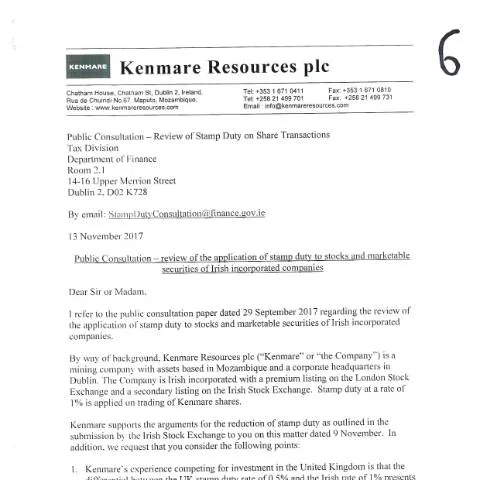
The Submission to Consultation regarding the review of the application of stamp duty to stocks and marketable securities of Irish incorporated companies is pivotal in shaping fiscal policies that affect businesses in Ireland. This document plays a critical role in the dialogue between the Department of Finance and stakeholders, including companies seeking to address tax burdens that may hinder their competitiveness.
Understanding the Stakeholder Landscape
Various stakeholders are involved in this consultation process, including:
- Irish Incorporated Companies: These are the primary applicants, looking to influence the tax landscape in a way that fosters growth and investment.
- Investors: Both domestic and international investors have a vested interest in how stamp duty impacts trading and investment attractiveness.
- Policy Makers: The Department of Finance and other regulatory bodies are key players in interpreting feedback and shaping future tax policies.
The Importance of the Public Submission
This submission serves multiple purposes:
- Feedback Mechanism: It allows companies like Kenmare Resources plc to express concerns and highlight potential impediments to investment.
- Policy Influence: By submitting well-founded arguments, companies can potentially shape the future of stamp duty regulation.
- Awareness Raising: It brings to light specific challenges that affect not only individual companies but the broader economic environment.
Comparative Analysis of Stamp Duty Rates
The stamp duty rate in Ireland stands at 1%, which is notably higher than rates in several other jurisdictions. This discrepancy can deter foreign investment as companies weigh their options globally. The following table illustrates how Ireland's stamp duty compares with those of other selected countries:
| Country | Stamp Duty Rate | Comments |
|---|---|---|
| Ireland | 1% | Higher rate compared to other EU nations |
| United Kingdom | 0.5% | Lower tax burden encourages investment |
| Germany | 0.2% | Attractive for stock transactions |
| France | 0.3% | Competitive compared to Ireland |
Submissions: Key Considerations and Required Documentation
When preparing a submission, several documentation aspects must be taken into account to ensure thoroughness and compliance. Essential components include:
- Company Background: A brief history and current status of the company can help contextualize the submission.
- Investment Data: Statistics and details illustrating the impact of stamp duty on investment opportunities should be enclosed.
- Comparative Analysis: Any comparisons with other jurisdictions that have lower stamp duties can provide compelling evidence for change.
Addressing Common Challenges
Submissions may encounter obstacles such as:
- Incomplete Documentation: Ensure that all required materials are submitted to avoid delays.
- Lack of Clarity: Clearly articulate the rationale behind the submission to facilitate understanding.
- Timing Issues: Adhering to deadlines is crucial; late submissions may not be considered.
What to Expect After Submission
Once the submission is processed, stakeholders can expect various outcomes:
- Review Period: The Department of Finance typically undertakes a thorough review of submissions, which can take several weeks.
- Feedback Opportunities: Stakeholders may receive opportunities to discuss their submissions further, offering clarity on intricate details.
- Policy Updates: Insights gained from submissions may lead to policy alterations, potentially resulting in reduced stamp duty rates.
Challenges for Foreign Entities
For non-Irish companies operating in Ireland, the implications of stamp duty can be particularly complex. Foreign firms may face unique challenges, such as:
- Understanding Local Regulations: Navigating the Irish tax landscape can be daunting without local expertise.
- Investment Hesitancy: Higher stamp duty may dissuade foreign entities from making significant investments.
- Reputational Risks: The perception of an unfriendly tax environment can affect a company's standing internationally.
Strategies for Foreign Investors
Foreign companies interested in entering the Irish market can adopt several strategies:
- Engage Local Advisors: Consulting with tax professionals familiar with Irish regulations can provide critical insights.
- Leverage International Networks: Utilize existing international connections to understand best practices regarding tax submissions.
- Participate in Consultations: Actively engage in discussions and consultations to influence future tax frameworks.
Potential Outcomes of the Consultation Process
The submission process may yield various outcomes, including:
- Policy Changes: If numerous submissions highlight a common concern, this can lead to substantial amendments in tax laws.
- Increased Engagement: The process fosters ongoing dialogue between companies and policymakers, leading to a more informed regulatory environment.
- Enhanced Transparency: By documenting concerns and recommendations, the government may commit to updating stakeholders on decisions made.
Long-term Implications for the Business Environment
Changes stemming from these submissions can have a far-reaching impact:
- Investor Confidence: Lower stamp duty rates could enhance confidence among both domestic and international investors.
- Market Stability: More competitive tax rates may contribute to a more stable market environment.
- Increased Economic Activity: A favorable tax landscape can stimulate broader economic growth through increased investments.
Conclusion: The Path Forward
In navigating the complexities of stamp duty submissions, understanding the nuances of the process is essential for stakeholders. Engaging in public consultations such as the one overseen by the Department of Finance can be pivotal in shaping a more favorable business environment in Ireland.
Understanding Stamp Duty: Implications for Irish Companies
Stamp duty, as governed by the Finance Act of 1891, imposes a tax on certain transactions related to stocks and marketable securities. The current review of the application of stamp duty to the stocks and marketable securities of Irish incorporated companies aims to clarify the implications of these taxes, particularly for businesses and investors alike. It is critical to understand how these regulations affect financial transactions and corporate structures.
For Irish companies, stamp duty can impact a range of activities, including the issuance of shares, transfers of existing shares, and the overall capital structure. When a company issues new shares, the stamp duty applicable is calculated based on the amount paid for those shares. Conversely, when shares are transferred, the duty is based on the market value of those shares at the time of the transfer. This has significant implications for share pricing, as companies may need to factor these costs into their business strategies.
In essence, understanding the nuances of stamp duty is crucial for compliance and for making informed business decisions. For example, companies planning to raise capital through share issuance must take into account not only the costs of issuance but also the additional burden of stamp duty. The consultation process provides an opportunity for stakeholders to voice their concerns and suggestions on how to amend current regulations.
Potential Revisions and Stakeholder Perspectives
The ongoing consultation regarding the application of stamp duty on stocks and marketable securities presents a platform for stakeholders to address their perspectives and propose changes. Engaging in this process allows companies, investors, and financial advisors to highlight specific issues they encounter under the current legislation. For instance, some stakeholders argue that the existing stamp duty regime creates a disincentive for investment in Irish companies, particularly for foreign investors.
Many submissions have emphasized the need for a more competitive stamp duty environment that aligns with international practices. A common recommendation includes the possibility of revising the rates or even introducing exemptions for certain types of transactions, such as those involving small and medium-sized enterprises (SMEs) or start-ups. This could encourage a more vibrant investment landscape and promote growth within the Irish economy.
The perspectives shared in response to this consultation could directly influence the decisions of the Department of Finance in relation to potential reforms. It is essential for companies to stay aware of the developments in this area and consider participating actively, as the outcome may significantly alter operational costs associated with capital raising and share transfers.
The Role of Technology in Stamp Duty Compliance
As the review of stamp duty application moves forward, the role of technology in ensuring compliance and streamlining processes cannot be overlooked. The integration of digital solutions can enhance the efficiency of how stamp duty is assessed and collected. For instance, online platforms could facilitate the submission of necessary documentation, making it easier for both companies and tax authorities to manage stamp duty obligations.
Moreover, the implementation of blockchain technology may provide a transparent and immutable ledger for transactions, which could aid in verifying share ownership and transfer processes while automatically calculating the applicable stamp duty. This technological advancement could also minimize the administrative burden on companies and the Revenue, reducing the likelihood of errors and ensuring timely compliance.
As part of the consultation, stakeholders are encouraged to explore how technological innovations can be harnessed to improve the efficiency and effectiveness of stamp duty assessments. By advocating for a modernized approach to tax collection, stakeholders can contribute to a more streamlined and responsive tax system that meets the needs of contemporary businesses.