Navigating the Submission Process for Stamp Duty Review
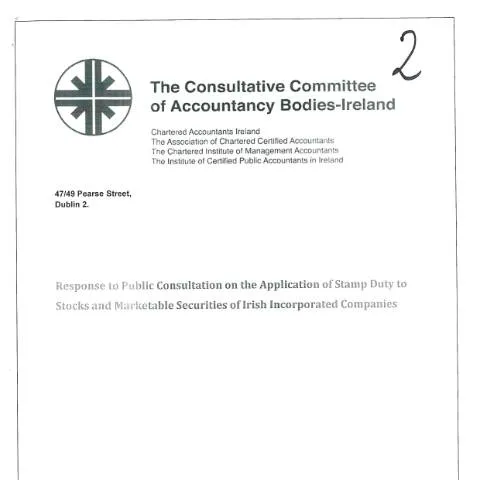
Engaging with the Department of Finance on stamp duty matters is crucial for stakeholders involved in the financial markets of Ireland. The document in question is part of a larger consultation process aimed at reviewing the application of stamp duty on stocks and marketable securities of Irish incorporated companies. As Brexit continues to influence financial policy, understanding this submission’s significance is increasingly vital.
Understanding the Context of the Submission
The submission responds to a public consultation initiated by the Consultative Committee of Accountancy Bodies — Ireland (CCAB-I). It addresses critical concerns regarding the application of stamp duty and aims to influence legislative decision-making in the context of evolving international financial landscapes.
- Why This Matters: The request for a review comes at a pivotal moment when Ireland seeks to position itself as the premier financial hub within the EU post-Brexit.
- Stakeholder Engagement: It invites input from a broad range of stakeholders, ensuring that diverse perspectives shape the outcome.
Timeline: Key Dates and Next Steps
The timeline for this public consultation is structured but requires careful navigation. Stakeholders need to be acutely aware of when to submit their responses, and what follows after submission. The process typically unfolds as follows:
- Consultation Announcement: Following the announcement, stakeholders are encouraged to prepare their responses.
- Submission Deadline: Ensure that all contributions are submitted by the specified deadline, typically a few weeks after the announcement.
- Evaluation Phase: The Department of Finance reviews submissions, often engaging in further discussions with key stakeholders.
- Policy Announcement: Following the evaluation, feedback will be incorporated into policy decisions, resulting in a public announcement of any changes.
Completing the Submission: Essential Components
When preparing to make a submission, it’s important to focus on several key components to ensure clarity and effectiveness:
- Executive Summary: Start with a concise overview of your position on the stamp duty issue.
- Impact Analysis: Discuss how the current application of stamp duty affects your sector, citing specific challenges and opportunities.
- Proposed Revisions: Clearly outline any suggested changes to the existing stamp duty framework, providing rationale based on data and market trends.
Each section should be clearly defined and supported by relevant data to reinforce your arguments.
Where to Submit and Follow-Up Protocols
After completing your submission, understanding the correct submission channels and follow-up procedures is crucial for ensuring your voice is heard:
- Submission Channels: Typically, submissions can be made through email or via a designated online platform. Ensure you check the guidelines provided in the consultation notice.
- Confirmation of Receipt: After submission, request confirmation to ensure your document was successfully received.
- Follow-Up Strategy: If you do not receive a response within the expected timeframe, consider following up with the Department of Finance using the provided contact details.
Dealing with Submission Errors and Omissions
In case of any issues with your submission—be it missing information or disagreement with the content—there are several steps to take:
- Error Identification: Review any feedback received carefully to identify specific issues raised.
- Correction Submission: If necessary, prepare a corrected submission addressing the points raised, clearly referencing your original submission.
- Engagement with Officials: Reach out directly to the contacts provided by the Department of Finance for clarification on how to proceed.
The Form’s Role in the Larger Policy Landscape
This submission is not merely an isolated document; it forms part of a broader strategy to reform taxation policy in Ireland. Its significance can be underscored through the following:
- Policy Recommendations: Your input can contribute to shaping tax policy aimed at enhancing Ireland's attractiveness for foreign investment.
- Stakeholder Collaboration: Assembled responses may influence collaborative efforts with other stakeholders to advocate for shared objectives.
Common Confusions: Distinguishing Similar Forms
It is vital to differentiate this submission from other related forms that might serve similar purposes within the Department of Finance. For instance:
| Form | Purpose | Key Differences |
|---|---|---|
| Form 11 | Individual tax returns | Targets personal income tax rather than corporate tax implications. |
| RBN1 | Business name registration | Relates to the registration of a business entity rather than tax policy. |
Being aware of these distinctions can ensure that you submit the appropriate documentation for your needs and avoid unnecessary complications.
Breaking Down the Submission Components for Clarity
To navigate the complexities of your submission effectively, let’s delve deeper into each component:
Executive Summary
Crafting an impactful executive summary is essential as it sets the tone for the rest of your submission. It should encapsulate your primary arguments in a clear, succinct manner.
Impact Analysis
The impact analysis should address key statistics and data points that illustrate the current state of the market:
- Market share of Irish companies affected by stamp duty.
- Comparative rates of stamp duty in other EU countries.
Proposed Revisions
Your proposed revisions should reflect a deep understanding of the implications of stamp duty, backed by comparative analysis:
- What changes do you advocate, and why?
- How will these changes affect investment levels in Ireland?
By thoroughly dissecting each component of the submission, you enhance your chances of effectively conveying your insights and recommendations.
Understanding Stamp Duty: A Comprehensive Overview
Stamp duty in Ireland is a tax levied on certain documents and transactions, primarily in relation to the transfer of property or shares. The taxation of stocks and marketable securities involves a specific set of regulations that must be understood by both individuals and entities operating within the Irish financial landscape. Under the Stamp Duties Consolidation Act 1999, the primary focus is on the transfer of shares in companies incorporated within Ireland. This section will break down the fundamental components of stamp duty as it applies to stocks and to the various exemptions that may be available.
Stamp duty is calculated based on the market value of the shares being transferred, and the standard rate is currently set at 1% for non-residential property and 1% for the shares of Irish companies. However, there are specific scenarios that might either enhance or reduce the burden of this tax. For example, certain types of intra-group transfers and mergers may qualify for exemptions or relief under sections of the Act. It's crucial for stakeholders, including businesses, investors, and legal advisors, to stay informed about the nuances of these regulations to ensure compliance and optimal tax management.
Moreover, the implications of stamp duty extend beyond just the financial aspect. They also play a significant role in shaping the behaviour of investors and the overall market environment. Investors must navigate these regulations carefully, as the costs associated with stamp duty can influence their strategy, particularly in high-value transactions. Understanding the full scope of stamp duty implications is essential for making informed decisions in the Irish market.
Consultation Process: Engaging Stakeholders and Gathering Insights
The review of the application of stamp duty to stocks and marketable securities is not just a technical exercise; it is fundamentally about understanding the perspectives and insights of stakeholders involved in the financial markets. The public consultation process serves as a critical avenue for gathering feedback from industry players, including investment firms, legal practitioners, and corporate entities. This involvement ensures that the review is reflective of the realities faced by those directly impacted by the regulations.
Consultation submissions typically cover a range of topics, including suggestions for legislative amendments, identification of challenges in compliance, and proposals for greater clarity in the application of current laws. Stakeholders are encouraged to provide data-driven insights, including statistical analyses and case studies, to support their positions. By engaging with the community in this manner, the authorities aim to create an informed perspective that will drive effective policy changes.
The timeline for submissions, as well as the guidelines for participation, are outlined by the Department of Finance. Submissions can be made through formal channels, ensuring that all feedback is properly documented and considered in the review process. Transparency in these consultations is essential, as it fosters trust and collaboration between the government and the public sector.
Future Implications: The Direction of Stamp Duty in Ireland
As the review progresses, it is vital to consider the future implications of any potential changes to stamp duty as it pertains to stocks and marketable securities. The financial landscape is evolving, with increasing emphasis on digital assets and innovative financial instruments. As such, the application of stamp duty may need to adapt to align with these developments. The rise of fintech solutions and the growing popularity of venture capital investment may also necessitate a reassessment of current regulations.
Investors and companies should be particularly attentive to these developments, as changes to stamp duty laws can have significant consequences for capital flows, investment strategies, and overall market dynamics. For example, if exemptions are introduced for certain types of equity financing, this could encourage more start-ups to enter the market, thus fostering economic growth and innovation.
Moreover, the global context cannot be overlooked. Ireland's position as a hub for international business means that its stamp duty framework must remain competitive with other jurisdictions. Policymakers will need to balance domestic revenue needs with the desire to attract foreign investment. Therefore, the outcomes of this consultation and review process will likely set the stage for Ireland's financial policy direction in the years to come.