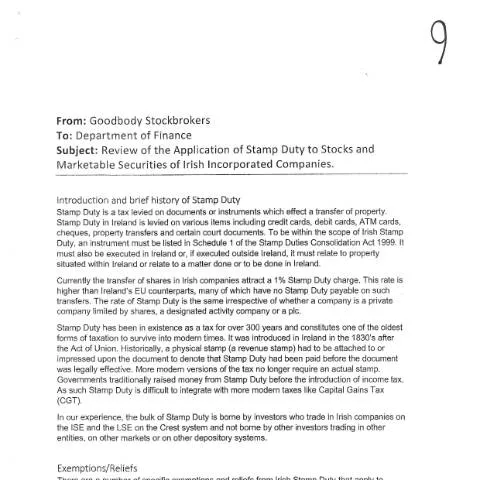
Navigating the Submission Process for Stamp Duty Consultation
The ongoing review of the application of stamp duty to stocks and marketable securities of Irish incorporated companies has significant implications for various stakeholders in the finance and investment sectors. As a key regulatory mechanism, understanding the nuances of this submission process is critical for both individuals and businesses aiming to articulate their positions effectively within this consultative framework.
Understanding the Context of Submission Number 9
Submission number 9, which delves into the implications of stamp duty as applied to stocks and securities, forms a crucial part of the dialogue between the Department of Finance and market participants. This submission not only aims to assess current practices but also strives to identify potential reforms that could enhance market efficiency and attractiveness for investors.
Given the historical context of stamp duty in Ireland—originating as a means to raise revenue over 300 years ago—it's essential to grasp how this consultation fits into a broader regulatory landscape that seeks to balance tax needs with economic competitiveness.
Key Players in the Submission Process
Submissions can be made by a variety of stakeholders, including:
- Financial institutions: Banks and investment firms heavily impacted by stamp duty regulations.
- Corporations: Companies that issue stocks and securities subject to this tax.
- Individual investors: Private shareholders affected by market dynamics and taxation.
- Advisory firms: Consultants and legal advisors who represent clients in these matters.
Each party brings a unique perspective, emphasizing the multifaceted nature of the issue at hand.
Decoding the Submission Form: Section by Section
The submission document consists of several key sections, each designed to elicit specific information and insights. Here’s a breakdown of common components:
| Section | Purpose |
|---|---|
| Introduction | Sets the stage for the rationale behind the submission and the issues at stake. |
| Exemptions | Details on existing exemptions and their implications for various stakeholders. |
| Comparative Analysis | Assessment of stamp duty practices in other jurisdictions to provide context. |
| Stakeholder Feedback | Invites qualitative insights from stakeholders directly affected by the regulations. |
| Conclusion | Summarizes key recommendations and potential reforms for consideration. |
Each section requires careful thought and attention to detail, as the insights provided will directly influence the outcomes of the consultation process.
Common Pitfalls to Avoid When Completing the Submission
When filling out the submission form, it’s essential to be aware of potential mistakes that could undermine the effectiveness of your input:
- Vagueness: Ensure that your responses are specific and backed by data or examples.
- Irrelevance: Stay focused on the issues relevant to stamp duty; stray comments may dilute your message.
- Lack of Clarity: Use straightforward language and avoid jargon unless necessary, as clarity is crucial.
By steering clear of these pitfalls, stakeholders can craft submissions that resonate more effectively with the reviewing authorities.
Submission Channels: Online vs. Paper
In today’s digital age, understanding the nuances of submission channels is crucial for stakeholders. The Department of Finance typically allows submissions through online platforms, but paper submissions remain a viable alternative. Let’s explore the differences:
| Channel | Advantages |
|---|---|
| Online Submission |
|
| Paper Submission |
|
Choosing the appropriate channel is vital to ensure that the submission process is seamless.
The Role of Supporting Documentation
When submitting your consultation response, the relevance of supporting documentation cannot be overstated. Depending on the nature of your submission, you may need to provide:
- Financial statements: To illustrate the impact of stamp duty on your business.
- Market analysis: To provide context on how the current tax regime affects market competitiveness.
- Expert opinions: From financial advisors or legal representatives to bolster your recommendations.
Compiling the right documents is a step that should not be overlooked, as they serve to substantiate your claims and recommendations effectively.
Processing Submissions: From Reception to Decision
Once the Department of Finance receives submissions, they undergo a rigorous evaluation process that typically includes:
- Initial Review: Assessing for completeness and relevance.
- Analysis: Detailed examination of the content and context of submissions.
- Stakeholder Engagement: Potential follow-ups for clarification or additional information.
- Final Recommendations: Formulating proposals based on collective insights from stakeholders.
Understanding this process can help stakeholders anticipate timelines and manage expectations regarding outcomes.
Historical Context and Regulatory Framework
The historical underpinnings of stamp duty reveal much about its current application and relevance in the Irish economy. Established in the 1830s, stamp duty has survived numerous reforms and adaptations. In this light, it is crucial to understand the foundational structures that have shaped its evolution:
- Historical taxation frameworks: A look at how earlier practices influence current approaches.
- Legislative milestones: Key acts and amendments that have impacted stamp duty regulations.
- International comparisons: Understanding how stamp duty aligns with practices in other jurisdictions.
This context not only illuminates the significance of the current consultation but also underscores the need for potential reform in a changing economic landscape.
Future Implications of the Consultation Outcome
The results of this consultation will resonate far beyond the immediate stakeholders involved. Potential reforms could alter the landscape for:
- Market competitiveness: How Irish companies position themselves relative to their international counterparts.
- Attraction of foreign investment: The potential to enhance or dissuade international investors.
- Regulatory practices: The evolution of tax-related policies as they adapt to market realities.
Stakeholders must remain vigilant and engaged as these discussions unfold, as the outcomes will have lasting ramifications on the financial landscape in Ireland.
Understanding Stamp Duty in the Context of Irish Companies
Stamp duty is a tax levied on documents that transfer ownership or rights in property or shares. In the context of Irish incorporated companies, it is essential to understand how stamp duty applies to stocks and marketable securities. The key legislation governing this area is the Stamp Duties Consolidation Act 1999, which outlines the circumstances under which stamp duty is applicable.
In the case of Irish companies, stamp duty is generally charged at a rate of 1% on the market value of the shares being transferred. This applies to both the purchase of shares in a company and the transfer of shares between parties. Understanding the nuances of these transactions is crucial for shareholders and potential investors, as exemptions and reliefs can significantly affect the financial implications of a transaction.
It is also important to mention that certain types of transactions may be exempt from stamp duty. For instance, transfers of shares between spouses or civil partners may qualify for relief under specific conditions, thereby allowing parties to avoid the tax burden. Knowing these exemptions is vital for any shareholder or investor navigating the complex legal landscape surrounding share transfers.
The Role of Consultation in Reviewing Stamp Duty Application
The review of the application of stamp duty to stocks and marketable securities is not merely an administrative exercise; it is an opportunity for stakeholders to engage in meaningful dialogue with regulatory authorities. The consultation process allows businesses, investors, and legal practitioners to voice their concerns, propose changes, and provide insights based on their experiences with the taxation system.
Submissions to this consultation can include recommendations for simplifying the stamp duty framework, addressing specific cases where the current system may create disincentives for investment, or proposing new exemptions that could enhance the attractiveness of Irish markets for both domestic and international investors.
In previous consultations, stakeholders have often raised issues regarding the administrative burden associated with compliance, particularly for small to medium enterprises (SMEs). Feedback regarding the complexity of filing requirements and the associated costs can lead to significant changes in policy, showcasing the importance of participating in consultations like this one. Businesses should prepare to provide concrete examples of the challenges faced and articulate how proposed changes could benefit the wider economy.
Future Implications of Stamp Duty Changes on Investment Trends
As the Irish economy continues to evolve, the implications of any changes in stamp duty legislation on investment trends cannot be ignored. Stakeholders must consider how adjustments to the stamp duty framework might influence investor behavior, particularly in light of the increasing competition from other jurisdictions seeking to attract foreign direct investment.
For example, if stamp duty rates were to be lowered or exemptions broadened, it could potentially lead to an uptick in investment in Irish incorporated companies. Investors often weigh the cost of taxation against the potential return on investment; thus, a more favorable stamp duty regime could make Ireland a more attractive destination for capital.
Furthermore, it is crucial to engage in comparative analyses with other countries that have similar tax structures. By understanding the impact of stamp duty adjustments in those jurisdictions, policymakers can make more informed decisions that align with global best practices while ensuring that the needs of the Irish economy are met.
Ultimately, the review of stamp duty application is more than just an exercise in taxation; it is a pivotal moment that could shape the future of investment in Ireland. Stakeholders must remain vigilant and proactive in providing feedback during the consultation process to ensure that any reforms yield meaningful benefits for the economy and its participants.