Understanding the Capital Acquisitions Tax Valuation of Unquoted Shares in Ireland
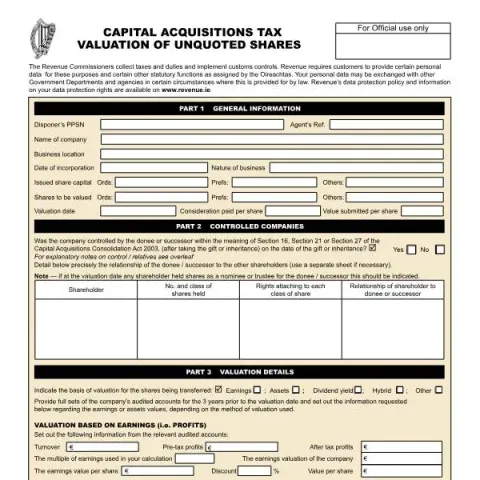
The Revenue Commissioners in Ireland require individuals and companies to complete the Form Q7 when valuing unquoted shares for Capital Acquisitions Tax (CAT) purposes. This official form is essential for accurately determining the market value of shares transferred through gifts or inheritances, especially when these shares are not publicly traded. Proper completion of this form ensures compliance with Irish tax legislation and facilitates the correct assessment of tax liabilities.
When to Use Form Q7
This form should be submitted when transferring unquoted shares that are subject to CAT, particularly in cases of inheritance or gift. It is used to establish the fair market value of the shares at the date of transfer, which is crucial for calculating the applicable tax. If you are involved in such a transfer, completing Form Q7 accurately is a necessary step to comply with Revenue’s requirements and to avoid potential penalties or surcharges for undervaluation.
Key Sections of the Form and Required Information
Form Q7 is divided into several parts, each requesting specific details about the shares, the company, and the valuation method used:
Part 1: General Information
- Agent’s Reference: Internal reference number for your records.
- Disponer’s PPSN: Personal Public Service Number of the transferor.
- Company Details: Name, location, date of incorporation, and nature of business.
- Share Capital: Details of issued shares, including ordinary, preference, and other classes.
- Shares to be Valued: Number and type of shares involved in the transfer.
- Valuation Date: The date on which the valuation is based.
- Consideration Paid Per Share: Price paid for each share, if applicable.
Part 2: Valuation Details and Control
This section requires details about the valuation basis, whether based on earnings, assets, or dividend yield. Additionally, it asks whether the company is controlled by the donee or successor, as control influences valuation methods and thresholds.
Part 3: Valuation Methodology
Depending on the chosen method, you must provide detailed financial data:
- Based on Earnings: Turnover, profits, and earnings multiples from audited accounts of the last three years.
- Based on Assets: Market value of property and investments, net assets, and adjustments for market value substitutions.
- Based on Dividend Yield: Details on dividend calculations if this method is used.
Supporting documentation such as audited accounts is mandatory to substantiate the valuation.
Part 4: Prior Sales of Shares
Provide details of any previous share transactions within the past three years, including the number of shares sold, sale price, and relationship between the parties involved. This information helps establish market comparables and valuation accuracy.
Part 5: Certification
The form must be signed by an accountable person or agent, certifying that the information provided is complete and that the valuation reflects the full market value of the shares transferred.
Important Considerations and Compliance Tips
When completing Form Q7, accuracy is paramount. Understating the value of shares can result in surcharges under Section 53 of the Capital Acquisitions Consolidation Act, 2003. Conversely, overvaluation could lead to unnecessary tax liabilities. Providing comprehensive supporting documentation, such as audited accounts and detailed valuation calculations, is essential to substantiate your submission.
Fill in your form directly online
No printing: type your details into the boxes of the official form, tick, then download the PDF ready to send.
- 1Type into the form boxes
- 2Tick in one click
- 3Save and download the PDF
It is also important to note that the valuation provided for CAT purposes may differ from valuations for other Revenue purposes, such as corporate tax or accounting. Therefore, clarity and transparency in your valuation approach are vital.
Submission and Follow-Up
Once completed, Form Q7 should be submitted to the Revenue Commissioners as part of the inheritance or gift tax process. Keep copies of all supporting documents and correspondence for your records. The Revenue may request additional information or clarification, so maintaining detailed and accurate records will facilitate smooth processing.
In summary, Form Q7 is a critical document for Irish taxpayers involved in transferring unquoted shares. Proper understanding of its sections and diligent preparation ensure compliance with tax laws and accurate valuation of shares for Capital Acquisitions Tax purposes.