Understanding the C.A.12 Application for a Certificate of Discharge from Capital Acquisitions Tax in Ireland
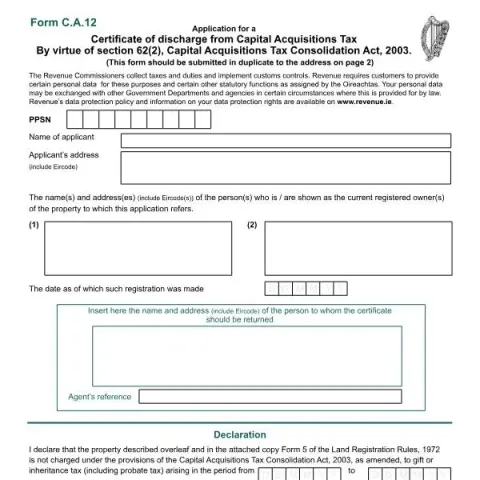
The Form C.A.12 is an official document issued by the Revenue Commissioners of Ireland, designed for individuals seeking a certificate of discharge from Capital Acquisitions Tax (CAT). This form is essential for confirming that a property or asset has not been subject to gift or inheritance tax during a specified period, or that any such tax liabilities have been fully settled. It serves as a vital step in property registration and ensuring compliance with Irish tax law under the Capital Acquisitions Tax Consolidation Act, 2003.
Purpose and Scope of the Form
The primary objective of the C.A.12 application is to obtain a formal certificate confirming that the property in question was not charged with gift or inheritance tax during a particular period. This certificate is often required when registering property under the Land Registration Rules, 1972, especially when ownership is transferred based on possession rather than a traditional sale. The certificate provides legal reassurance to the Land Registry that no outstanding tax liabilities exist, thus facilitating the registration process.
Preparing Your Application
Gathering Necessary Information
- Personal Details: You must provide your Personal Public Service Number (PPSN), full name, and complete address, including the Eircode.
- Property Details: Include the current registered owner’s name and address, the property's folio number (if registered), and a clear description of the property, such as town, street, and county.
- Relevant Dates: Specify the date of registration of the property ownership and the period during which you believe no gift or inheritance tax was charged.
- Recipient Details: Indicate the name and address of the person to whom the certificate should be sent.
Declaration and Signature
Applicants must declare that the property was not charged under CAT during the specified period, from the date of registration to the current application date. The declaration must be signed by the applicant or their agent, with the date clearly indicated.
Submitting the Application
The completed form must be submitted in duplicate to the address provided on page 2 of the form. Submission can be made by post, and it is advisable to keep copies of the application for your records. The Revenue Commissioners will process the application, and if all information is accurate and complete, they will issue a certificate confirming the discharge status of the property concerning gift or inheritance tax.
Processing and Issuance of the Certificate
Once received, the certificate will specify whether the property did not become charged with gift or inheritance tax during the relevant period or if any such charges have been discharged. This certificate is crucial for legal and administrative purposes, especially in property registration and estate management.
Important Considerations
- Legal Context: The legislation governing this process is set out in the Capital Acquisitions Tax Consolidation Act, 2003.
- Data Privacy: The Revenue Commissioners handle your personal data in accordance with their data protection policy, which is accessible on their website.
- Timing: Ensure that the dates provided are accurate, as incorrect information can delay processing or invalidate the certificate.
Contact and Support
If you have questions or require assistance with your application, you can contact the Revenue Commissioners Capital Acquisitions Tax Department at their Dublin address or by phone. It is recommended to consult the official guidance and ensure all required documentation is complete before submission to avoid delays.
Fill in your form directly online
No printing: type your details into the boxes of the official form, tick, then download the PDF ready to send.
- 1Type into the form boxes
- 2Tick in one click
- 3Save and download the PDF
In summary, the C.A.12 application is a critical procedural step for property owners and legal representatives in Ireland to confirm the absence of tax charges related to gifts or inheritances during a specified period, thereby facilitating property registration and estate management.