Engaging Parents in the Safe School Initiative
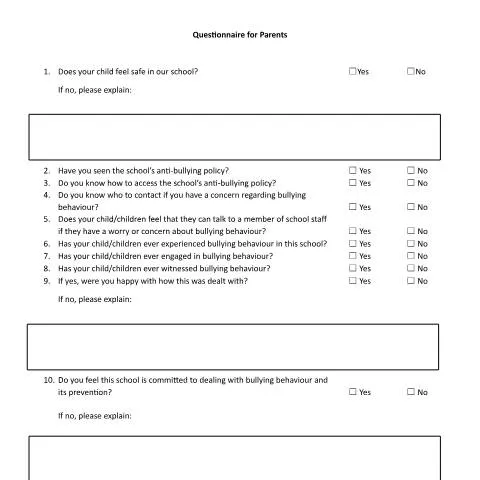
In the evolving landscape of education, parental engagement holds significant importance in fostering a safe and supportive environment for children. One of the key tools implemented by the Department of Education in Ireland is the Resources to Support Engagement with School Staff — Parent Questionnaire. This document serves as a crucial mechanism for gathering insights and feedback from parents regarding their children's experiences at school, especially related to bullying and safety concerns.
Understanding the Stakeholders: Who Should Participate?
This questionnaire is tailored for parents or guardians of students currently enrolled in an Irish primary or secondary school. However, the nuances of parental involvement vary significantly:
- Parents of Young Children: Those with children in early education may focus primarily on basic safety and emotional well-being.
- Parents of Adolescents: Typically concerned with more complex issues like peer pressure and bullying, these parents may have different expectations from the school environment.
- International Families: Parents from abroad may face unique challenges in understanding local educational policies and how to address concerns within the Irish context.
The Role of the Questionnaire in Addressing Bullying
Bullying is a pivotal issue addressed by the questionnaire, which features targeted questions aimed at identifying the prevalence and handling of bullying within the school community. Here’s a brief overview of the questionnaire structure:
- Safety perceptions in the school environment.
- Awareness and accessibility of the anti-bullying policy.
- Communication channels for reporting concerns.
- Personal experiences of parents regarding their children’s bullying incidents.
By gathering this data, schools can effectively evaluate their policies and adjust their strategies to enhance student safety and well-being.
Decoding the Questionnaire: Key Sections and Insights
Each question within the questionnaire holds particular significance and reveals critical insights into the school climate:
- Question 1: Asks if children feel safe, directly addressing the school's environment.
- Questions 2 & 3: Gauge parents' awareness of the school's anti-bullying policy.
- Questions 6-8: Explore both victim and bystander experiences, crucial for comprehensive policy evaluation.
Furthermore, open-ended questions allow parents to elaborate on their views, providing qualitative data that can inform policy revisions.
Step-by-Step: Completing and Submitting the Questionnaire
Parents are encouraged to complete the questionnaire thoughtfully. Here’s a chronological breakdown of the process:
- Accessing the Questionnaire: Parents should receive this document directly from the school or via the school's online portal.
- Filling Out the Questionnaire: Each question should be answered as accurately as possible. If a question does not apply, it's important to indicate that for clarity.
- Submission Methods: Parents can typically submit the questionnaire in one of the following ways:
- Online Submission: Many schools offer a digital format through their official websites.
- Paper Submission: Completed paper copies can be returned directly to the school office.
- In-Person Submission: Parents might also choose to discuss their responses with school staff during designated parent-teacher meetings.
It is crucial to adhere to submission deadlines, which are usually communicated alongside the questionnaire, to ensure that parents' feedback is considered in a timely manner.
What Happens After Submission? The Follow-Up Process
Once submitted, the data collected from the questionnaire undergoes thorough analysis:
- Data Compilation: School officials compile responses to identify trends and areas needing improvement or intervention.
- Feedback Mechanism: Parents can expect to receive updates about changes or initiatives being implemented as a result of their feedback.
- Ongoing Communication: Schools often hold meetings to discuss findings and plan future actions, ensuring that parental voices remain integral to the school’s approach to safety and anti-bullying measures.
Impact of Involvement: Benefits to the School Community
Engaging in this questionnaire not only empowers parents but also significantly benefits the school community:
- Enhanced Safety Protocols: Feedback directly influences the refinement of policies aimed at fostering a secure environment for students.
- Stronger School-Home Connections: Active participation nurtures a collaborative relationship between parents and educators, ensuring that all parties are aligned in their commitment to student welfare.
- Informed Decision Making: Schools can make well-rounded decisions based on comprehensive feedback from the community, leading to a more responsive educational environment.
Addressing Special Circumstances: Inclusivity in the Engagement Process
Certain families may face unique challenges that necessitate tailored approaches to engagement:
- Non-English Speakers: Schools should provide translations of the questionnaire to accommodate parents who may not be fluent in English, ensuring their voices are heard.
- Parents with Disabilities: Considerations such as accessibility to physical forms or digital platforms must be prioritized to ensure all parents can participate.
- Adoptive and Foster Families: Tailoring questions to understand the specific concerns of these families can provide valuable insights into unique experiences and needs.
Looking Forward: The Future of Parental Engagement in Irish Schools
As educational frameworks evolve, the role of parental feedback becomes increasingly vital. The Department of Education is focusing on continuous improvement and innovation within the engagement processes. With ongoing collaboration and enhanced communication channels, the future promises to create safer, more inclusive environments for all students.
In sum, the Resources to Support Engagement with School Staff — Parent Questionnaire is not merely a form; it is a conduit for dialogue and action. By participating, parents play a pivotal role in ensuring that their children's educational experience is both positive and constructive.
Understanding the Importance of Parent Questionnaires in Irish Schools
Parent questionnaires serve as a crucial tool for enhancing communication between schools and families in Ireland. They provide an avenue for parents to express their thoughts on various aspects of school life, from academic performance to social environment. Understanding the rationale behind these questionnaires can empower parents to engage more effectively with school staff.
Fill in your form directly online
No printing: type your details into the boxes of the official form, tick, then download the PDF ready to send.
- 1Type into the form boxes
- 2Tick in one click
- 3Save and download the PDF
In the context of the Irish education system, which emphasizes inclusivity and community involvement, feedback from parents is invaluable. Schools often use these questionnaires to assess parents' perspectives on teaching methodologies, student welfare, and overall school policies. This feedback can guide school leaders in making informed decisions that benefit both students and the wider school community.
Moreover, the responses gathered can be instrumental in identifying areas where additional support is needed. For example, if a significant number of parents express concerns about the availability of extracurricular activities, the school can explore options to enhance its offerings accordingly. Thus, participating in these questionnaires not only enhances the relationship between parents and school staff but also contributes directly to the improvement of the school environment.
Designing Effective Parent Questionnaires
The effectiveness of a parent questionnaire lies in its design. A well-structured questionnaire should encourage honest and constructive feedback. Here are several considerations for schools in Ireland when designing these tools:
- Clarity and Simplicity: Questions should be straightforward and jargon-free to ensure all parents can understand them. Avoiding complex language helps elicit genuine responses.
- Open-ended Questions: Including open-ended questions allows parents to share their thoughts in their own words. This can provide insights that closed questions may not capture.
- Focus on Specific Aspects: Questions should be targeted towards specific aspects of the school experience, such as communication effectiveness, support services, or educational resources. This focused approach helps gather actionable data.
- Frequency of Administration: Consider how often these questionnaires should be deployed. Regular feedback (e.g., once a term) can help track progress over time and adjust strategies as necessary.
In addition, schools should ensure that they communicate the purpose of the questionnaire to parents. Explaining how the data will be used can motivate parents to participate, knowing their feedback can lead to tangible changes. Schools might also consider providing a brief overview of past responses and how they influenced school improvements, reinforcing the importance of parental input.
Leveraging Technology for Effective Engagement
In today’s digital age, leveraging technology can significantly enhance the engagement between schools and parents in Ireland. Utilizing online platforms for administering questionnaires not only streamlines the process but also increases accessibility. Here are some technological solutions schools can adopt:
- Online Survey Tools: Various platforms allow schools to create customizable surveys that can be easily distributed via email or school portals. These tools often provide analytics features that simplify data collection and interpretation.
- Mobile Accessibility: With many parents using smartphones, ensuring that questionnaires are mobile-friendly can encourage higher response rates. This may include optimizing forms for mobile devices or utilizing messaging apps for quick surveys.
- Secure Data Handling: Ensuring that data privacy is maintained is paramount. Schools should use secure platforms that comply with the Data Protection Act 2018 and the General Data Protection Regulation (GDPR) to protect parents' information.
- Feedback Mechanisms: After collecting responses, schools can utilize technology to communicate outcomes and actions taken based on the feedback received. This could include newsletters, social media updates, or dedicated sections on school websites.
By embracing technology, schools can not only foster a culture of continuous improvement but also demonstrate a commitment to valuing the input of parents. This can also pave the way for future collaboration on important educational initiatives.