Navigating the Implications of Brexit on Forestry Imports and Exports
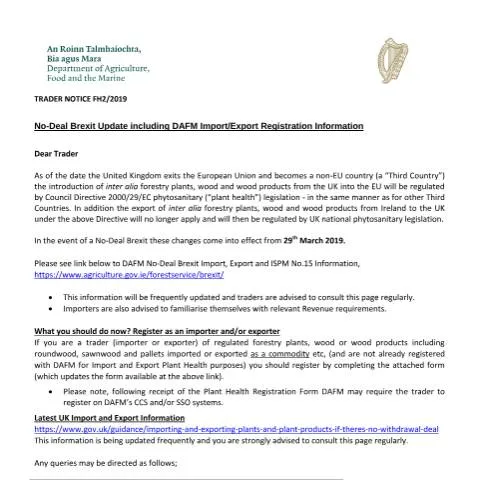
The landscape of trading forestry plants, wood, and wood products has undergone a significant transformation in light of the United Kingdom's exit from the European Union. For traders involved in the import and export of these commodities, understanding the nuances of the Forest Service - Brexit Information (FH22019) document is crucial. This communication from the Department of Agriculture, Food and the Marine (DAFM) outlines essential updates that impact the process of registering as an importer or exporter of regulated forestry products.
Understanding Your Regulatory Obligations Post-Brexit
As of March 29, 2019, with the UK's status changing to that of a "Third Country," the importation of forestry plants, wood, and wood products from the UK into the EU is now governed by Council Directive 2000/29/EC. This legislation aligns the treatment of UK commodities with those from other non-EU countries. Conversely, any exports of forestry products from Ireland to the UK are now subject to UK national phytosanitary legislation.
The New Regulatory Framework
This shift mandates that traders engage with both EU and UK regulations when transporting forestry goods. This change is not merely a technicality; it represents a comprehensive restructuring of compliance requirements that traders must navigate effectively.
Who Should Act?
If you are a trader involved in the import or export of regulated forestry products—such as roundwood, sawnwood, or pallets—you must ensure you are registered with DAFM for plant health purposes. The FH22019 document states clearly that if you are not already registered, you must complete the designated Plant Health Registration Form, which is updated in the context of Brexit.
Completing the Plant Health Registration Form
Filling out the Plant Health Registration Form is an essential step in demonstrating compliance with the new regulatory environment. Here’s how to approach this task:
Key Information Required
- Trader Identification: Provide your full legal name and address, along with your PPSN (Personal Public Service Number), which acts as your primary identifier in Irish legislation.
- Email and Contact Information: Include a valid email address and phone number to ensure communication with DAFM can occur seamlessly.
- Type of Commodities: Clearly indicate the types of forestry plants and wood products you are planning to import or export.
- Intended Use: Outline the intended use of these products to help DAFM assess your application accurately.
Submission Process and What to Expect
Once the registration form is completed, it is crucial to submit it to the DAFM promptly. After submission, you may need to engage with DAFM’s CCS (Compliance Control System) and SSO (Single Sign-On) systems. Here’s what a trader can anticipate post-submission:
Potential Follow-Up Requirements
DAFM may reach out for additional information or clarification on your application. Being prepared for this eventuality can expedite the registration process. If you have not received a response within the expected timeframe, proactive follow-up can be helpful. You can contact DAFM using the following channels:
- For Imports/Exports Queries: [email protected]
- For ISPM No.15 Specific Queries: [email protected]
The Importance of Staying Informed
Given the ongoing updates regarding Brexit, it is essential for traders to stay informed about changes in regulations. The DAFM regularly updates its information page to reflect any alterations in the rules governing imports and exports. Regular consultation of this page can be advantageous for maintaining compliance.
UK Requirements for Trade
For those exporting from Ireland to the UK, familiarizing yourself with the requirements set by the UK government is equally important. The UK has established its own phytosanitary regulations, which must be adhered to for successful trade. This includes understanding specific UK import requirements, which are frequently detailed on the UK government’s guidance page.
Consequences of Non-Compliance
Failing to comply with these regulations can have serious repercussions for traders. Non-registered traders face penalties including but not limited to:
- Delays in shipments due to non-compliance checks.
- Potential fines imposed by regulatory authorities.
- Revocation of trading privileges or licenses.
Particular Cases: Special Considerations for Non-Irish Traders
Non-Irish traders wishing to engage in imports and exports of forestry products must be aware of additional complexities. They must establish a registered presence or representative within Ireland to facilitate compliance with DAFM regulations. This can include:
Establishing Representation
- Appoint a registered agent in Ireland who can act on your behalf.
- Provide documentation proving the authority of this agent to handle registrations and compliance.
- Ensure your representative is well-acquainted with both EU and UK regulations affecting your trading activities.
Special Cases Involving Urgency
For traders facing urgent deadlines, navigating the new regulations can be particularly challenging. In such cases, it may be beneficial to consult with a legal expert or compliance advisor who specializes in Irish and EU trade regulations. These professionals can aid in expediting the registration process and ensuring that all necessary documentation is in order.
Guidance for Time-Sensitive Situations
- Prioritize the completion of the Plant Health Registration Form and any supplementary paperwork.
- Utilize expedited communication channels with DAFM to clarify any uncertainties.
- Consider attending workshops or information sessions hosted by DAFM to gain insights on navigating urgent compliance issues.
Keeping Track of Your Application
Once you have submitted your registration form, tracking the status of your application can help mitigate any potential delays. DAFM may provide you with a reference number upon submission, which can be used to inquire about your application’s progress.
Effective Communication with DAFM
Maintaining open lines of communication is essential. If you experience delays in receiving a response, do not hesitate to contact DAFM to check on the status of your application. Always ensure to reference your application number for quicker resolution.
Conclusion: The Road Ahead for Traders
As Ireland navigates the post-Brexit landscape, understanding the implications of documents like FH22019 is vital for any trader involved in the forestry sector. By ensuring compliance with registration requirements, staying informed about ongoing regulatory changes, and actively engaging with DAFM, traders can successfully adapt to the new trading environment. The pathway to successful trading lies in preparedness and ongoing education about the evolving landscape of import and export regulations.
Understanding the Implications of Brexit on Forest Management
Brexit has introduced a slew of changes affecting various sectors, including forestry and timber management in Ireland. The Forest Service under the Department of Agriculture, Food and the Marine (DAFM) plays a crucial role in overseeing these changes. One of the more pressing concerns for stakeholders is the import and export regulations that now differ from those prior to Brexit.
Previously simple transactions with the UK now face additional paperwork, customs declarations, and potential tariffs. For example, if you are importing timber from the UK, you must be aware of the new phytosanitary requirements that necessitate a Plant Passport or equivalent documentation. This is essential to ensure that the imported products meet EU health standards, which have become more stringent in light of Brexit.
Moreover, forest owners and management companies must familiarize themselves with the updated market arrangements and the potential impact on trade relationships. Engaging with the DAFM to stay updated on licensing and registration requirements is vital. Those looking to export forestry products to the UK must navigate new systems, including the Import Control System (ICS) and ensure compliance with specific regulations outlined in the Brexit transition guidance.
It's advisable for all stakeholders to regularly consult the DAFM's dedicated Brexit webpage and newsletters for the latest updates. Participating in workshops or webinars hosted by the Forest Service can also enhance understanding and prepare the sector for these changes effectively.
Forest Certification Schemes in a Post-Brexit Landscape
In the wake of Brexit, forest certification schemes have gained renewed focus for forest owners and operators in Ireland. Certification can help ensure that timber products are sustainably sourced, which is increasingly important in today's eco-conscious market. The main certification schemes prevalent in Ireland include the Forest Stewardship Council (FSC) and the Programme for the Endorsement of Forest Certification (PEFC).
These certifications are not only pertinent for market access but also for compliance with both EU regulations and UK standards. Following Brexit, UK timber suppliers are increasingly looking for certified sources to guarantee sustainability and legality. Therefore, forest owners and producers in Ireland are encouraged to pursue certification as a means of ensuring their products remain competitive in both the EU and UK markets.
The process of obtaining certification involves thorough documentation and an understanding of the standards set by the respective bodies. This may include aspects such as maintaining biodiversity, ensuring proper management of forest resources, and fulfilling social responsibilities. It's worth noting that while certification can incur upfront costs, it can significantly enhance marketability and open doors to lucrative contracts both domestically and internationally.
To navigate the certification process effectively, stakeholders should consider engaging with certification bodies or consultants who can provide tailored advice and support. Continuous education on forest management practices and certification standards is also paramount, as these can evolve with changing regulations and market dynamics.
Practical Steps for Compliance with New Import/Export Regulations
Navigating the new import and export regulations resulting from Brexit is crucial for anyone involved in the forestry sector. Here are some practical steps to ensure compliance with the latest rules and maintain smooth operations.
Register with the DAFM: If you are involved in the import or export of timber or forestry products, it is imperative to register with the DAFM. This registration involves submitting required documentation and obtaining relevant licenses. The online portal for registration can be accessed via the DAFM website.
Obtain Necessary Certifications: Depending on the type of products you are trading, you'll need to secure the appropriate phytosanitary certifications. Ensure that you are familiar with the specific requirements for the products you import or export, which may involve inspections or treatments mandated by the DAFM.
Update Your Documentation: Adjust your trading documentation to reflect the new customs and import regulations. For example, customs declarations will now require detailed descriptions of the goods, including their origin, classification, and value, thus necessitating a change in how transactions are documented.
Stay Informed and Engaged: Regularly check the DAFM’s Brexit updates and engage with industry bodies or trade associations. They often provide invaluable insights into compliance challenges and can offer guidance on best practices within the new regulatory framework.
Plan for Delays: With the introduction of new customs procedures, delays are likely. Businesses should factor this into their supply chain management and client expectations. Implementing buffer periods for deliveries can help mitigate issues caused by potential customs holdups.
By proactively addressing these areas, businesses can better position themselves in an evolving market landscape, ensuring compliance while fostering growth and sustainability within the forestry sector.