Understanding the Importance of the ENF in Animal Feed Exports
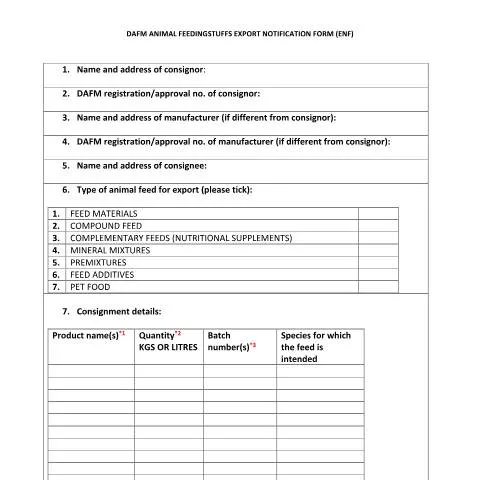
In the ever-evolving landscape of international trade, especially in the context of Brexit, navigating the complexities of export regulations is paramount for Irish producers. The DAFM Animal Feedingstuffs Export Notification Form (ENF) plays a crucial role in ensuring compliance with both EU and international regulations. This document is not merely a formality; it serves as a vital communication tool between exporters and the Department of Agriculture, Food and the Marine (DAFM). Filling out this form correctly can significantly influence the speed and success of your export operations.
Who Must Submit the ENF?
The responsibility of submitting the ENF lies primarily with the consignor, which is typically the person or entity exporting the animal feed. However, several scenarios dictate who needs to fill out and submit this form:
- Consignor: If you are directly involved in the export of feed materials, you must complete the ENF.
- Manufacturer: Should the manufacturer differ from the consignor, they too may be required to provide information, particularly their DAFM registration number.
- Consignee: If the consignee resides outside of Ireland, providing accurate details is essential for customs clearance.
Each stakeholder's compliance with the ENF requirements is crucial to avoid disruptions in trade, ensuring that the export proceeds smoothly without legal or regulatory hindrances.
The ENF: A Key Step in the Export Process
Filling out the ENF is where the export journey begins. This form includes several sections that require detailed information about the consignor, consignee, and the feed products being exported. Here's what exporters need to prepare:
Required Information Breakdown
- Consignor Information: Name, address, and DAFM registration number.
- Manufacturer Details: If applicable, you must provide information about the manufacturer, along with their registration number.
- Consignment Details: This section requires specifics about the type of animal feed, quantities, and batch numbers.
Understanding each component of the ENF is crucial. For instance, the type of feed can affect the kind of certification you will need for your export, which is also specified within the form.
Timeline for Submission: Key Dates to Remember
Exporters must understand the timeline associated with the ENF to avoid delays in their shipping process. Here’s what to consider:
Important Dates
| Event | Timeline |
|---|---|
| ENF Submission Deadline | At least 5 working days before the export date. |
| Response from DAFM | Typically within 3 working days after submission. |
| Certification Issuance | Immediately upon approval, but may vary. |
By adhering to these timelines, exporters can ensure they receive all necessary certifications and approvals before engaging in international shipping, avoiding costly delays.
Channels for Submission: Online vs Paper
Submitting the ENF can be done through various channels, each with its own advantages and drawbacks:
Submission Methods
- Online Submission: Completing the ENF online and emailing it to [email protected] is the most efficient method. This reduces the risk of errors and ensures quicker processing times.
- Paper Submission: While not recommended due to slower processing, paper submissions must be sent directly to the relevant DAFM office. Use registered mail to ensure delivery.
- In-Person Submission: For urgent cases, particularly when additional verification is needed, visiting a DAFM office may facilitate immediate feedback.
Choosing the correct submission method is vital, as each can impact the lead time for receiving necessary certifications.
Handling Issues: What If Something Goes Wrong?
Even with careful preparation, issues may arise during the export process. Understanding how to handle potential problems can save time and resources:
Common Issues and Resolutions
- Incomplete Forms: If the ENF is submitted but lacks necessary information, DAFM will reach out for clarifications. Ensure you respond promptly to prevent delays.
- Certification Denial: Should your certification be denied, consult with DAFM to understand the reasons. Rectifying the issues will often involve resubmitting the ENF with additional documentation.
- Missing Documents: If certain documents are missing, such as batch production records, the DAFM may require these before proceeding. Always keep copies of all required documentation to facilitate resubmission.
Awareness of common pitfalls and having a proactive approach to resolve issues can significantly smoothen the export process.
Final Steps: After the ENF Submission
Once the ENF is submitted and approvals are received, there are still important steps to consider to ensure compliance throughout the export process:
Post-Submission Checklist
- Review Documentation: Double-check that all accompanying documentation is in order, including health certificates and other relevant certificates.
- Keep Communication Open: Stay in contact with DAFM for any updates regarding your export. This includes any potential changes to regulations that may affect your shipment.
- Document Everything: Maintain thorough records of all communications and submissions related to the ENF for future reference and compliance audits.
By diligently following up on the ENF process, exporters can mitigate risks associated with international trade.
Enhancing Compliance: Best Practices for Using the ENF
Successful navigation of the ENF process requires a strategic approach. Here are some best practices that can enhance compliance for animal feed exporters:
Practical Recommendations
- Stay Updated: Regularly review updates from DAFM regarding changes in regulations and requirements for animal feed.
- Engage with Industry Networks: Joining industry associations can provide valuable insights and support from peers who have navigated similar processes.
- Utilize Checklists: Create a pre-export checklist to ensure all necessary forms, certifications, and documentation are prepared well in advance.
By incorporating these best practices into your operations, you can achieve a streamlined export process that minimizes risks and enhances compliance.
Understanding the Impact of Brexit on Irish Trade
Brexit has brought about significant changes in the landscape of international trade for Ireland, given its geographic and economic ties with the United Kingdom. As a member of the European Union, Ireland enjoyed seamless trade relations with the UK, but the departure of the UK from the EU on January 31, 2020, has introduced new complexities to this relationship.
The Trade and Cooperation Agreement (TCA), effective from January 1, 2021, facilitated tariff-free and quota-free trade in goods between the EU and the UK. However, businesses must now navigate new customs checks, documentation requirements, and regulatory barriers. For example, companies exporting goods from Ireland to the UK must now submit a customs declaration, which can be done through a customs agent or via the Customs Division of the Revenue Commissioners, depending on the complexity of the trade.
To prepare for the post-Brexit environment, Irish exporters are encouraged to familiarize themselves with the UK Global Tariff and ensure compliance with any new sanitary and phytosanitary measures that may apply to agri-food products. Additionally, businesses should consider securing a UK Economic Operator Registration and Identification (EORI) number to facilitate smooth customs operations.
Companies must also consider the potential impact of regulatory divergence over time, as the UK may choose to amend its regulations independently of EU standards. This divergence could affect various sectors, particularly in areas such as pharmaceuticals, agriculture, and financial services. Therefore, it is crucial for businesses engaged in trade to stay informed about regulatory updates from both the EU and UK authorities.
Exporting Opportunities and Challenges Post-Brexit
With the changing dynamics brought about by Brexit, new opportunities and challenges have emerged for Irish exporters. While some sectors face increased barriers, others may find new markets opening up as they adapt to the evolving trade landscape.
For instance, the technology and digital sectors may benefit from reduced competition in certain niches as UK companies realign their focus post-Brexit. Irish tech firms can leverage this shift by positioning themselves as key partners in both the EU and UK markets. Additionally, the EU's ongoing commitment to sustainable trade practices presents opportunities for Irish exporters in the renewable energy and green technologies sectors.
However, Irish exporters must also contend with the increased complexity of logistics and supply chains. With customs checks now mandated for goods moving between Ireland and the UK, businesses should invest in robust supply chain management systems and explore alternative routes, such as direct shipping to continental Europe, to mitigate delays and costs associated with customs processing.
Trade missions and government support initiatives are also important resources for Irish businesses looking to expand their exports in a post-Brexit environment. The Department of Enterprise, Trade and Employment, along with Enterprise Ireland, provides various supports, including financial assistance, market research, and networking opportunities to help Irish companies navigate new markets effectively.
Regulatory Compliance and Documentation for International Trade
Navigating the documentation and regulatory compliance landscape is critical for Irish businesses engaging in international trade, especially post-Brexit. One of the most significant changes is the requirement for customs declarations for goods moving between Ireland and the UK. This includes submitting the correct documentation to Revenue, which may include commercial invoices, packing lists, and any required certificates or licenses.
Moreover, businesses should be aware of the importance of accurate product classification and valuation for customs purposes. Goods must be correctly categorized under the correct tariff codes to avoid penalties or delays. This requires a strong understanding of the Combined Nomenclature and the relevant EU customs regulations.
In addition, businesses exporting certain controlled goods may need to secure export licenses from the relevant authorities, such as the Department of Business, Enterprise, and Innovation. The regulations governing the export of dual-use items, military goods, and certain technologies are particularly stringent and require thorough due diligence.
Moreover, businesses should keep abreast of the rules surrounding Intellectual Property (IP) rights, which can become more complex in a post-Brexit context. The European Union's IP frameworks may differ from those of the UK, necessitating a review of IP registrations and protections. Irish businesses may benefit from consulting with IP experts to ensure they are adequately protected across both jurisdictions.