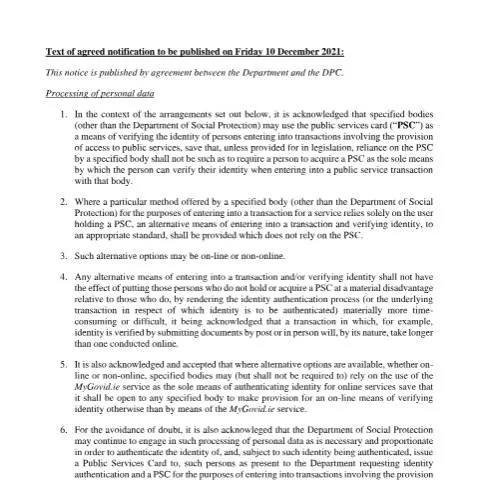
Understanding the Agreement Between the Department of Social Protection and the Data Protection Commission
The Agreement between the Department of Social Protection (DSP) and the Data Protection Commission (DPC) represents a crucial framework for the handling of personal data in Ireland. Signed with the intent to enhance privacy and data security, this document outlines the obligations of the DSP regarding the processing of personal data, particularly in relation to the Public Services Card (PSC). This agreement is not just a bureaucratic necessity; it is pivotal in the evolving landscape of data protection and individual rights in Ireland.
The Genesis of the Agreement: Regulatory Context and Historical Background
The framework for this agreement is rooted in both national and European legislation, particularly the General Data Protection Regulation (GDPR), which enforces stringent criteria for the processing of personal data. Ireland’s own Data Protection Act 2018 complements this regulation, ensuring that citizens’ data is processed fairly and transparently. The DSP has been under scrutiny to align its operations with these laws, especially given the widespread use of the PSC.
The PSC, introduced to streamline access to public services, necessitated a robust framework for identity verification. The DSP's move to formalize its data handling practices through this agreement was a direct response to the increasing public concern regarding privacy and data misuse.
Key Provisions of the Agreement
- Identity Verification: The agreement establishes that entities other than the DSP may use the PSC for identity verification but cannot mandate it as the sole method.
- Alternative Verification Methods: It emphasizes the necessity for alternative identity verification methods, ensuring that individuals without a PSC are not disadvantaged in accessing public services.
- Data Retention Policies: Personal data collected by the DSP is subject to strict retention policies, where data must be deleted six months after its collection unless it contributes to the public service identity.
Specific Roles: Who Files and Who Benefits?
The DSP is responsible for ensuring compliance with the outlined agreements, while the DPC oversees adherence to data protection mandates. Individuals applying for public services who utilize the PSC are indirectly the beneficiaries of this agreement, as their identity verification processes are safeguarded against biases or unnecessary complications.
Public service users, including those applying for social welfare benefits or health services, may need to understand how this agreement impacts their transactions. Enhanced data protection measures mean that their personal information is less vulnerable to misuse, promoting public trust in governmental operations.
Public Services Card: A Central Element
Central to this agreement is the Public Services Card (PSC), which facilitates access to various state services. The PSC aims to simplify and streamline user experiences when engaging with public services. However, its association with personal data has raised questions about privacy and access.
The agreement delineates how the PSC should be utilized by various bodies outside the DSP, ensuring that individuals should not be forced into solely using this card for identity verification. For example, if a citizen needs to verify their identity for a service, alternative methods, whether online or offline, must be available, thereby preventing any ‘material disadvantage’ to those without a PSC.
Timeline of Implementation: What to Expect
As part of the agreement, the DSP has committed to a timeline that enables it to adapt its data processing systems to comply with the new regulations. Key milestones include:
- Initial Agreement Date: The agreement was set into motion on December 10, 2021.
- Interim Period: A 12-month period was established for the DSP to modify its data handling processes, ensuring compliance with the agreement.
- Data Deletion Process: Following the interim period, any non-public service identity data collected must be deleted or redacted within two months.
Understanding the Retention and Deletion Framework
The retention policy is particularly significant in fostering trust among citizens. The stipulated six-month retention limit for personal data ensures that individuals are not indefinitely subjected to potential data misuse. The DSP must enforce that any data not classified as public service identity (PSI) is destroyed post-haste once the designated retention period has elapsed.
Distinguishing This Agreement from Other Relevant Documents
It is essential to differentiate this agreement from other similar documents that may exist within the realm of governmental operations. Unlike routine forms such as tax returns or social welfare applications, this agreement specifically pertains to the workings of data protection in relation to identity verification systems.
- Data Protection Impact Assessment (DPIA): A DPIA focuses on assessing the risks associated with data processing, whereas this agreement is a formal commitment on how data is managed.
- Public Services Card Application: This is a process for individuals to obtain a PSC, while the agreement governs how the PSC and related data are handled by public authorities.
Monitoring and Compliance: Administrative Oversight
The DSP must continuously monitor compliance with the terms of this agreement, demonstrating their commitment to data protection. This includes regular assessments and potential audits by the DPC to ensure adherence to the outlined stipulations. For citizens, this means a more transparent process regarding how their information is used and safeguarded by government entities.
The Chain of Processes: An Interconnected System
This agreement does not exist in isolation but is part of a broader chain of processes surrounding public service applications and data handling. When an individual applies for a PSC, they engage in a series of interconnected steps that involve identity verification, data collection, and service access. Understanding this chain is vital for applicants and users of public services.
- Application Submission: The initial step involves filling out an application form, which may require personal data.
- Identity Authentication: The DSP then verifies the submitted identity using methods outlined in the agreement.
- Issuance of the PSC: Upon successful verification, the PSC is issued, allowing access to various services.
- Data Processing Compliance: Throughout this process, the DSP must comply with the agreement's stipulations regarding data processing and retention.
Tracking Your Application: Insights for Applicants
After submitting an application, individuals may be left wondering about the status of their request and adherence to the data protection framework outlined in the agreement. The DSP has systems in place for tracking applications, allowing users to check the progress of their requests.
Applicants can typically expect a response within a defined timeframe, contingent on the complexity of their applications. Should delays occur, individuals have the right to seek clarification or updates from the DSP, reinforcing their agency in the process.
Practical Steps for Engaging with the Agreement
As citizens become aware of their rights under this agreement, it’s crucial to understand the practical steps they can take when engaging with the DSP and the PSC. Here are some actionable insights:
- Stay Informed: Familiarize yourself with the provisions of the agreement and how they relate to your interactions with public services.
- Utilize Alternative Verification Methods: If you do not have a PSC, ensure you are aware of alternative methods available for identity verification.
- Keep Records: Maintain copies of all submitted documents related to your public service applications, as this will assist in tracking your requests.
- Engage with the DPC: If you have concerns about your data being mishandled, you can reach out to the DPC for assistance and guidance on your rights.
Conclusion: The Importance of the Agreement for Data Protection
The Agreement between the Department of Social Protection and the Data Protection Commission is a landmark document that seeks to enhance individual rights and protect personal data in Ireland. By establishing clear guidelines for identity verification and data retention, it aims to foster trust in public services and ensure that citizens feel secure in their interactions with governmental bodies. As individuals navigate public services, understanding this agreement and its implications can empower them to engage more effectively with the systems designed to serve them.
Understanding the Agreement: Key Provisions and Objectives
The Agreement between the Department of Social Protection (DSP) and the Data Protection Commission (DPC) stands as a pivotal aspect in the realm of data governance in Ireland. Its primary objective is to establish a framework for ensuring that personal data handled by the DSP adheres strictly to the principles outlined in the General Data Protection Regulation (GDPR) and the Data Protection Acts of 1988 and 2018. This section delves into crucial provisions embedded within the Agreement.
One of the standout features of this Agreement is its emphasis on transparency and accountability. It obligates the DSP to continuously assess its data processing activities and ensure that they align with legal obligations. This includes regular audits and assessments, which must be reported to the DPC, thus fostering a culture of compliance within the department. Moreover, the Agreement stipulates the necessity for Data Protection Impact Assessments (DPIAs) whenever new projects or initiatives involving personal data are initiated. This is particularly significant for any new service deliveries or enhancement of existing services that might impact the privacy rights of individuals.
Additionally, the Agreement highlights the importance of collaboration between the DSP and the DPC. Regular meetings are mandated to discuss potential areas of concern, emerging data protection trends, and to exchange insights on best practices in data management. This collaborative approach not only strengthens the relationship between the two bodies but also emphasizes a unified front in protecting citizens' data.
Impact on Citizens: Rights and Protections
As a result of this Agreement, citizens can expect enhanced protections for their personal data, particularly in relation to social welfare services administered by the DSP. One notable outcome is the increased clarity around individuals' rights concerning their data. The DSP is required to publish detailed information on how citizens' personal information is collected, stored, and processed, thereby empowering individuals to understand their rights under the GDPR.
Furthermore, the Agreement introduces mechanisms that facilitate individuals in exercising their rights, such as the right to access their data, the right to rectification, and the right to erasure. This is particularly relevant for citizens who may need to rectify inaccuracies in their personal information held by the DSP, or those who wish to understand the reasoning behind decisions affecting their welfare entitlements.
Complaints procedures have also been streamlined as a result of the Agreement. Citizens can lodge complaints directly with the DSP regarding data handling practices, and the Department is obligated to respond in a timely manner. This not only fosters confidence in the system but also encourages citizens to engage actively in protecting their data rights.
Future Developments: Evolving Data Protection Landscape
The Agreement between the DSP and the DPC is a dynamic document that will evolve in response to the changing data protection landscape. As technology advances and new methods of data processing emerge, the relevance of this Agreement will be tested. Future iterations may incorporate additional provisions that respond to these changes, including updates on artificial intelligence and its implications for personal data processing.
Moreover, with the increasing integration of data-driven decision-making in public services, there may be a push towards more robust data governance frameworks. This could involve enhanced training for personnel within the DSP on data protection best practices, thereby ensuring that staff are well-equipped to handle sensitive personal information responsibly.
Looking ahead, the DSP and DPC may also explore the potential of innovations in technology to improve data protection measures. This includes the use of encryption, anonymization techniques, and other security measures that can further safeguard personal data. The collaboration between these entities is expected to adapt in parallel with technological advancements, maintaining a proactive approach in protecting citizens' data rights.