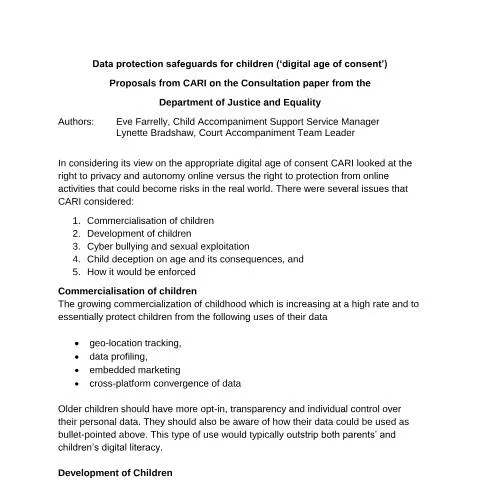
Understanding the Consultation on Data Protection Safeguards for Children
The Consultation on Data Protection Safeguards for Children, also known as the ‘digital age of consent’, is of paramount importance as Ireland navigates the complexities of protecting children in the digital realm. This document, stewarded by the Department of Justice, Home Affairs and Migration, seeks input on how best to safeguard minors while acknowledging their rights in an increasingly commercialized online environment. The key themes explored in this consultation are not just theoretical; they resonate deeply with the lived experiences of children and their families in Ireland.
Who Initiates the Consultation Process?
The consultation process is primarily initiated by concerned stakeholders, which include child protection advocates, legal experts, educational institutions, and parents. The aim is to collect diverse perspectives on the implications of setting the digital age of consent. In doing so, it invites submissions from entities like CARI (Child and Adolescent Research Initiative), which has been at the forefront of advocating for children’s rights in the digital age. In this inclusive environment, all voices are encouraged to ensure that the final outcome is equitable and considers the nuanced needs of various groups.
The Role of Stakeholders
- Advocacy Groups: Organizations such as CARI contribute research and data to support the discussion on appropriate age limits.
- Parents and Guardians: Their insights into the practical implications of digital consent for their children are invaluable.
- Young People: Their direct experiences with online platforms provide real-world insight into the challenges they face.
Navigating the Form: A Step-by-Step Guide
Completing the consultation document involves careful attention to detail. Below is a breakdown of each section of the consultation form, highlighting critical components and potential pitfalls in the submission process.
Section Breakdown
-
Background Information:
This section requires the respondent’s personal details. It includes a query about the respondent's relationship to children. Be sure to indicate whether you are a parent, educator, or advocate as this context will frame your insights.
-
Views on Current Legislation:
Respondents must reflect on existing data protection laws. Review the Data Protection Act 2018 and its implications for children's online presence before submitting your views.
-
Proposed Age Threshold:
This section probes opinions on the proposed age for digital consent. Justify your stance with evidence, drawing from the experiences shared
by children and the implications of their online interactions.
-
Concerns and Suggestions:
Here, you can elaborate on any concerns about the proposed changes, such as issues related to privacy violations or online exploitation. Suggestions for improvement can provide actionable insights for the Department.
Submission Channels: Understanding Your Options
Once the consultation document is complete, you must choose an appropriate submission channel. Different methods come with their own set of considerations:
Online Submission
- Advantages: Speed and convenience; immediate confirmation of receipt.
- Disadvantages: Potential technical issues may arise.
Paper Submission
- Advantages: Allows for a physical copy; preferred by some for record-keeping.
- Disadvantages: Slower process; risk of delays in delivery.
In-Person Submission
- Advantages: Opportunity for direct dialogue with representatives.
- Disadvantages: May require more time and planning; limited availability.
Who Will Be Affected: Profiles of Impacted Individuals
The implementation of the digital age of consent has vast implications across various demographics. Understanding the profiles of individuals affected is crucial for effective advocacy and implementation:
Children and Minors
- Age 12 and Under: Heavily reliant on guardians for consent. They may not fully comprehend the implications of online activities.
- Age 13-16: Often more tech-savvy but still susceptible to online risks. They may require additional education on data privacy.
- Age 17 and Above: Nearing adulthood and typically ready to assume more responsibility for their online presence.
Parents and Guardians
This group plays a pivotal role in guiding children’s online behavior. Their understanding of the digital landscape directly impacts how children navigate these spaces.
Educators and Child Advocates
Teachers and organizations dedicated to child welfare must remain informed about digital rights to adequately protect minors. They can advocate for educational resources that inform families about online safety.
Documenting Your Experience: Supporting Evidence and Justifications
When submitting your perspectives, supporting evidence can significantly strengthen your position. Here’s how to prepare:
Types of Evidence
- Personal Stories: Relatable anecdotes can illustrate the impact of online exploitation or positive experiences with digital consent.
- Research Studies: Citing relevant studies, such as the findings from the Swedish Data Protection Board or academic research on child development in digital contexts, enhances credibility.
- Statistical Data: Use statistics to highlight trends in online behavior among children, especially concerning cyberbullying or privacy breaches.
What Happens After Submission?
After submitting your input, there are several pathways for what may occur:
Review Process
The Department of Justice will review received submissions, categorizing responses according to themes and concerns raised. This process is crucial to ensure that varied perspectives are considered.
Public Engagement
In some cases, the Department may host public discussions or workshops to delve deeper into specific topics highlighted in the submissions. Engaging with the community can yield further insights and foster collaborative solutions.
Implementation of Recommendations
Once all feedback is collated, the department will deliberate on the recommendations, which may lead to amendments in existing regulations or the introduction of new legal frameworks aimed at protecting children online.
Addressing Potential Challenges: What to Do in Case of Issues
During the process, various challenges may arise. Here’s how to navigate them effectively:
In Case of Errors in Submission
If you discover an error in your submitted consultation response, promptly contact the department to request a revision. Clear communication and transparency are key.
Submissions Without Adequate Evidence
Responses lacking sufficient evidence may be disregarded. Ensure you have well-supported arguments, as this bolsters the validity of your feedback and the likelihood of being considered seriously.
Concerns Over Lack of Response
If you feel your concerns are not adequately addressed, consider reaching out via official channels to seek clarification. Active engagement can emphasize the importance of the issues raised.
Conclusion: Moving Towards a Safer Digital Future for Children
The consultation process surrounding the digital age of consent is a pivotal opportunity to influence the future of data protection for children in Ireland. By actively participating, you contribute to shaping a framework that balances children’s autonomy online with their need for protection. As this dialogue unfolds, remaining engaged with developments and advocating for children's rights will be essential in fostering a safer digital environment.
Understanding the Digital Age of Consent in Ireland
The digital age of consent is a critical legislative framework that balances children's rights with the need for online safety and data protection. In Ireland, the age of consent for processing children's data is set at 16 years, in alignment with the General Data Protection Regulation (GDPR). This means that individuals under the age of 16 cannot provide valid consent for the processing of their personal data without parental or guardian approval.
As technology evolves and children engage with digital services from an increasingly young age, the implications of this age limit must be examined. The consultation process for data protection safeguards aims to explore potential adjustments to the legal framework, ensuring it remains relevant in today’s digital landscape. It is essential for stakeholders, including parents, educators, and child protection advocates, to engage in this process to express their views on both the potential risks and benefits associated with the current provisions.
Furthermore, the consultation highlights the need for educational programs aimed at parents and children, emphasizing the importance of understanding digital privacy rights and the responsibilities that come with online engagement. Stakeholders are encouraged to consider how best to communicate these concepts to children in a way that is age-appropriate and empowers them to make informed decisions online.
The Role of Parents and Guardians in Data Protection Consents
While the law establishes 16 as the age of consent for data processing, the involvement of parents or guardians remains crucial for younger children. This section will examine the responsibilities of parents and guardians in safeguarding their children's data, especially as digital interactions become more prevalent.
Parents are urged to actively participate in their children's online activities, ensuring they understand the platforms their children are using and the data they are sharing. The consultation process acknowledges that parents should be equipped with resources that help them navigate the complexities of digital consent, from understanding privacy policies to recognizing the implications of children's online actions.
Moreover, there is a need for clear communication from companies that operate online services targeting children. Parents must have access to comprehensive information about how their children's data will be used, stored, and protected. This advocacy for transparency is crucial in building trust between digital service providers and families.
It's essential for parents to not only provide consent but to foster discussions about online safety. This includes talking about potential risks, privacy settings, and the importance of reporting inappropriate content. By initiating these conversations, parents can empower their children to navigate the online world safely and responsibly.
Impact of Emerging Technologies on Data Protection for Children
As technology continues to advance, new challenges arise regarding data protection for children. The consultation process must consider how emerging technologies, such as artificial intelligence (AI), the Internet of Things (IoT), and social media dynamics, can affect children's data privacy rights and protections.
With AI increasingly integrated into applications aimed at children, there is a growing concern about how these systems gather, process, and utilize data. The consultation should address the ethical implications of AI in relation to children's data consent and the potential for exploitation. It’s imperative that developers and researchers consider child-centric design principles that prioritize privacy and protection from the ground up.
Moreover, IoT devices, which often collect substantial amounts of data, require stringent safeguards to ensure the data is handled appropriately. The consultation could benefit from discussions around regulatory measures that ensure manufacturers of IoT devices targeting children are held accountable for data protection standards.
Furthermore, social media platforms present unique challenges in data protection, particularly with the trending phenomenon of influencers and content creation among younger demographics. The consultation should explore how these dynamics impact consent and what measures can be implemented to protect children from the potential pitfalls of fame and exposure online.
Overall, the impact of these emerging technologies compels stakeholders to engage critically in the consultation process, advocating for robust data protection measures tailored specifically for children while balancing the benefits of technological advancement.