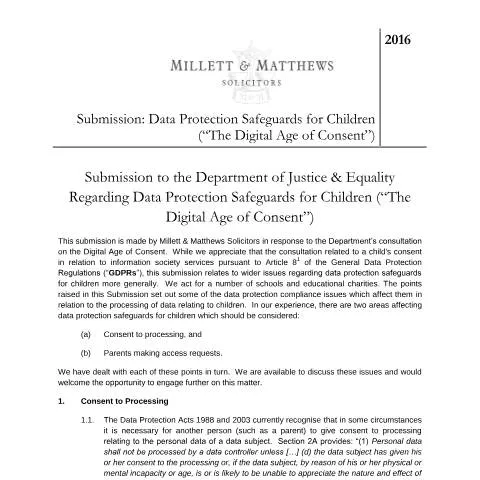
Understanding the Consultation on Data Protection Safeguards for Children
The Consultation on Data Protection Safeguards for Children, also referred to as the ‘Digital Age of Consent’ document, represents a significant initiative spearheaded by the Department of Justice, Home Affairs and Migration. This consultation seeks to address the nuances of how children’s data is processed in the digital landscape, particularly in light of the General Data Protection Regulation (GDPR) which governs the management of personal data within the EU. The insights drawn from this document are crucial for various stakeholders, particularly schools and organizations working with children.
Who Needs to Get Involved and Why?
Participation in this consultation is especially relevant for:
- Educational institutions, including primary and secondary schools, that handle children's personal data.
- Parents and guardians who need clarity regarding their rights and responsibilities when it comes to their children’s data.
- Child advocacy groups and legal experts focused on data protection laws.
- Organizations that provide online services aimed at children, which must navigate the complexities of consent and data protection.
This wide range of stakeholders underscores the necessity of addressing varying perspectives on how children's data should be treated, particularly given that the digital landscape is continually evolving.
Preparing Your Submission: Key Considerations
When contemplating a submission, it is vital to articulate specific concerns and suggestions regarding data protection safeguards. Here are essential aspects to consider:
Consent to Processing
Understanding the current legislative framework around consent is crucial. According to the Data Protection Acts 1988 and 2003, in situations where children may not appreciate the implications of their consent due to age or mental capacity, parental consent is required. Consider the following:
- Age Considerations: Children under 12 typically need explicit parental consent for their data processing.
- Maturity Judgments: For individuals aged 12-18, maturity assessments can vary widely. Include suggestions for how these assessments can be standardized.
Access Requests by Parents
The existing framework does not explicitly empower parents to make access requests on behalf of their children. This presents challenges for educational institutions. When drafting your comments, think about:
- Suggesting legislative clarity on parents' rights to access their child’s data.
- Proposing a code of practice specifically focused on schools and data access requests.
Channels for Submission: Navigating the Process
Submissions can be made through different channels. Each method has its peculiarities, which are worth noting:
- Online Submission: Typically the most efficient method, online forms may prompt for specific information that you will need to prepare in advance.
- Postal Submission: If you opt for a physical submission, ensure that your document is correctly formatted and includes all necessary information.
- In-Person Meetings: Engaging with the Department might be beneficial if you can articulate complex concerns that require direct dialogue.
Regardless of the channel selected, be sure to double-check deadlines and submission guidelines to ensure that your input is considered.
Specific Challenges: Navigating Unique Scenarios
There may be unique scenarios that warrant special attention when drafting your submission. Here are some to consider:
For International Stakeholders
If you are an international entity working with Irish children, ensure you address:
- The nuances of cross-border data transfers.
- Local compliance requirements that may differ from your home jurisdiction.
Complex Family Situations
Situations involving joint custody or differing parental opinions on data processing can complicate consent. Inclusion of provisions for:
- Clarifying how access requests should be managed.
- Establishing a dispute resolution process when parents disagree.
Urgent Situations
In cases where data processing relates to urgent health or safety concerns, outline how existing regulations can be adapted to expedite consent processes. Consider advocating for:
- Fast-tracked consent in emergencies.
- Clear guidelines on situations where parental consent might be bypassed for children's immediate welfare.
Unpacking the Document: Key Sections to Address
The submission document itself is structured to facilitate comprehensive feedback. Herein are significant sections to focus on:
| Section | Description | Implications |
|---|---|---|
| Introduction | Overview of the consultation’s aim and context. | Sets the stage for the importance of data protection for children. |
| General Data Protection Regulation (GDPR) Context | A summary of GDPR's relevance to children's data. | Highlights compliance requirements and potential conflicts. |
| Impact Assessments | Discussion of potential impacts of proposed regulations. | Calls for stakeholder insights on practical outcomes. |
| Summary of Current Practices | Analysis of how data is currently handled. | Identifies areas where improvements are needed. |
Focusing on these sections will ensure your feedback is both relevant and impactful.
What Happens After Submission?
Once submissions are lodged, they undergo a review process by the Department of Justice. It’s essential to understand the subsequent steps:
- Review Timeline: Typically, there is a defined period in which all submissions will be reviewed. Be attentive to any announcements regarding feedback timelines.
- Stakeholder Engagement: The department may convene roundtable discussions to delve deeper into complex issues raised in submissions.
- Implementation of Changes: Post-review, there may be a legislative proposal that reflects the insights gathered. Keep an eye on announcements regarding this phase as well.
Staying informed about these processes will help maintain momentum for ensuring children’s data protection remains a priority in legislative discussions.
Potential Outcomes and Their Implications
The outcomes of this consultation can significantly affect future regulations regarding children's data. Understanding these implications is crucial for stakeholders:
- Stronger Protections: Should the consultation result in stricter data protection measures, institutions will need to adapt their data handling practices accordingly.
- Clearer Guidelines: The establishment of unambiguous guidelines may streamline the consent process, enhancing parental understanding and compliance.
- Increased Awareness: A broader awareness of children's data rights can empower parents and guardians, ensuring they are more active participants in safeguarding their children's personal information.
Each potential outcome demands attention from stakeholders, who must prepare for adjustments in their operational frameworks in response to new guidelines. Engaging with the process now can help shape a future that responsibly addresses the complexities of children's data in the digital age.
Understanding the Digital Age of Consent in Ireland
The concept of the digital age of consent is a crucial consideration in the evolving landscape of data protection and children's rights in the context of the internet. In Ireland, the general consensus is that the age of consent for children regarding their personal data should be aligned with the provisions set forth in the General Data Protection Regulation (GDPR). Under GDPR, the digital age of consent is set at 16 years, allowing individuals aged 16 and above to provide legal consent for processing their personal data. This is significant in establishing a legal framework that protects children from potential exploitation online while allowing a degree of autonomy for teenagers.
However, the debate surrounding the appropriate age of digital consent is ongoing. Stakeholders, including parents, educators, child protection advocates, and technology companies, are advocating for a balanced approach. Some argue for a lower age, proposing 13 years as a more realistic threshold given the widespread use of social media and digital services by younger teenagers. Others emphasize the importance of maintaining the 16-year threshold to better safeguard children's privacy and personal data, ensuring they are aware of the implications of their digital interactions.
The consultation process set forth by the Department of Justice and the Office of the Data Protection Commissioner aims to collect diverse perspectives on this topic. Engaging with children, parents, and industry representatives is crucial to ensure that any legislative measures proposed will reflect the interests and needs of all stakeholders involved.
The Role of Parents and Guardians in Data Protection
In Ireland, the role of parents and guardians in the context of children's data protection cannot be overstated. Under GDPR and national legislation, parents or guardians are typically required to provide consent for the processing of personal data for children under the age of 16. This responsibility places a significant burden on parents to understand the digital landscape and the ways in which their children's data may be collected, used, and shared by online platforms.
To assist parents in this endeavor, several resources are available that outline best practices for protecting children’s data online. These include guidelines on how to set privacy settings on social media accounts, the importance of educating children about the potential risks associated with sharing personal information, and the need for ongoing conversations about digital literacy and responsible online behavior.
Moreover, parents are encouraged to participate in the consultation process, voicing their concerns and suggestions regarding the digital age of consent and data protection safeguards. Their insights play a critical role in shaping policies that not only protect children's data but also promote a culture of awareness and responsibility in the digital age.
Technological Innovations and Children's Data Protection
As technology continues to advance, innovative solutions are emerging to enhance the protection of children's data. In Ireland, various tech companies and non-profit organizations are exploring the use of artificial intelligence (AI) and machine learning to create safer online environments for children. These technologies can be deployed to monitor and analyze children's online interactions, identifying potentially harmful situations and providing alerts to parents or guardians.
Additionally, privacy-enhancing technologies, such as blockchain, are being considered for their potential to give users greater control over their personal data. By leveraging decentralized systems, these technologies can empower children and their families to manage consent and data sharing more effectively. This not only promotes transparency but also fosters trust in digital platforms, encouraging a safer online experience for young users.
However, the introduction of such technologies must be approached with caution. Concerns regarding surveillance, data security, and the ethical implications of using AI in children's online spaces must be addressed comprehensively. The ongoing consultation process provides an opportunity for all stakeholders, including technologists, policymakers, and child welfare advocates, to collaborate on finding solutions that balance innovation with the paramount need for child protection.