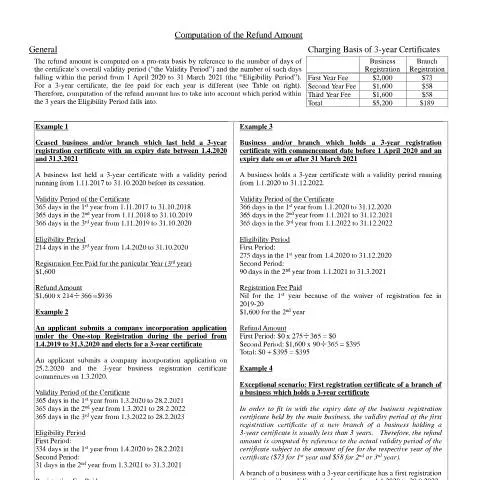
Understanding the Computation of the Refund Amount Document
The Computation of the Refund Amount form (IRBR 189 (3/2020)) plays a pivotal role in the context of business registration in Hong Kong, particularly during the waiver period from April 1, 2020, to March 31, 2021. This document is essential for businesses and their branches that have sought to benefit from a rebate or refund of their registration fees during this unique period, shaped by significant economic conditions and regulatory adjustments.
Historical Context and Regulatory Framework
To appreciate the significance of the IRBR 189 form, it’s crucial to explore its historical backdrop. The Hong Kong government introduced various relief measures in response to the financial strains caused by the COVID-19 pandemic. Among these measures was the waiver of business registration fees for the specified financial year, leading to the necessity for businesses to claim refunds based on their eligibility.
The Basic Law of the Hong Kong Special Administrative Region underpins these regulatory changes, establishing the legal framework for business operations. The IRBR 189 form arises directly from the need to administer the financial relief package effectively and transparently, ensuring that eligible businesses receive their due refunds in a systematic manner.
Eligibility and Application Process
To successfully navigate the refund process, applicants must first ascertain their eligibility. The Eligibility Period outlined in the IRBR 189 document is paramount, as it dictates the timeframe during which businesses must have held their registration certificates. The configuration of the refund amount is based on the Validity Period of the certificate, and businesses should thoroughly review their registration details to ensure compliance.
Steps to Complete the IRBR 189 Form
- Gather Required Information: Before filling out the form, businesses must compile necessary documentation, including previous registration certificates, payment receipts, and specific dates related to their business operations.
-
Fill Out the Form: The IRBR 189 form necessitates precise input. Engage in the following steps:
- Validity Period: Input the specific validity dates of your business registration certificate.
- Eligibility Period: Clearly indicate the timeframes where the business was operational and eligible for the refund.
- Fees Paid: Document all fees paid during the relevant periods to compute the refund amount accurately.
- Review for Accuracy: Errors in the form can delay processing. Rigorously double-check all entries for correctness.
Where and How to Submit the Form
The IRBR 189 form can be submitted electronically through the Business Registration Office's e-services platform, reflecting the Hong Kong government's emphasis on digitization and efficiency. Alternatively, businesses may opt to submit a physical copy of the form at designated Business Registration offices.
Physical Submission Details
If opting for physical submission, ensure the following:
- Print the completed form clearly.
- Include all supporting documents as required.
- Submit within the stipulated deadlines to avoid any penalties.
Processing and Monitoring Your Application
Once submitted, the administration will review the IRBR 189 form. The typical processing time can vary, so it is prudent to track the application's status through available channels. Businesses should keep their submission receipts, which are vital for any follow-up communications with the Business Registration Office.
Responding to Issues or Rejections
In the event of a rejection or request for additional information, it’s critical to act swiftly. The administration may contact you for clarifications or corrections. Here are steps to take if faced with such situations:
- Review the feedback thoroughly to understand the reasons behind the rejection.
- Gather any additional documentation or corrections needed.
- Respond promptly to any requests for further information to avoid delays.
Special Considerations for Different Business Types
The IRBR 189 document also addresses unique scenarios that may arise, such as applications from foreign entities or businesses with complex ownership structures. Understanding how these variations affect the refund computations is essential for a successful claim.
Example Scenarios
| Scenario | Details | Refund Amount Calculation |
|---|---|---|
| Foreign Applicant | A foreign business registered in Hong Kong must follow the same eligibility criteria but may require additional documentation. | Calculated based on the same terms outlined in the eligibility period. |
| Complex Ownership Structures | Businesses with multiple branches may need to submit separate forms for each branch, depending on individual registrations. | Each branch will calculate the refund based on its specific validity and eligibility periods. |
Implications of Timeliness and Compliance
Timeliness is a recurring theme in the process of submitting the IRBR 189 form. Adhering to deadlines is not merely a bureaucratic formality but fundamentally impacts the ability to claim refunds. The government’s strong emphasis on e-services means that businesses must be proactive in their submissions to avoid any penalties associated with late filings.
Key Dates to Remember
- Submission Start Date: Applications could typically be submitted from April 1, 2020.
- Submission End Date: The deadline for applications will depend on the specific business registration periods.
- Processing Timeline: Once submitted, processing can take several weeks, so plan accordingly.
Final Steps and Future Considerations
Upon successful processing of the IRBR 189 form, businesses will receive notifications detailing the refund amounts approved. It is advisable to keep these records organized for future reference, especially when preparing for subsequent business registrations or audits.
As Hong Kong's regulatory landscape evolves, staying informed about changes in business registration and refund processes will be crucial. Engaging with the Business Registration Office and utilizing their resources can facilitate smoother transactions in the future.
In light of the unique challenges presented by the pandemic and its aftermath, the IRBR 189 form serves as a crucial tool for business recovery in Hong Kong. By understanding its requirements and navigating the process diligently, businesses can secure the financial relief they need to thrive in a challenging economic landscape.
Understanding the Refund Calculation Methodology
The computation of the refund amount during the waiver period from 1 April 2020 to 31 March 2021 involves several precise steps that authorities and applicants must adhere to. The formula typically hinges on the business nature, the registration status, and specific exemptions applicable during the COVID-19 pandemic.
Firstly, it's essential to clarify whether your business qualifies for the fee waiver. The Companies Registry (CR) has provided clear guidelines on eligibility. For instance, businesses that were registered before 1 April 2020 are generally entitled to the refund, while those incorporated after this date may not be eligible. The calculation process typically begins with identifying the total annual fee paid and determining the applicable waiver. This involves:
- Verifying the registration date of the company with the Companies Registry.
- Reviewing the paid fee for the relevant tax year, which spans from 1 April 2020 to 31 March 2021.
- Applying any specific exemptions or reductions that the government announced during the COVID-19 period.
It's prudent to maintain accurate records regarding payments made and keep a close eye on notices from the Companies Registry for any updates to the refund process. The process requires adept navigation of both financial documentation and compliance with local policies.
Potential Challenges in the Refund Application Process
Applying for a refund can present various challenges that businesses should be aware of. One common issue is ensuring all documentation is correctly filled out and submitted within specified timelines. The form required for the refund request is typically a 'Specified Form' provided by the CR, and any errors or incomplete sections can result in delays or even rejections of applications.
Additionally, businesses must be prepared to substantiate their claims with adequate proof of payment. This includes bank statements or receipts that accurately reflect the fees paid during the waiver period. Applicants should also be cautious of administrative errors—such as incorrect tax identification numbers or addresses—on both the application form and the submitted documents.
Furthermore, there may be significant backlogs or delays due to the increased volume of applications stemming from the pandemic's impact. Therefore, it becomes imperative for businesses to submit their applications as early as possible and follow up with the CR periodically. Keeping an eye on the CR’s official announcements can provide insights into processing times and any additional requirements that may arise.
Exploring the Broader Financial Implications of the Refund
While the refund from the waiver period is beneficial, it’s essential for businesses to analyze the broader financial implications of receiving this amount. The refund may provide immediate liquidity support, which can be vital during tough economic times. However, it’s crucial to understand how this refund could impact your tax situation or future financial planning.
For instance, businesses might need to factor in these refunds as 'other income' on their next tax return, depending on the specific circumstances and the advice of financial professionals. This could alter tax liabilities or equate to unexpected financial obligations later in the fiscal year, especially if your business was already facing economic strain.
Moreover, businesses should consider how to reinvest the refunded amount strategically. Whether it's for bolstering cash reserves, investing in technology, or hiring resources, the decision on how to utilize the refund can considerably influence the long-term growth trajectory of the company. It might also be wise to consult financial advisors or accountants who specialize in Hong Kong’s fiscal policies to ensure that your business makes informed and strategic decisions in utilizing the refunded amount.