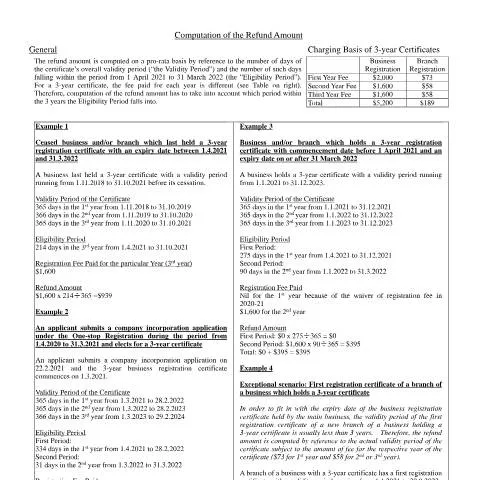
Navigating the IRBR 189: Understanding the Refund Amount Computation for Business Registration
In the dynamic landscape of Hong Kong's business environment, understanding the intricacies of official documentation is paramount. The Computation of the Refund Amount (Waiver Period from 1.4.2021 to 31.3.2022), identified by the reference code IRBR 189 (3/2021), is crucial for businesses seeking clarity on refunds related to their business registration fees. This document may seem daunting at first, but it plays a vital role in ensuring that businesses are reimbursed accurately according to the periods stipulated.
Key Milestones Leading to the Refund Process
To appreciate the significance of the IRBR 189 form, it is essential to trace the steps that lead to its completion and submission. The refund process begins with the issuance of a business registration certificate, which typically spans three years. However, changes in operations or unforeseen circumstances can lead to adjustments in registration and fees.
Understanding Validity and Eligibility Periods
The first critical concept is the validity period of the business registration certificate. This period determines how long the business is officially registered to operate. For the purpose of refunds, the Eligibility Period is equally significant. Businesses must assess their validity period against the eligibility criteria laid out in the IRBR 189.
- Validity Period: The span during which the registration certificate is active.
- Eligibility Period: Specific days within which the refund can be calculated based on the registration certificate’s validity.
Distinct Scenarios: Who Should Complete IRBR 189?
While many may assume that this form is only relevant to businesses that ceased operations, the reality is more nuanced. Various situations can warrant the need for this refund computation. Understanding these scenarios can aid in determining who must fill out the IRBR 189 form.
General Business Operations
Businesses that maintain their operations but fall into specific waiver periods are eligible for refunds. This includes organizations that have opted for a three-year registration certificate but faced interruptions due to policy changes.
Ceased Operations
Companies that have ceased operations before the expiry of their registration may also file for refunds. This is particularly crucial for minimizing losses incurred due to registration fees that were paid in advance.
Special Cases: New Registrations and Waivers
New businesses registering during the waiver period (1st April 2021 to 31st March 2022) may find the refund process particularly beneficial. Understanding how their registration fee correlates with the time periods specified is critical in maximizing potential returns.
Completing the IRBR 189: A Step-by-Step Guide
The act of filling out the IRBR 189 form can appear intricate, but by breaking it down into manageable steps, the process becomes more accessible.
Gathering Required Information
Before proceeding, businesses should compile all necessary documentation:
- A copy of the business registration certificate.
- Details regarding the validity period and eligibility period.
- Any correspondence related to the waiver period from the Business Registration Office.
Filling Out the Form
Upon gathering the necessary information, businesses can start filling out the IRBR 189 form. Key sections include:
- Business Details: Name, registration number, and contact information.
- Period of Registration: Validity and eligibility periods must be accurately entered for computation.
- Fees Paid: Clearly state the registration fees initially paid for the specified durations.
Common Pitfalls to Avoid
While completing IRBR 189, businesses should be vigilant about common mistakes that can delay the refund process:
- Incorrectly calculating the number of days within the eligibility period.
- Failing to provide all necessary supporting documents.
- Omitting signatures or vital information.
Submitting the IRBR 189: Where and How
After completing the form, the next crucial step is submission. Understanding the proper channels for filing can significantly impact the speed and efficiency of the refund process.
Submission Channels
Businesses have several avenues for submitting the IRBR 189:
- Online Submission: Utilizing the Business Registration e-Services platform can streamline the process and reduce wait times.
- Physical Submission: Alternatively, forms can be submitted in person at designated Business Registration offices.
Monitoring the Submission
Once submitted, businesses should monitor the status of their application. Keeping track of the processing time can provide insights into when to expect feedback regarding the refund.
The Bigger Picture: IRBR 189 Within the Business Registration Framework
Understanding the purpose of the IRBR 189 also requires examining how it fits within the broader context of business registration in Hong Kong. The form is not just a standalone document; it exists within a network of regulatory frameworks and requirements.
Connecting with Other Business Forms
Many may confuse the IRBR 189 with other registration-related forms, such as those required for company incorporation or annual returns. Each serves distinct purposes, and clarity on their functions helps businesses navigate their obligations effectively.
| Form | Purpose | Applicable Period |
|---|---|---|
| IRBR 189 | Computation of Refund Amount | Waiver Period |
| Application for Business Registration | Initial registration of a business | Upon starting a new business |
| Annual Return (NAR1) | Annual reporting obligations | Every financial year |
Regulatory Framework: The Basic Law and Business Operations
The Basic Law of the Hong Kong Special Administrative Region provides the overarching legal framework within which these forms operate. Compliance with the stipulated laws ensures that businesses maintain good standing and avoid penalties which could arise from incomplete or incorrect submissions.
The Consequences of Inaction: What Happens if You Don’t Submit IRBR 189?
Failing to submit the IRBR 189 form can have significant implications for businesses, particularly in terms of financial losses and potential legal repercussions.
Financial Implications
Without the necessary refund, businesses may incur avoidable expenses that could have been recouped. Understanding the significance of timely submission is essential for fiscal health.
Legal Repercussions
Missing deadlines or failing to file this form can also lead to complications with regulatory authorities. This may include penalties or legal challenges, ultimately hindering the operations of the business.
Conclusion: Empowering Your Business through Understanding
In conclusion, the IRBR 189 form, while seemingly complex, is a vital tool for businesses operating in Hong Kong. By understanding its nuances, businesses can navigate the refund process effectively, ensuring compliance while maximizing their financial returns. The more businesses engage with this process, the better equipped they will be to foster a resilient and thriving operation amidst the ever-evolving regulatory landscape.
Understanding the Waiver Period: Context and Implications
The waiver period from 1 April 2021 to 31 March 2022 was a crucial time for many businesses in Hong Kong, particularly in light of the ongoing challenges posed by the global pandemic. During this period, the Hong Kong Government introduced a range of support measures aimed at mitigating the adverse effects of COVID-19 on the local economy. One such measure was the temporary waiver of certain fees and levies, which can significantly impact the computation of the refund amount for businesses.
Understanding the background of this waiver is essential for businesses seeking to claim refunds. The waiver period reflects an acknowledgment of the financial difficulties faced by many enterprises and is part of a broader strategy to stimulate economic recovery. Companies that were able to maintain compliance with tax obligations during this period benefited from reduced financial burdens, thereby enabling them to allocate resources more effectively in the face of uncertainty.
It's important to note that the computation of refund amounts during this period necessitates a detailed examination of eligibility criteria, the types of fees waived, and any specific conditions imposed by the government. Businesses are advised to keep meticulous records, as these documents play a critical role in justifying their claims for refunds.
Factors Influencing Refund Computation
Computing the refund amount during the waiver period involves several factors that can influence the final figure. Firstly, it is essential to differentiate between various types of tax and fees that could be subject to waiver. For example, business registration fees, profits tax, and property rates may all be applicable under different circumstances.
Additionally, the eligibility of the business plays a significant role in determining the refund amount. The government's guidelines outline specific criteria that must be met, including the size of the business, its sector, and its ability to prove a reduction in income due to the pandemic. Companies must also confirm they have adhered to all relevant regulations and requirements, as failure to do so could jeopardize their refund claims.
Moreover, it is vital to consider the timeline of the refund application process. Businesses should be aware of the deadlines for submission to ensure timely processing of their claims. Any delays in application could lead to complications or even disqualification from receiving a refund. Utilizing e-services provided by the government can streamline this process, making it easier for businesses to navigate through the required forms and documentation.
Common Pitfalls and How to Avoid Them
While the waiver period provides substantial relief opportunities, there are common pitfalls that businesses must avoid to ensure successful refund computation. One prevalent issue is the misinterpretation of the eligibility criteria. Businesses often mistakenly believe they qualify for refunds when they do not meet all the necessary conditions. Therefore, reviewing the official guidelines published by relevant authorities, such as the Companies Registry (CR) and the Inland Revenue Department (IRD), is critical.
Another common error involves improper documentation. Failing to provide adequate records or submitting incomplete forms can lead to delays or rejections of refund applications. It is advisable for businesses to maintain comprehensive records of all transactions, including invoices and bank statements, as these documents can substantiate the claims made in the refund applications.
In addition, businesses should be cautious about the timing of their applications. Each refund request has specific deadlines; missing these can result in forfeiting the opportunity for refunds. Utilizing reminders and checklists can help track important dates and ensure compliance with submission timelines.
Lastly, businesses should remain updated on any changes in government policy regarding the waiver period. The local administration may issue new directives or amendments that could affect refund computations. Keeping informed through official channels can prevent businesses from missing crucial updates that might impact their claims.