Navigating the Intricacies of the IRBR 189 (3/2019): Understanding the Refund Process
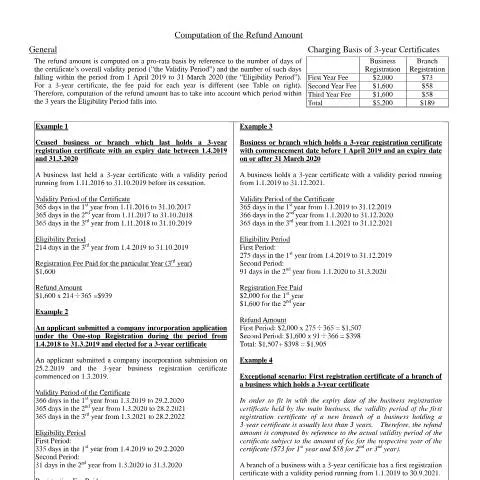
Amidst the bustling business landscape of Hong Kong, fiscal adjustments can profoundly impact a company's financial management. The Computation of the Refund Amount form, officially referenced as IRBR 189 (3/2019), plays a pivotal role during the waiver period from 1 April 2019 to 31 March 2020. Understanding this document is not only crucial but can also provide a significant financial reprieve for businesses navigating the complexities of registration fees.
Unpacking the Purpose: Why This Form Matters
Rather than merely a bureaucratic requirement, the IRBR 189 form serves as a crucial conduit for businesses seeking to reclaim a portion of their registration fees. This process is especially relevant for companies and branches that have had their registration certificates halted or adjusted during the specified waiver period. The refund calculations hinge on the days covered by the validity of the certificate and how they intersect with the eligibility period.
The Refund Calculation: A Closer Look
The computation of the refund is based on a pro-rata assessment of the registration fees paid. To illustrate this, we can break down the steps involved:
- Identify the Validity Period: Each registration certificate has a defined period, which needs to be examined.
- Determine the Eligibility Period: The specific duration during which a business may apply for a refund, typically tied to the waiver period.
- Calculate the Fee Paid: This involves noting the total registration fee, as outlined in the certificate.
- Compute the Refund: This will take into account the number of days corresponding to the eligibility period against the fee structure.
The complexity of this calculation cannot be understated, as even minor discrepancies in dates or fees can lead to significant variations in the refund amount.
Who is Responsible for Submission?
Filing the IRBR 189 form is the responsibility of the business entity or branch that holds the registration certificate. This includes both sole proprietorships as well as larger corporate structures. The form must be accurately completed and submitted in a timely manner to ensure that the business can effectively reclaim any applicable fees.
Key Stakeholders in the Filing Process
Different stakeholders might play roles throughout the filing process, including:
- Business Owners: Ultimately, they are responsible for ensuring the form is filled out correctly.
- Accountants: Professionals who might assist in accurately calculating fees and ensuring compliance with regulations.
- Legal Advisors: Providing oversight and advice on the implications of the filing.
The Process in Detail: Step-by-Step Guidance
Completing the IRBR 189 form requires meticulous attention to detail. Here’s a thorough breakdown of the steps from initiation to submission:
Step 1: Gather Necessary Documentation
Before filling out the form, ensure you have the following:
- Previous Registration Certificates: Any prior documents that relate to the business registration.
- Fee Payment Records: Evidence of fees paid, which will be necessary for accurate calculations.
- Business Identification: Essential for proving the legitimacy of the entity filing.
Step 2: Complete the Form
Accuracy is essential in this step. Pay particular attention to:
- Validity Dates: Ensure all dates align with the actual registration and waiver periods.
- Fee Structure: Use the provided tables within the form to avoid miscalculations.
- Signature and Declaration: Confirm all necessary declarations are signed to validate the form.
Step 3: Submit the Form
Once completed, the form must be submitted to the Business Registration Office. This can typically be done through:
- Online Submission: Utilize e-services where available for quick processing.
- In-Person Submission: Drop off the completed form at designated offices, ensuring to retain a proof of submission.
Step 4: Await Confirmation
After submission, businesses should monitor their application status. Communication from the Business Registration Office typically includes:
- Confirmation of Receipt: Acknowledgment that the form has been received.
- Processing Updates: Any further requirements or clarifications needed.
The Aftermath: Understanding Outcomes and Refunds
Once the form has been submitted and processed, the business will receive information regarding the refund amount. Understanding potential outcomes is crucial:
Typical Scenarios Following Submission
- Approval: If everything is in order, the refund will be processed, typically within a specified time frame.
- Request for Clarification: If there are discrepancies, the office may require additional information, which can delay the process.
- Rejection: In cases where the eligibility is not met, understanding the reasons is crucial for future compliance.
What to Do in Case of Issues
If the outcome is not favorable, businesses have the option to:
- Appeal the Decision: Submit an appeal with supporting documents.
- Rectify Errors: If there were errors in the submission, correct and resubmit as necessary.
Exploring Common Misconceptions: Clarifying the Differences
The IRBR 189 form is sometimes confused with other business registration forms. Differentiating these documents is essential to avoid administrative pitfalls.
Comparison with Similar Forms
| Form | Purpose | Key Differences |
|---|---|---|
| IRBR 189 | Refund computation for registration fees | Specifically for the waiver period; focuses solely on refunds |
| Other Business Registration Forms | New applications or modifications | Covers new registrations, not refunds |
Timing is Everything: Key Dates and Deadlines
For a successful submission, understanding the critical timelines surrounding the IRBR 189 form is essential:
- Submission Period: Forms must be submitted during the waiver period to qualify for the refund.
- Processing Time: Typically spans several weeks; businesses should plan accordingly.
- Final Decision Notification: Usually sent shortly after processing, informing businesses of their status.
Building for the Future: Long-Term Considerations
Ultimately, navigating forms like the IRBR 189 is not just about immediate refunds; it sets the stage for better financial management moving forward. Businesses can use the experience to:
- Enhance Record-Keeping: Maintain accurate records of all registration fees and dates.
- Prepare for Future Applications: Leveraging previous experiences can streamline future dealings with the Business Registration Office.
In sum, while the IRBR 189 form may appear to be a mere bureaucratic hurdle, it can significantly impact a business's financial landscape in Hong Kong. Each detail counts towards ensuring compliance, optimizing refunds, and fostering a productive relationship with the administrative structures in place.
Understanding the Refund Calculation Process
The computation of refund amounts during the specified waiver period from 1 April 2019 to 31 March 2020 is a nuanced process governed by the regulations set forth by the Inland Revenue Department (IRD) of Hong Kong. This period marked a significant transition due to the various relief measures implemented by the government in response to economic challenges.
To accurately assess refund amounts, it is essential to understand the underlying principles of income tax calculation and the specific criteria that affect the computation. The refund is primarily determined by the excess tax paid over one’s assessable income during the relevant tax year.
For instance, if a business entity or individual taxpayer found itself in a situation where their taxable income was significantly reduced due to the economic impact of the COVID-19 pandemic, they might be eligible for a tax rebate or refund. The IRD provides detailed guidelines on how to account for any losses, exemptions, or deductions that can be applied to the tax calculation.
To initiate the computation, taxpayers must gather their financial records for the fiscal year, including income statements, previous tax returns, and any documentation related to allowances or exemptions claimed. It’s crucial to ensure that all relevant data is accurately recorded to facilitate a smooth refund process.
In scenarios where taxpayers applied for tax exemptions or relief measures, the IRD typically evaluates these requests on a case-by-case basis, ensuring that all qualifying conditions are met before finalizing any refund amounts. Therefore, keeping thorough records and understanding the required documentation are vital steps in this process.
Common Pitfalls in Refund Applications
In navigating the refund application process, taxpayers often encounter several common pitfalls that can lead to delays or denials of their claims. Recognizing these pitfalls can be instrumental in ensuring a successful application for a refund during the waiver period.
Firstly, one of the most frequent mistakes is the failure to submit the application within the stipulated deadlines. The IRD emphasizes strict adherence to application timelines; therefore, taxpayers should familiarize themselves with important dates and ensure that their applications are submitted on time. For the waiver period, specific forms related to refund applications must be completed and submitted to avoid penalties or disqualification from receiving the refund.
Secondly, taxpayers sometimes overlook the importance of providing comprehensive and accurate supporting documentation. The IRD requires specific forms, such as the NNC2 and other specified forms related to tax relief, which must be filled out correctly and submitted with the relevant financial evidence. Incomplete or inaccurate applications can lead to significant delays in processing and, in some cases, outright rejection.
Another common issue encountered is the misunderstanding of eligibility criteria for refunds or tax reliefs. Many taxpayers are unaware of specific provisions that apply to their circumstances, notably changes introduced during the waiver period. It is vital to be informed about any legislative amendments that could affect tax liabilities and refund eligibility.
Furthermore, taxpayers often neglect to seek professional advice when necessary. The intricacies of the tax code in Hong Kong can be challenging to navigate, particularly during periods of legislative change. Engaging with tax professionals or legal advisors can provide invaluable guidance and help rectify any potential errors before the application is submitted.
Strategies for Maximizing Refund Claims
In light of the unique circumstances surrounding the waiver period from 1 April 2019 to 31 March 2020, there are strategic approaches taxpayers can take to optimize their refund claims. Understanding available options and proactively engaging with the refund process can lead to more favorable outcomes.
One of the foremost strategies is to conduct a thorough review of past tax filings. By analyzing previous submissions, taxpayers can identify any discrepancies or areas where they may have overpaid taxes. This review process may involve going back several years to claim carryforward losses or unclaimed deductions that could contribute to a larger refund.
Taxpayers should also stay informed about new relief measures introduced during the waiver period. For example, the government rolled out various initiatives aimed at supporting businesses and individuals affected by the pandemic. Being aware of these measures allows taxpayers to adjust their claims accordingly and ensure that they are maximizing the available benefits.
Another beneficial tactic is to maintain clear and organized records throughout the fiscal year. Establishing a system for tracking income and expenses can simplify the refund application process significantly. This organization includes retaining invoices, receipts, and other financial documentation that supports the refund claim, which can be easily referenced when completing required forms.
Additionally, taxpayers can enhance their likelihood of receiving a refund by proactively communicating with the IRD. If there are any uncertainties regarding the refund process or specific documentation requirements, reaching out to the department for clarification can be advantageous. Understanding the nuances of the process from the outset can help mitigate common errors and streamline application processing.
Finally, utilizing e-services offered by the IRD provides a convenient way to manage applications and track the status of claims. The online platform allows users to submit documents, receive notifications, and access tax information at their convenience, which greatly enhances the efficiency of the overall refund process.