Critical Insights into the IRBR 188B Form: A Key to Business Refunds
In the dynamic business landscape of Hong Kong, navigating the regulatory framework can be complex. With various forms and procedures in place, understanding each document's purpose is crucial. Among these, the Authorization for Change of Payee’s Name on Concessionary Refund Cheque (IRBR 188B) stands out for its role in facilitating refunds linked to business registration fees. This article delves deeply into the intricacies of this document, its significance, and the steps required for effective completion and submission.
The Context of the IRBR 188B Form
The IRBR 188B form is intimately connected to the Business Registration Ordinance and plays a significant role in the broader framework of financial governance in Hong Kong. Specifically tailored for the waiver period spanning from April 1, 2020, to March 31, 2021, this form is crucial for businesses seeking to amend the name of the payee on refund cheques issued by the Inland Revenue Department (IRD).
Understanding the Concessionary Refunds
During the specified waiver period, businesses in Hong Kong were entitled to refunds for registration fees, a vital lifeline during challenging economic times. However, discrepancies in payee names can pose significant hurdles in accessing these funds. Thus, the IRBR 188B serves to alleviate such issues, ensuring that businesses can receive their entitlements without unnecessary delays.
Who Needs to Submit the IRBR 188B?
The submission of the IRBR 188B form is typically undertaken by representatives of registered businesses. This encompasses a range of profiles:
- Sole Proprietors: Individuals operating their enterprises under their names.
- Partnerships: Business entities formed by two or more individuals.
- Corporations: Registered companies that can have multiple directors and officers.
- Unincorporated Bodies: Organizations that operate without formal incorporation.
Specific Scenarios Leading to Form Submission
In practice, various scenarios may necessitate the use of the IRBR 188B:
- When a business undergoes a name change but has pending refund cheques.
- If a partnership changes its structure and requires a revised payee name.
- In cases where the payee's name on the cheque does not match the business registration due to clerical errors.
Completing the IRBR 188B: A Step-by-Step Guide
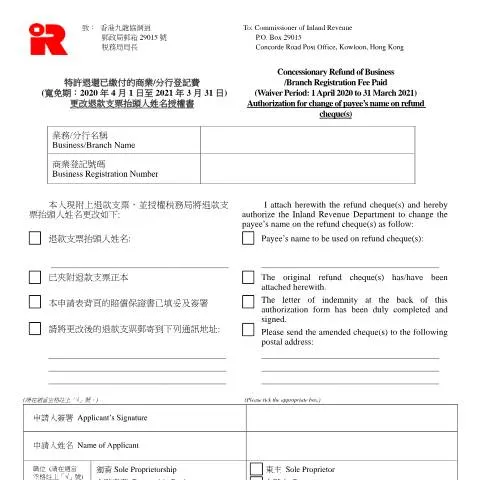
Completing the IRBR 188B form accurately is essential to avoid delays in processing. Below is a detailed breakdown of the sections within the form.
Section Breakdown
| Field | Description | Requirements |
|---|---|---|
| Business/Branch Name | The name under which the business is registered. | Must match the business registration document. |
| Business Registration Number | The unique identifier assigned to the business. | Essential for processing the application. |
| Payee’s Name to Be Used | The revised name to be printed on the refund cheque. | Must be clearly stated to ensure correct issuance. |
| Attachments | Original refund cheque(s) and Letter of Indemnity. | Both documents must be included to support the application. |
| Signature of Applicant | The person authorized to make the application. | Must be signed in the appropriate section. |
It is imperative that all fields are completed with accurate details to prevent any setbacks in processing the request.
Submission Channels and Procedures
Once the IRBR 188B form is complete, businesses must choose their submission channel wisely. There are three primary methods:
- Online Submission: Through the official e-services portal, which is encouraged for its efficiency and tracking capabilities.
- Postal Submission: Mailed directly to the Commissioner of Inland Revenue at the designated address. Ensure that the document is sent via registered mail for security.
- In-person Submission: Visiting the Inland Revenue Department’s office allows for immediate processing and assistance, particularly useful for complex cases.
Comparative Overview of Submission Methods
| Method | Advantages | Considerations |
|---|---|---|
| Online | Quick processing; confirmation receipt. | Requires internet access and registration. |
| Postal | Can be done from anywhere; suitable for varied submissions. | Potential delays; no immediate confirmation. |
| In-person | Direct assistance; immediate responses to queries. | Travel required; potential waiting times. |
What Happens After Submission?
Upon submission, the Inland Revenue Department will process the IRBR 188B form, typically within a specified timeframe. Applicants may track their submission status through the selected channel. Effective follow-up can be crucial, particularly if no feedback has been received within the expected period.
Post-Submission Follow-Up Actions
Once submitted, businesses should consider the following:
- Keep a copy of the submitted form and any accompanying documents for future reference.
- If no confirmation is received within two weeks, reach out to the IRD via their customer service hotline or official email.
- Monitor the business registration records to ensure the changes are reflected promptly.
Managing Special Cases and Exceptions
While the IRBR 188B process is straightforward for many, certain scenarios demand additional attention. Businesses may face unique challenges based on their structure, ownership changes, or other factors.
Potential Complications
- Multiple Payees: In the case of partnerships, if multiple individuals are listed as payees, all must provide consent.
- Disputes over Ownership: If there is contention regarding the ownership of the business or its assets, additional documentation may be required to resolve these issues.
- Foreign Entities: Businesses registered outside Hong Kong may encounter different regulatory requirements, necessitating further inquiry.
Conclusion: The Importance of Compliance and Accuracy
In conclusion, the IRBR 188B form is not merely a bureaucratic hurdle but a vital tool for businesses to reclaim funds and rectify discrepancies in the payee information for refund cheques. Understanding the nuances of this form and adhering to the submission process is essential for ensuring a seamless refund experience.
For further assistance, businesses are encouraged to consult directly with the Inland Revenue Department or seek professional guidance. The meticulous completion of forms like the IRBR 188B not only ensures compliance but also reflects a commitment to maintaining clear and accurate business operations within Hong Kong's vibrant market landscape.
Understanding the Concessionary Refund Cheque System in Hong Kong
The concessionary refund cheque system in Hong Kong was introduced as part of various relief measures during the pandemic to provide financial assistance to individuals and businesses affected by the COVID-19 outbreak. This system allows for refunds related to specific fees and charges that were waived or reduced during the designated waiver period from April 1, 2020, to March 31, 2021. Understanding how this system works is crucial for recipients, especially when it comes to the authorization for changes in the payee's name on these cheques.
During the waiver period, the government implemented various measures to ease financial burdens, including the concessionary refund of fees for areas such as public transport, utilities, and government service charges. Refunds are issued via cheque, and it is essential for recipients to ensure that their details, including the payee's name, are accurate to avoid delays or issues in receiving their funds.
For those who need to change the name on a concessionary refund cheque, it is important to gather all necessary documentation before submitting an authorization request. This could include your Hong Kong Identity Card (HKID), proof of the original payee’s identity, and any legal documents that substantiate the name change, such as marriage certificates or court orders.
Step-by-Step Process for Submitting an Authorization Request
Submitting an authorization request for a change of the payee’s name on a concessionary refund cheque involves several key steps. Following this structured process ensures that your request is processed promptly and accurately, facilitating a seamless experience in receiving your funds.
- Gather Required Documents: Collect all necessary documentation, including your HKID, the original cheque, and legal documents that verify the name change.
- Fill Out the Authorization Form: Complete the relevant form, typically the 'Specified Form for Authorization of Change of Payee's Name' (check the official website for the specific form number). Ensure all details are accurately filled out to prevent delays.
- Submit the Authorization Request: Submit the completed form along with the supporting documents to the appropriate authority. This is generally the office handling public records, as indicated on the form.
- Await Confirmation: After submission, monitor your application status. It is advisable to keep copies of all submitted documents for your records.
- Receive New Cheque: Upon approval, a new cheque in the updated payee's name will be issued. Be sure to verify that all details are correct before depositing the cheque.
Common Issues and Solutions Regarding Payee Name Changes
While the process for changing the payee’s name on a concessionary refund cheque is designed to be straightforward, applicants may encounter common issues that can complicate matters. Below are some of the most frequently faced challenges along with suggested solutions.
- Incorrect Documentation: One of the primary reasons for delays is submitting incorrect or incomplete documentation. To avoid this, double-check that you have all required documents before submission, and consult the official guidelines for any updates or changes in requirements.
- Miscommunication with Authorities: If there are misunderstandings regarding the application, it is beneficial to maintain clear communication with the relevant authority. Reach out via their official contact channels, and keep a record of all communications.
- Delays in Processing: Given the high volume of applications, processing times may vary. If you have not received feedback within the expected timeframe, consider following up. Use the reference number from your submission to facilitate quicker responses.
- Incorrect Payee Name on Cheque Issued: In cases where the cheque is issued with an incorrect name despite proper submission, immediate contact with the relevant department is necessary to rectify the issue. Provide them with all supporting documentation to expedite the correction.
By being aware of these potential challenges and preparing adequately, applicants can navigate the process more effectively, ensuring a smoother experience in updating the payee’s name on concessionary refund cheques.