Navigating the Authorization for Change of Payee’s Name on Refund Cheque: A Detailed Guide
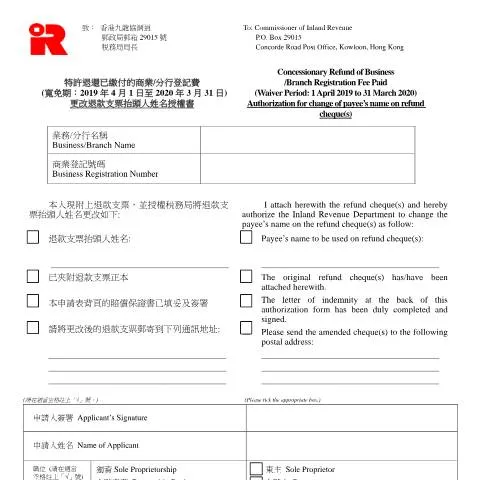
In the dynamic business landscape of Hong Kong, clarity and precision in administrative processes are paramount. The Authorization for Change of Payee’s Name on Concessionary Refund Cheque (IRBR 188B, 3/2019) stands out as a crucial document for businesses seeking to amend the name of the payee on their refund cheque. Understanding the intricacies of this form is essential for smooth transactions with the Inland Revenue Department (IRD).
What Sets This Authorization Apart?
Unlike other forms related to business registration, the IRBR 188B focuses specifically on the amendment of the payee's name on a refund cheque. This may seem straightforward, but it is often confused with similar documents such as the Business Registration Form or Tax Return Forms. Here’s how it differs:
- Document Purpose: While business registration forms establish a business's existence, the IRBR 188B specifically facilitates an amendment related to financial transactions.
- Target Audience: This form is predominantly for businesses that have paid a registration fee and are seeking a refund, whereas other forms cater to business establishment or tax declaration.
- Submission Requirements: The submission process for the IRBR 188B may include unique prerequisites, including the original cheque and a letter of indemnity, which are not required for other typical forms.
Dissecting the Form: A Step-by-Step Approach
Filling out the IRBR 188B accurately is crucial to avoid delays. Below is a detailed walkthrough of each section of the form, highlighting potential pitfalls:
1. Business/Branch Name and Registration Number
This section demands the official name of your business as registered, along with the Business Registration Number. It’s vital to ensure that these details match exactly with those on file with the IRD to avoid discrepancies.
2. Payee's Name Modification
When indicating the new name for the payee on the refund cheque, ensure it is correctly spelled and formatted. This section is critical as any errors can lead to the rejection of your request.
3. Attach Supporting Documents
Along with the completed form, you must attach the original refund cheque(s). This requirement is often overlooked, leading to unnecessary delays. Additionally, the letter of indemnity must be completed accurately, as it protects both the applicant and the IRD against any claims related to the cheque.
4. Applicant’s Signature
The applicant’s signature must match the one used in prior submissions to the IRD. If the applicant is a corporate entity, make sure that the designated signatory is authorized to sign on behalf of the company.
5. Witness Signature
A witness is required for this form to validate the signature of the applicant. Ensure that the witness is an individual who can legally attest to the authenticity of the document.
The Chronological Journey: From Submission to Outcome
Understanding the timeline of this process can help manage expectations:
- Preparation: Gather the necessary documents, including the original cheque and a completed letter of indemnity.
- Submission: Submit the IRBR 188B along with the attachments to the IRD. Ensure you do this within the waiver period (1 April 2019 to 31 March 2020) to qualify for the refund.
- Processing: The IRD will review your submission. This may take several weeks, depending on their workload.
- Outcome Notification: You will receive a notification regarding the approval or rejection of your request. If approved, the cheque will be reissued with the new payee name.
Understanding the Administrative Review Process
Once submitted, the IRD undertakes a thorough review of the application. Here’s how you can track your request:
- Contact Details: Maintain open lines of communication with the IRD through their official contact methods. Having your business registration number at hand can expedite the process.
- Follow-Up: If you haven’t received a response within the expected timeline, consider reaching out to the IRD for an update.
- Documentation: Keep a record of all submitted documents and communications. This can be useful in case of disputes or delays.
Historical Context: Legal Framework and Relevance
The necessity for this specific authorization form is grounded in the Basic Law of the Hong Kong Special Administrative Region, which provides the legal framework for business operations and tax regulations. The waiver period associated with the form is a reflection of the government’s efforts to streamline business processes and alleviate financial burdens during specific fiscal years.
Unique Cases: Handling Complex Situations
There are instances where the application process can become complex, especially for certain demographics:
Foreign Entities
For businesses registered outside Hong Kong, additional documentation may be required to verify the legitimacy of changes requested. Ensure compliance with local laws, as the IRD may have different processing protocols for foreign entities.
Minors and Guardian Signatures
If the applicant is a minor, a guardian must authorize the form. This requires additional signatures and possibly supporting documents to confirm the guardian's identity and authority.
Urgent Requests
In urgent situations, it is advisable to contact the IRD directly. While standard processing times apply, the department may accommodate urgent requests depending on the circumstances.
Practical Tips for a Smooth Submission
To enhance the likelihood of a successful application, consider the following tips:
- Double-Check Everything: Review all entries for accuracy. Small errors can cause significant delays.
- Keep Copies: Always make copies of submitted documents for your records. This can be invaluable if any issues arise.
- Understand the Deadlines: Be fully aware of the timelines associated with your application. Missing a deadline can result in forfeiture of the refund.
- Stay Informed: Follow changes in regulations or procedures by the IRD, particularly those that can impact refund processes.
| Step | Description | Timeframe |
|---|---|---|
| Preparation | Gather documents, complete the form | 1-2 days |
| Submission | Submit the form and attachments | Day of preparation |
| Processing | IRD reviews the application | 2-6 weeks |
| Outcome Notification | Receive approval or rejection | Varies |
By familiarizing yourself with the requirements and nuances of the Authorization for Change of Payee’s Name on Concessionary Refund Cheque, you enhance your ability to navigate the administrative landscape of Hong Kong effectively. With the right preparation and understanding, you can ensure that your application process is as seamless as possible, paving the way for successful financial outcomes for your business.
Understanding the Concessionary Refund Cheque System
The Concessionary Refund Cheque system in Hong Kong was implemented as part of the government's initiatives to provide financial relief to specific groups during designated periods. The Waiver Period from 1 April 2019 to 31 March 2020, for instance, was aimed at helping businesses and individuals affected by various economic challenges. This program allowed eligible applicants to receive refunds under certain conditions, which included the requirement to maintain accurate records and adhere to the application protocols set forth by the government.
To apply for the refund, individuals and businesses must ensure that they are registered with the appropriate authorities, such as the Companies Registry (CR) and have the necessary documentation in place. Understanding the nuances of the refund process, including eligibility, application deadlines, and required forms, is crucial for a successful claim. Additionally, applicants need to be aware of the specific classifications under which they fall, as this may affect their eligibility for receiving the refund or the amount they are entitled to. The government provides resources and guides to assist applicants in navigating this system effectively.
Eligibility Criteria for Change of Payee’s Name
Changing the payee's name on a concessionary refund cheque involves meeting specific eligibility criteria set by the authorities. Generally, this process is designed for individuals or businesses that have experienced a legitimate change in their name, whether due to rebranding, legal reasons, or personal circumstances. It is important to provide adequate evidence supporting the name change, which may include legal documentation such as court orders, marriage certificates, or business registration amendments.
Furthermore, it is essential that the original cheque has not been cashed or deposited prior to the change request. Any attempt to change the payee's name after the cheque has been processed could lead to complications, including potential legal ramifications or delays in the refund process. Therefore, those wishing to initiate a name change should act promptly and ensure all required documentation is submitted in a timely manner.
Applicants should also be aware that there may be specific forms designated for this purpose, which must be filled out accurately to prevent complications. The relevant form might be the 'Application for Change of Payee Name' (specific form number may vary), which can typically be found on the official government or financial authority websites. Understanding the complete procedural requirements will help streamline the process of changing the payee's name on the concessionary refund cheque.
Practical Steps to Initiate the Change of Payee’s Name
Initiating the change of payee's name on a concessionary refund cheque involves a series of specific practical steps. Firstly, applicants must gather all necessary documents that substantiate their request. This may include the original cheque, legal identification (HKID), and all relevant documentation that justifies the name change.
Next, it is advisable to fill out the required form accurately. Depending on the specific instructions provided by the government authorities, this form can often be downloaded from the respective official website in both English and Traditional Chinese. Be sure to double-check the form for any required signatures and additional information needed to avoid unnecessary processing delays.
Once completed, the application should be submitted either electronically or physically, depending on the options available. It is important to note that deadlines for submission are strictly enforced, and failure to comply can result in forfeiting the refund. Maintaining a record of submission and any correspondence is essential for tracking the progress of the request.
Lastly, applicants should monitor their application status closely. If there are any queries or the need for additional information arises from the authorities, responding promptly can expedite the resolution process. In the case that the request is approved, the updated cheque will be issued under the new payee's name, completing the overall process efficiently.