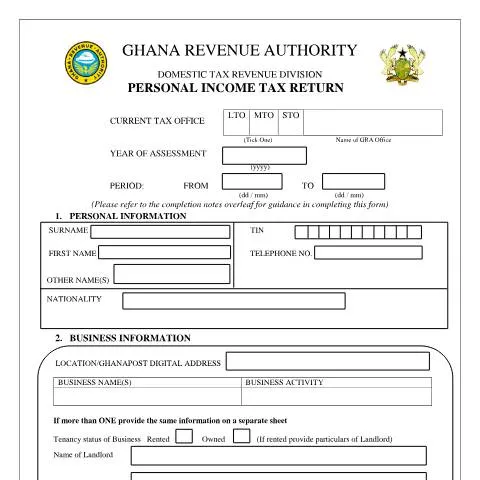
Understanding the Personal Income Tax Return Form DT-0103
Navigating the intricacies of taxation in Ghana can be daunting, yet it is imperative for individuals to comply with the country's tax laws. The Personal Income Tax Return Form DT-0103, known officially as the Personal Income Tax Return Form V103 Ver 1.1, is a critical document in this process. This form serves as an essential tool for taxpayers to report their incomes, compute taxes owed, and adhere to their legal obligations under the Ghana Revenue Authority (GRA).
Navigating Submission Channels for Form DT-0103
Taxpayers have multiple submission channels available for the DT-0103 form, each catering to different preferences and circumstances. Understanding these channels is crucial for ensuring timely submission and compliance.
Online Submission
The online submission has gained popularity due to its convenience and efficiency. Taxpayers can access the GRA's digital services through ghana.gov.gh, where they can complete and submit the DT-0103 form electronically. This method is often preferred for its speed, as it allows for immediate processing and reduces the potential for errors associated with manual entry.
Submission via Mail
For those who may not have reliable internet access or prefer traditional methods, submitting the DT-0103 via postal mail is an alternative. Taxpayers should ensure that they send the completed form to their respective local tax office (LTO, MTO, or STO) to avoid unnecessary delays. It's advisable to use registered mail to track the submission.
In-Person Submission
Submitting the form in person at the local tax office allows for immediate clarification of any uncertainties with GRA officials. Taxpayers can receive guidance directly while submitting Form DT-0103, which could be particularly beneficial for first-time filers or those with complex financial situations.
The Role of Form DT-0103 in the Tax Filing Process
Form DT-0103 is not just a standalone document; it fits into a broader tax compliance framework. It provides vital information that helps the GRA assess individual tax liabilities accurately.
Integration with the Ghana Card and TIN
This form is closely tied to the taxpayer’s Ghana Card and Tax Identification Number (TIN). The Ghana Card serves as a primary form of identification, while the TIN is essential for tax purposes. When filling out the DT-0103, the taxpayer’s TIN must be included, ensuring that all reported income is accurately linked to the individual’s tax profile in the GRA database.
Importance of Accurate Reporting
Completing Form DT-0103 accurately is essential for avoiding penalties. Any discrepancies or omissions can lead to audits or additional inquiries by the GRA. This reinforces the importance of meticulous record-keeping and reporting.
Components and Criteria for Completing Form DT-0103
Completing the DT-0103 requires thorough attention to detail, especially in the following sections:
Personal and Business Information
The initial sections of the form require personal information, including:
- Name and contact details
- NIA and TIN numbers
- Business information if self-employed or engaged in business activities
It's crucial to ensure that all information matches the official documents to prevent issues during processing.
Income Sources
In this section, taxpayers declare various sources of income, which include:
- Business income
- Employment income
- Investment income
Each source must be detailed accurately, with necessary calculations attached. Taxpayers should prepare financial statements and supplementary documents to support their claims for business income and any other deductions.
Tax Computation Section
Taxpayers must compute their tax liability through a series of calculations outlined in the form. This includes:
- Net business profit or loss
- Assessable income
- Deductions and reliefs
Understanding the tax rates applicable and how to apply deductions is vital. Taxpayers are encouraged to familiarize themselves with the latest tax brackets and relief measures to ensure they benefit from any available tax reductions.
Supportive Documentation and Its Importance
Preparing the appropriate documentation is a pivotal part of the tax return process. This ensures that the GRA can verify the reported figures, which could save taxpayers from future complications.
Financial Statements
For business owners, attaching professionally prepared financial statements is often necessary. These should include:
- Income statements
- Balance sheets
Such documents substantiate reported business incomes and help in demonstrating compliance with tax obligations.
Employment Letters and Payslips
Employees must provide documentation from their employers, including:
- Payslips from the assessment year
- Letters confirming employment status and income
These documents verify the amounts reported in the employment income section of Form DT-0103.
Investment Documentation
Taxpayers reporting income from investments should prepare:
- Dividend statements
- Interest certificates
These will validate claims for investment income and ensure accurate reporting.
Tracking the Progress of Your Submission
Once Form DT-0103 is submitted, taxpayers may wish to track its status to ensure compliance and address any issues that may arise.
Contacting the GRA
Taxpayers can contact their local GRA office for updates. It is advisable to have the TIN and relevant submission details at hand to expedite the inquiry process. The GRA may also provide an online tracking system for submissions.
Receiving Confirmation
After processing, taxpayers should receive a confirmation of tax liability or any adjustments made. This communication is key for understanding any owed amounts or entitlements to refunds.
Addressing Issues: Handling Refusals and Incompleteness
Taxpayers may encounter issues related to refusal or rejection of their Form DT-0103 due to various reasons, such as incomplete information or missing documentation. Here’s how to navigate these situations:
Responding to Rejections
Upon receiving a rejection notice from the GRA, the taxpayer should carefully review the reasons cited. The following steps can be taken:
- Correct any highlighted inaccuracies.
- Gather any additional documentation as required.
- Resubmit the form promptly to avoid penalties for late filing.
Handling Missing Documents
If the GRA identifies missing attachments, taxpayers are encouraged to proactively obtain and submit the necessary documents. This may include reaching out to employers for verification letters or obtaining financial statements from accountants.
Considerations for Specific Taxpayer Categories
Certain taxpayers, such as non-residents or minors, may face unique situations when completing Form DT-0103. Understanding these nuances is critical.
Non-Residents
Non-resident individuals earning income within Ghana must adhere to specific tax regulations. They are obligated to complete Form DT-0103, declaring their Ghanaian-sourced income. They should ensure compliance with any treaties between Ghana and their home countries that may affect tax obligations.
Minors and Dependents
Minors typically do not file taxes independently, but their income may still require reporting, especially if sourced from investments. In cases involving minors, guardians should complete the form on their behalf and ensure that all income is reported accurately.
Differentiating Form DT-0103 from Other Tax Forms
Taxpayers often confuse Form DT-0103 with other similar tax forms. Understanding these distinctions can clarify which form is appropriate based on individual circumstances.
Comparison with Other Income Tax Forms
| Form Code | Purpose | Target User |
|---|---|---|
| DT-0103 | Personal Income Declaration | Individuals earning income (employees, business owners) |
| DT-0104 | Company Tax Return | Corporate entities |
| DT-0105 | Withholding Tax Return | Businesses withholding tax on payments |
Each form serves a distinct purpose, and using the correct form is essential for compliance and accurate tax assessment.
Final Steps Before Submission
Before submitting the DT-0103, there are final checks that can prevent complications:
Review and Double-Check
Taxpayers should conduct a thorough review of the entire form:
- Ensure all personal information is up-to-date.
- Verify calculations in the tax computation section.
- Confirm that all necessary documentation is attached.
Deadline Awareness
Understanding the submission deadlines is vital to avoid penalties. The GRA typically sets annual deadlines that must be adhered to, which vary depending on the taxpayer's classification (e.g., individual, business). Mark your calendar with these critical dates to remain compliant.
Understanding the Personal Income Tax Return Form V103 Ver 1.1
The Personal Income Tax Return Form V103 Ver 1.1 is a crucial document for individuals in Ghana to report their earnings and ensure compliance with the Ghana Revenue Authority (GRA) tax regulations. This form caters to individuals, including employees and self-employed persons, who need to declare their income, deductions, and tax liabilities. It is essential to understand the different sections of the form to accurately fill it out and avoid potential penalties due to errors or omissions.
When completing the V103 form, taxpayers must provide detailed information about their income sources. These details include salaries, wages, bonuses, and any earnings from self-employment. It is advisable to maintain accurate records of all income and related transactions throughout the tax year to facilitate this process.
In addition to reporting income, taxpayers should also be aware of allowable deductions that can reduce their taxable income. Common deductions include contributions to retirement savings schemes, life insurance premiums, and expenses incurred in the generation of income. Understanding what qualifies as a deductible expense can significantly affect the overall tax liability.
To further elaborate, the V103 form consists of several key sections including:
Personal Information: This section requires the taxpayer's Ghana Card number, Tax Identification Number (TIN), and contact information. It is imperative to ensure that all information matches with the records held by the GRA to avoid discrepancies.
Income Details: Here, you will list all forms of income as per the regulations. It is critical to report all income accurately and comprehensively to reflect true earnings.
Deductions: Taxpayers must carefully list all applicable deductions as per GRA guidelines to reduce taxable income legitimately.
Calculation of Tax Payable: In this section, taxpayers will compute their tax liability using the progressive tax rates established by the GRA. Keeping abreast of these rates is essential, as they may change periodically.
Declaration and Signature: The form concludes with a declaration that the information provided is true and accurate to the best of the taxpayer's knowledge. This section must be signed and dated to validate the return.
Taxpayers should ensure that they submit their Personal Income Tax Return Form V103 Ver 1.1 by the deadline, which is typically 30th April each year, for the preceding tax year (1st January to 31st December). Late submissions could attract penalties or interest on any outstanding taxes owed.
Common Challenges and Solutions in Filling Out the V103 Form
Many taxpayers face challenges when it comes to filing their Personal Income Tax Return Form V103 Ver 1.1. Knowledge of these common obstacles and their solutions can greatly enhance the filing experience and ensure compliance with tax regulations.
One prevalent challenge is the lack of clarity regarding deductible expenses. Many individuals are unaware of what qualifies as a legitimate deduction. To overcome this, it is recommended that taxpayers consult the official GRA guidelines or seek assistance from tax professionals who can provide clarity on allowable deductions. Furthermore, maintaining meticulous records throughout the year can assist in identifying eligible deductions more easily during the filing process.
Another common issue is related to accurate income reporting. Self-employed individuals, in particular, may struggle to track all sources of income. Implementing effective bookkeeping practices, such as using accounting software or maintaining physical records, can help individuals keep track of all income streams more efficiently. Keeping receipts and invoices organized will serve as valuable documentation in case of an audit by the GRA.
Another significant challenge is meeting the submission deadline. Procrastination can lead to rushed filings, increasing the likelihood of mistakes. To mitigate this risk, taxpayers should create a filing schedule well ahead of the deadline. Setting reminders and breaking down the filing process into manageable tasks can help ensure timely and accurate submissions.
Lastly, many taxpayers may find themselves confused by the tax rates applicable for their income levels. As tax rates can change, it is advisable to refer to the GRA’s official website or consult with a tax advisor to ensure that the latest rates are used in calculations. Utilizing online tax calculators can also be helpful in estimating tax liabilities based on current rates.
Importance of Compliance and the Role of the Ghana Revenue Authority (GRA)
Understanding the importance of compliance when it comes to tax obligations is essential for every taxpayer in Ghana. The Ghana Revenue Authority (GRA) plays a pivotal role in the enforcement of tax laws, collection of taxes, and ensuring that citizens adhere to their tax responsibilities. The V103 Form is not just a requirement but also a means to contribute to national development through tax revenue.
Tax compliance fosters a culture of accountability and responsibility among individuals and businesses. When taxpayers fulfill their obligations, it enhances the government's ability to provide essential services, invest in infrastructure, and stimulate economic growth. By contributing their fair share of taxes, citizens play an active role in nation-building and development.
Failure to comply with tax obligations can lead to legal consequences, including fines and penalties, and can hinder a taxpayer’s ability to obtain necessary permits or licenses. The GRA has established a system of audits and reviews to ensure compliance, and they have the authority to sanction defaulters. Therefore, it is crucial for taxpayers to understand their responsibilities and ensure timely and accurate submissions of their tax returns.
Moreover, with the advent of digitalization, the GRA has made efforts to simplify tax compliance through initiatives such as the Ghana Integrated Financial Management Information System (GIFMIS). This development provides taxpayers with easier access to their tax information and facilitates the filing process.
In conclusion, engaging with the GRA and staying informed about tax obligations can greatly enhance the experience of filing the Personal Income Tax Return Form V103 Ver 1.1. It is essential to view tax compliance as not only a legal obligation but also a means of contributing to the socio-economic development of Ghana.