When Statutory Maternity Pay Becomes a Roadblock: The Employer's Formal Refusal Process
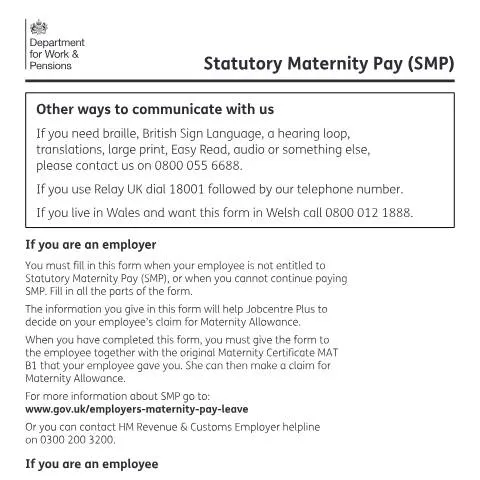
For thousands of expectant mothers across the UK, the anticipation of Statutory Maternity Pay represents crucial financial security during one of life's most significant transitions. Yet not every pregnancy journey leads to this entitlement. When employers cannot provide SMP—whether due to insufficient earnings, inadequate employment duration, or procedural missteps—the Department for Work and Pensions requires a formal notification process that bridges the gap between employer obligations and employee rights.
This official notification system serves a dual purpose: it provides transparent documentation of why SMP cannot be paid whilst simultaneously opening the pathway to Maternity Allowance through Jobcentre Plus. The form represents more than administrative paperwork; it's the pivotal document that transforms a potentially contentious workplace situation into a structured process with clear next steps for all parties involved.
The Legal Framework Behind SMP Refusal Documentation
The requirement for employers to formally document SMP refusal stems from the Social Security Contributions and Benefits Act 1992, which established the statutory framework for maternity payments. This legislation recognises that whilst SMP remains the primary route for maternity support, not all employment relationships meet the stringent qualifying criteria.
The 26-week employment test represents the most common barrier to SMP entitlement. Employees must have worked continuously for their employer for at least 26 weeks into the 15th week before their baby's due date—a requirement that excludes many workers in temporary positions, those who've recently changed jobs, or individuals in seasonal employment.
Equally significant is the Lower Earnings Limit threshold, which requires average weekly earnings to meet National Insurance contribution levels. For the 2024-25 tax year, this threshold stands as a moving target that affects part-time workers, those with irregular hours, or employees whose earnings fluctuate seasonally.
The formal documentation requirement ensures that employees receive clear explanations for refusal decisions, preventing misunderstandings that could lead to employment disputes or delayed benefit claims. It also provides HMRC with necessary records for monitoring employer compliance with statutory payment obligations.
Decoding the Four-Part Structure: From Employee Details to Refusal Reasons
Part A establishes the employee's identity through standard identifiers: full name, address, National Insurance number, and internal employee reference numbers. The emphasis on black ink and capital letters reflects the form's processing requirements—these details will be manually input into DWP systems, making legibility crucial for accurate record-keeping.
The National Insurance number field requires particular attention, with its specific format of two letters, six numbers, and a final letter. Employers must transcribe this exactly as it appears on the employee's documentation, as any discrepancy could delay Maternity Allowance processing.
Part B presents the core decision framework through two checkbox options. The first addresses complete SMP ineligibility, whilst the second covers situations where SMP payments must cease after a specific date. This distinction proves vital for employees who may have received partial SMP before circumstances changed—perhaps due to returning to work earlier than planned or changes in their legal status.
When employers tick the second box, they must specify the exact date when SMP payments end, using the week-ending format that aligns with payroll cycles. This precision ensures that any Maternity Allowance claim begins at the correct point, preventing payment gaps or overlaps.
Critical Date Calculations in Part C
Part C requires employers to demonstrate their understanding of SMP timing calculations through three key dates. The baby's due date establishes the baseline for all other calculations, whilst the qualifying week—15 weeks before the due date—determines both employment duration requirements and earnings assessment periods.
The Maternity Pay Period typically begins 11 weeks before the due date, though employees can choose to start later. Employers must document when this period would have commenced, even when refusing SMP, as this information helps Jobcentre Plus calculate Maternity Allowance entitlement periods.
| Calculation Element | Timing | Purpose |
|---|---|---|
| Qualifying Week | 15 weeks before due date | Employment and earnings assessment |
| Earliest SMP Start | 11 weeks before due date | Determines payment period commencement |
| Latest SMP Start | Day after birth | Automatic trigger if not already started |
The Seven Grounds for SMP Refusal: Understanding Part D's Checkbox Matrix
Insufficient employment duration represents the most frequently cited refusal reason. The 26-week continuous employment requirement excludes workers who've changed jobs recently, even if their total working experience exceeds this period. Importantly, employment breaks of more than one week typically restart the qualifying period, affecting workers who've had temporary layoffs or unpaid leave.
The earnings threshold calculation encompasses all payments subject to National Insurance contributions, including overtime, bonuses, and certain benefits-in-kind. However, expenses, pension contributions, and salary sacrifice arrangements can complicate these calculations. Employers must include contractual benefits and special National Insurance arrangements in their assessments, potentially affecting workers whose basic salary appears insufficient but whose total package meets the threshold.
Insufficient notice periods create particular challenges in modern employment relationships. The 28-day advance notice requirement for maternity leave often conflicts with unpredictable pregnancy outcomes or medical recommendations for immediate work cessation. The form acknowledges that "good reason" exceptions exist, but employers must make these determinations case-by-case, considering medical evidence and individual circumstances.
Medical Evidence and Timing Requirements
The medical evidence deadline—typically the Maternity Certificate MAT B1 within three weeks of the Maternity Pay Period start—poses practical challenges when pregnancies don't follow standard timelines. GPs cannot issue MAT B1 certificates before the 20th week of pregnancy, creating tight windows for employees whose babies arrive early or whose work cessation is medically urgent.
The 13-week extension for "good reason" provides flexibility, but employers must evaluate whether circumstances justify delayed submission. Medical complications, postal delays, or administrative errors within healthcare systems typically constitute good reason, whilst simple oversight or misunderstanding may not.
Post-birth notification requirements affect employees whose babies arrive unexpectedly early or whose employment status changes around the birth. The 28-day notification window begins from the actual birth date, not the expected due date, accommodating premature births whilst maintaining administrative order.
Legal Custody and Post-Birth Employment: Complex Scenarios
Legal custody restrictions present unique administrative challenges, particularly when custody status changes during pregnancy or the maternity period. Employees in police custody, immigration detention, or serving prison sentences lose SMP entitlement, but temporary detention or bail conditions may not trigger this exclusion. Employers must distinguish between different types of legal custody and their varying impacts on benefit entitlement.
The return-to-work provisions address situations where employees commence employment with new employers during their maternity period. This typically occurs when employees resign during pregnancy and secure new positions before their babies arrive. The form specifically addresses work that begins after birth with employers who didn't employ the individual during the qualifying week, preventing double-entitlement situations.
The Bridge to Maternity Allowance: Coordinating Benefits Transition
The form's ultimate purpose extends beyond documenting SMP refusal—it facilitates the transition to Maternity Allowance, which operates under different eligibility criteria managed by Jobcentre Plus. Unlike SMP's employment-based qualification system, Maternity Allowance considers broader employment history, including work for multiple employers and self-employment periods.
When employers complete this form, they must return both the completed document and the original MAT B1 certificate to the employee. This package becomes the foundation for the Maternity Allowance claim, providing Jobcentre Plus with verified employment information and medical certification. The seamless handover prevents delays that could leave new mothers without financial support during their maternity period.
Calculation differences between SMP and Maternity Allowance mean that some employees may receive higher payments through the allowance system, particularly those with diverse employment histories or those who've worked for multiple employers during the qualifying period. The allowance system can aggregate earnings from various sources, potentially benefiting workers in portfolio careers or those transitioning between employment types.
Processing Timelines and Employee Rights
Once employees receive their completed refusal form, they typically have up to three months after their baby's birth to claim Maternity Allowance, though earlier claims often process more smoothly. Jobcentre Plus aims to process straightforward claims within four to six weeks, though complex cases involving multiple employers or disputed employment details may take longer.
The form includes specific contact information for employees who disagree with their employer's refusal decision. The HM Revenue & Customs Statutory Payments Dispute team (0300 322 9422) provides independent review of employer decisions, particularly valuable when earnings calculations are disputed or when employment duration interpretations differ between parties.
Employer Obligations and Dispute Resolution Pathways
Employers completing this form assume significant responsibility for accurate information provision. Incorrect date calculations, earnings assessments, or employment duration determinations can affect not only immediate SMP decisions but also subsequent Maternity Allowance claims. The Department for Work and Pensions may audit these forms, particularly when benefit claims appear inconsistent with employer declarations.
Record-keeping requirements extend beyond form completion. Employers must retain supporting documentation including payroll records, employment contracts, attendance records, and correspondence related to maternity leave notifications. These records prove essential if disputes arise or if HMRC conducts compliance reviews.
The form's reference to the SMP calculator (www.gov.uk/calculate-your-maternity-pay) provides employees with independent verification tools. Significant discrepancies between employer calculations and official calculator results often indicate errors in earnings assessment or qualifying period determination, warranting further investigation.
For employers uncertain about their refusal grounds, the HMRC Employer helpline (0300 200 3200) offers guidance on complex scenarios. Common consultation areas include earnings calculations for irregular workers, employment continuity assessments for seasonal staff, and medical evidence evaluation timeframes. Early consultation prevents errors that could expose employers to successful appeals or compliance penalties.
The dispute resolution process through HMRC provides structured recourse for employees challenging refusal decisions. This independent review examines employer calculations, policy interpretations, and procedural compliance, offering binding determinations that protect both parties' interests. Successful appeals may result in backdated SMP payments, whilst unsuccessful challenges confirm the validity of Maternity Allowance claims, ensuring continuous support throughout the resolution process.
Managing Employee Expectations and Communication Protocols
When informing an employee that they're not entitled to Statutory Maternity Pay, employers must handle the situation with sensitivity whilst maintaining clear professional boundaries. The communication process extends beyond simply completing the SMP1 form and requires careful consideration of timing, method, and supporting documentation.
Best practice dictates that employers should arrange a face-to-face meeting or video call to discuss the SMP decision before issuing the formal SMP1 form. This allows for questions to be addressed immediately and demonstrates respect for the employee's circumstances. During this conversation, employers should clearly explain which specific eligibility criteria haven't been met, whether that's insufficient earnings, inadequate service length, or missing documentation.
The timing of this communication is particularly sensitive. Whilst there's no statutory requirement to provide the SMP1 form immediately upon receiving the maternity pay claim, employers should aim to complete their assessment within 28 days of receiving proper notice. Delays can cause significant stress for expectant mothers who may be relying on SMP for financial planning purposes.
Documentation is crucial throughout this process. Employers should maintain detailed records of all communications, including dates of conversations, emails sent, and any additional information requested from the employee. This creates an audit trail that protects both parties and ensures compliance with employment law requirements.
When presenting the SMP1 form, employers should provide a clear covering letter that reiterates the key points discussed and offers information about alternative support options. This might include details about Maternity Allowance applications through Jobcentre Plus, or information about any enhanced maternity schemes the company operates that might still apply.
Employers should also be prepared to address common misconceptions. Many employees assume that working for a company automatically entitles them to SMP, not realising that personal eligibility criteria must also be satisfied. Clear explanation of the difference between statutory entitlements and company policies can prevent misunderstandings and potential grievances.
Record-Keeping Requirements and Audit Considerations
Proper record-keeping when processing SMP1 forms extends far beyond simply filing the completed document. Employers must maintain comprehensive records that demonstrate due diligence in their assessment process and provide evidence of compliance with statutory obligations.
HMRC requires employers to retain all SMP-related documentation for at least three years after the end of the tax year in which the decision was made. This includes the original SMP1 form, copies of all supporting evidence reviewed, payroll records showing earnings calculations, and any correspondence with the employee regarding their claim.
The earnings assessment documentation is particularly critical. Employers must retain detailed payroll records showing gross weekly earnings for the eight-week qualifying period, including any overtime, bonuses, or commission payments that contributed to the average. Where employees have had pay rises during the qualifying period, records must clearly show how the employer applied the pay increase retrospectively to earlier weeks in the calculation.
For employees with irregular working patterns or those who've had periods of absence during the qualifying period, additional documentation becomes necessary. This might include records of statutory sick pay periods, authorised unpaid leave, or adjustments made for weeks where no work was performed due to legitimate absence.
Digital record-keeping systems should include appropriate access controls and backup procedures to ensure data integrity. Many employers use payroll software that automatically calculates SMP eligibility, but manual verification and documentation of these calculations remains essential for audit purposes.
Regular internal audits of SMP processes can help identify potential compliance issues before they become problematic. This includes reviewing a sample of SMP1 forms issued during the tax year, checking calculation methodologies, and ensuring consistent application of eligibility criteria across different employee situations.
Where employers identify errors in previously issued SMP1 forms, they should promptly notify affected employees and, where appropriate, HMRC. This demonstrates good faith compliance efforts and can mitigate potential penalties during formal inspections.
Integration with Broader Maternity and Family Leave Policies
The SMP1 process doesn't exist in isolation but forms part of a broader framework of maternity and family leave entitlements that employers must navigate carefully. Understanding how SMP eligibility interacts with other statutory and company benefits is essential for providing comprehensive support to employees.
Even when an employee isn't entitled to SMP, they may still qualify for statutory maternity leave if they meet the service requirements. This creates situations where employers must process both an SMP1 form (declining pay) whilst simultaneously confirming entitlement to unpaid leave. Clear communication about these different aspects prevents confusion and ensures employees understand their full range of entitlements.
Shared Parental Leave arrangements add another layer of complexity to the SMP1 process. Where one parent isn't eligible for SMP, this affects the couple's ability to share statutory pay periods, even if both are entitled to share the leave itself. Employers should be prepared to explain these interactions and provide guidance on how SMP1 decisions impact broader family leave planning.
Company-enhanced maternity schemes often have different eligibility criteria from statutory entitlements. An employee who receives an SMP1 form might still qualify for enhanced company benefits, creating opportunities for employers to demonstrate support despite the statutory limitation. However, this requires careful policy design to ensure enhanced schemes don't inadvertently discriminate against employees with shorter service periods.
Occupational maternity schemes might also interact with SMP eligibility in complex ways. Some schemes offset statutory payments against enhanced benefits, meaning that an SMP1 decision affects the calculation of company payments. Employers must ensure their policy documentation clearly explains these interactions and that payroll systems are configured to handle the various scenarios correctly.
The relationship between SMP1 forms and pension contributions during maternity leave also requires consideration. Where employees aren't receiving SMP, arrangements for maintaining pension contributions during unpaid leave become more important. Employers should provide clear information about options for continuing pension savings and any company contributions that might continue during unpaid leave periods.
Return-to-work planning takes on additional significance when employees haven't received SMP during their leave. Financial pressures may influence return timing and arrangements, potentially affecting requests for flexible working or phased returns. Proactive discussion of these possibilities during the SMP1 process can help maintain positive employment relationships and support successful transitions back to work.