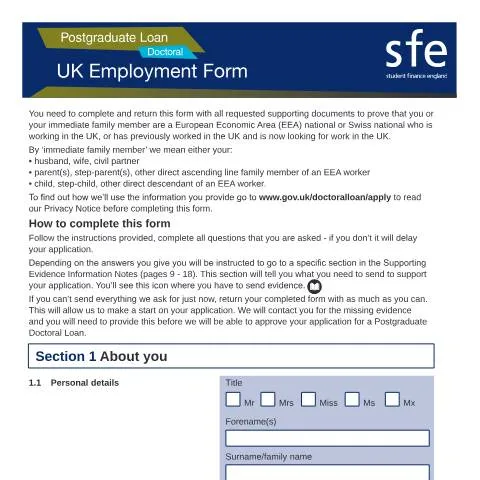
Understanding the 2022 to 2023 Postgraduate Doctoral UK Employment Form
Navigating the complexities of postgraduate funding can be daunting, especially for students who have family links to the European Economic Area (EEA) or Switzerland. The 2022 to 2023 Postgraduate Doctoral UK Employment Form plays a critical role in this process. This document is not merely a bureaucratic hurdle; it serves as a gateway for eligible individuals to access financial support for their doctoral studies in the UK. Understanding the nuances of this form, including who should submit it, how to fill it out correctly, and what to expect after submission, can significantly influence the success of your application.
Who Needs to Fill Out This Form? A Closer Look at Eligibility
The scope of the 2022 to 2023 Postgraduate Doctoral UK Employment Form is specific yet inclusive, catering primarily to those with EEA or Swiss nationality who fit certain employment criteria. However, there are various nuances to consider.
Direct Family Connections Matter
The form isn't solely for the applicant; it extends to immediate family members. According to the guidelines, if you are a spouse, civil partner, or a direct descendant of an EEA or Swiss national who either works or has previously worked in the UK, you might be eligible. Here are some of the key relationships recognised:
- Husband or wife
- Civil partner
- Parent or step-parent
- Child or step-child
Each of these connections is important for determining eligibility. If you think you might qualify, ensure that you gather all relevant details about your family member’s employment status in the UK.
Residence Status and Employment Conditions
Beyond family connections, your own residency and employment status are crucial. You must confirm whether you are currently working, previously employed, or actively seeking work in the UK. If you are not an EEA or Swiss national, your eligibility for a Postgraduate Doctoral Loan may depend on additional factors.
Regulatory Context: The Framework Behind the Form
The legal landscape surrounding student loans in the UK, particularly for those connected to the EEA or Switzerland, is shaped by both domestic and European legislation. The purpose of the 2022 to 2023 Postgraduate Doctoral UK Employment Form is rooted in the regulations governing student financial support, particularly as they relate to mobility and residency rights.
Legal Underpinnings
This form aligns with the provisions established in the Data Protection Act 2018 and the UK GDPR, ensuring that your personal data is handled appropriately. When you fill out this form, you are providing sensitive information, which must be safeguarded according to these legal standards. The Student Loans Company (SLC) takes these responsibilities seriously, which is why they advise applicants to review their Privacy Notice prior to submission.
The Role of Employment Verification
Employment verification is a significant aspect of this form. The need for proof of employment ensures that public funds are allocated fairly and that eligible recipients genuinely meet the criteria set forth. The SLC requires specific documentation that aligns with your employment status—whether you’re currently employed, self-employed, or actively seeking work after prior employment in the UK.
Completing the Form: Step-by-Step Instructions
Taking the plunge to fill out the form can feel overwhelming, but breaking it down into manageable steps can alleviate some of the stress.
Section Breakdown
The form comprises several sections, each designed to gather specific information. Below is a detailed guide to navigating the form effectively:
- Personal Information: This section requires basic details like your name, date of birth, and Customer Reference Number (if applicable).
- Residency Information: Determine if you are an EEA or Swiss national working or looking for work in the UK. Failure to answer this accurately could derail your application.
- Employment Status: You will need to declare whether you are employed or self-employed. Depending on your answer, additional evidence will be required, which brings us to the next section.
Each question must be answered thoroughly, as incomplete responses will delay the processing of your application.
Supporting Documents
In conjunction with your completed form, you must submit appropriate supporting documents. Depending on your employment situation, the evidence you’ll need to provide will vary:
| Employment Status | Required Documents |
|---|---|
| Current Employee | Pay slips, employment contract, or a letter from your employer |
| Self-Employed | Tax returns, business registration documents |
| Previously Employed | End-of-employment letter or last pay slip |
Make sure you read through the Supporting Evidence Information Notes carefully; these pages guide what needs to be included based on your specific circumstances.
Submission Process: Your Next Steps
Once you’ve completed the form and gathered your supporting documents, it’s time to submit your application. The way you submit the form can influence how quickly your application is processed.
Options for Submission
Currently, the form must be submitted via post. This method can take time, and delays can occur, so consider the following tips for a smoother submission experience:
- Ensure all sections of the form are completed accurately.
- Double-check that all supporting documents are included and clearly labelled.
- Consider using recorded delivery to track your application.
It’s crucial to submit all required information upfront. If you’re unable to provide everything at once, send in what you have and indicate that additional documentation will follow. The SLC may start processing your application based on what you submit initially, but you’ll eventually need to provide all necessary documents for approval.
Anticipating the Outcome: What Happens Next?
After submission, applicants often wonder what to expect in terms of processing time and communication from the SLC.
Waiting for a Decision
Once your form is processed, you will receive a notification regarding the status of your application. Depending on the completeness of your submission, this could take anywhere from a few weeks to a couple of months.
Responding to Queries
Be prepared to respond if the SLC reaches out for additional information. Promptly supplying any requested documents can expedite your application.
Special Considerations: Uncommon Situations
While the standard application process is fairly straightforward, some candidates might find themselves in unique situations that warrant special attention.
Working with Complications
For applicants with complex residency statuses or those who have faced challenges due to their employment history, there may be additional steps in the application process.
- International Students: If you’re a non-EEA or Swiss national with a family member who fits the criteria, consult the available guidelines for additional pathways to eligibility.
- Minors and Dependents: If you’re under 18, your application will require parental consent, and specific documentation will need to be submitted as part of your application.
Consulting the SLC's resources or seeking advice from a financial aid office can clarify any uncertainties surrounding your situation.
Preparation is Key: Final Tips for Success
As with any application process, being well-prepared is vital. It reduces the likelihood of errors and increases the chances of a favorable outcome.
Checklist for Your Application
Before hitting "send" on your application, use this handy checklist:
- Have you completed all sections of the form?
- Are your supporting documents gathered and organised?
- Have you reviewed your Privacy Notice?
- Is your submission method appropriate for tracking delivery?
Taking the time to ensure that everything is in order can make all the difference in the speed and success of your application.
Stay informed and engaged throughout the application process. Good luck as you embark on your postgraduate journey!
Understanding the 2022 to 2023 Postgraduate Doctoral Employment Form
The 2022 to 2023 Postgraduate Doctoral Employment Form is an integral part of the financial landscape for postgraduate students in the UK, particularly those pursuing doctoral studies. This form is used primarily to assess eligibility for certain financial support and tax benefits. In the UK, postgraduate doctoral researchers may need to navigate various employment forms, including the Postgraduate Doctoral Employment Form, to ensure they comply with both university regulations and HMRC requirements.
When filling out the form, it is crucial to understand its implications on your National Insurance contributions and how they interact with other income sources. For example, a student receiving a stipend may be required to declare that income, and the form will help determine whether or not they need to pay National Insurance contributions. Furthermore, the completion of this form might influence eligibility for benefits administered by the Department for Work and Pensions (DWP).
Aside from financial implications, completing this form accurately is vital to maintaining your student status. Inconsistencies or errors could lead to issues with student loans or grants, impacting your funding. Therefore, it is advisable to double-check all entries, ensuring that they align with your official university records and HMRC guidelines.
Common Challenges in Completing the Employment Form
Many postgraduate students face challenges when completing the 2022 to 2023 Postgraduate Doctoral Employment Form. One common issue is the ambiguity surrounding different types of income. For example, students often question how to report part-time work alongside research income. It is essential to provide a clear breakdown of all sources of income, including stipends, part-time work, and any freelance or consultancy income generated during your studies.
Another challenge is the varying requirements of different universities concerning the completion and submission of this form. Each institution may have its own guidelines regarding financial declarations, and students must ensure they comply with their specific university's rules while also adhering to national tax laws. This can lead to confusion, especially for international students unfamiliar with the UK system of tax and student funding.
Moreover, some students might overlook the importance of keeping records of their income. It's essential to maintain accurate records that can support the declarations made on the employment form. This documentation is not only beneficial for completing the form but may also be required in case of audits by HMRC or financial reviews by the university.
Future Implications of the Employment Form
Completing the 2022 to 2023 Postgraduate Doctoral Employment Form is not merely a one-time task but a document that may have lasting implications for your financial and professional future. For instance, the information provided can affect your credit score, impacting your ability to secure loans or mortgages post-graduation. HMRC uses the data from employment forms as a reference point for assessing your tax situation, which could influence future tax liabilities.
Additionally, many postgraduate students aim to transition into full-time employment following their studies. Accurately completing the employment form can help establish a solid financial history that may be beneficial when seeking future employment opportunities. Employers often check credit histories, and an organized approach to your finances can leave a positive impression.
In conclusion, the 2022 to 2023 Postgraduate Doctoral Employment Form serves as a pivotal element in a postgraduate student's financial journey. Understanding how to navigate the complexities of this document can yield significant benefits, from tax acknowledgments to future financial opportunities. Thus, students are encouraged to take the time necessary to complete this form thoroughly and correctly, seeking guidance when needed to avoid potential pitfalls.