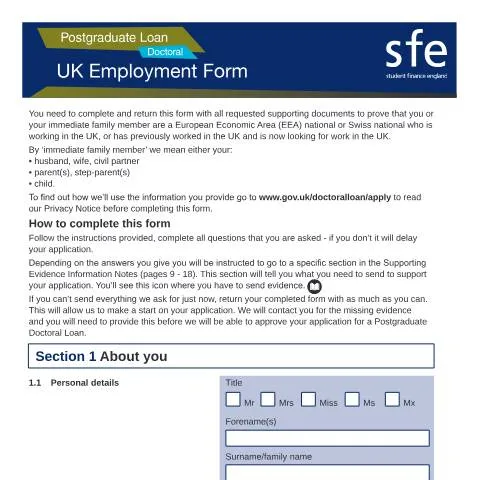
Navigating the 2021 to 2022 Postgraduate Doctoral UK Employment Form
Completing the 2021 to 2022 Postgraduate Doctoral UK Employment Form is a crucial step for European Economic Area (EEA) and Swiss nationals seeking financial support for their postgraduate studies in the UK. This form serves the purpose of assessing eligibility for a Postgraduate Doctoral Loan, and understanding its intricacies can significantly impact the financial direction of your academic journey. The implications of this document resonate not just within the confines of administrative procedures, but also affect the financial capabilities of students and their families.
The Legal Framework Behind the Form
The need for the Postgraduate Doctoral UK Employment Form arises from the Student Loans Company's commitment to ensuring that financial aid is allocated fairly and transparently. The framework is governed by regulations that require applicants to prove their residency status and employment background. This is rooted in the broader context of the UK's educational funding policies, which aim to support students whilst ensuring that resources are allocated to those eligible under specific criteria.
According to the Data Protection Act 2018 and UK GDPR, the information you provide on this form is not just to determine eligibility for loans; it is also a matter of legal compliance regarding data security and privacy. Thus, it's essential to comprehend both the purpose of the form and the legal obligations that surround it.
Understanding Your Eligibility: Who Should Fill Out This Form?
Eligibility for the Postgraduate Doctoral Loan is multifaceted. Before diving into the completion of the form, it's important to clarify some key definitions:
- EEA Nationals: These are individuals from European Economic Area countries who may have different residency rights based on their nationality.
- Swiss Nationals: Similar to EEA nationals, but specifically concerning those from Switzerland.
- Immediate Family Members: This includes your husband, wife, civil partner, parents, step-parents, and children.
It's particularly important to highlight the distinction between these categories, as it could affect your eligibility and the documentation you need to provide. If you are an EEA or Swiss national working in the UK, or have previously worked and are now seeking work, you are required to fill out this form.
Essential Steps to Complete the Form Effectively
Filling out the 2021 to 2022 Postgraduate Doctoral UK Employment Form requires careful attention to detail. Here are the essential steps to ensure that your application is processed smoothly:
- Gather Required Information: Before starting, collect all necessary personal details, including your Customer Reference Number (if you have one), and relevant information about your immediate family members who are EEA or Swiss nationals.
- Follow Instructions Closely: The form is divided into sections that address various aspects of your employment situation. Complete each section diligently, making sure to provide all requested information.
- Support Documentation: Depending on your employment status (employed or self-employed), you will be directed to specific sections in the Supporting Evidence Information Notes. Gather these documents ahead of time to avoid delays.
- Declarations: After completing the form, ensure to sign and date the declaration on page eight, confirming that all provided information is accurate to the best of your knowledge.
The Journey After Submission: What Happens Next?
After submitting the Postgraduate Doctoral UK Employment Form, the anticipation begins. The review process will involve the Student Loans Company examining your submission alongside any supporting documents provided. If everything is in order, you can expect to receive confirmation regarding your eligibility for the loan:
- If your application is approved, the Student Loans Company will communicate the next steps regarding your funding.
- In case of missing documents, you will receive a notification detailing what is required. It is advisable to respond promptly to avoid further delays.
- If your application is denied, you will be provided with specific reasons for denial. Understanding these reasons can help in addressing any deficiencies in future applications.
Comparing Submission Channels: Online vs. Paper Applications
The Student Loans Company offers multiple channels for submitting the Postgraduate Doctoral UK Employment Form. Each channel has its distinct advantages and implications:
| Submission Channel | Advantages | Considerations |
|---|---|---|
| Online Submission |
|
|
| Paper Submission |
|
|
Unique Circumstances: Cases to Consider
Not every situation fits neatly into the standard eligibility criteria for the Postgraduate Doctoral Loan. Several unique cases might require special consideration:
- Non-resident EEA or Swiss Nationals: If you are an EEA or Swiss national living outside the UK, you must provide evidence of your employment history in the UK and your intent to return for your studies.
- Dependent Family Members: If your application hinges on a family member's employment status, ensure that their current situation is accurately reflected in the form.
- Complex Employment Scenarios: If you have multiple jobs or have recently transitioned between employment statuses, clarity and thorough documentation will be essential. Delve into the specific sections of the form that apply to your situation.
Final Thoughts: Staying Informed and Prepared
The 2021 to 2022 Postgraduate Doctoral UK Employment Form is not merely an administrative hurdle, but a vital document that underpins your financial support system during your postgraduate studies in the UK. Navigating its requirements successfully means understanding not just the form itself, but also the broader contexts in which it operates. By being aware of the legal framework, your eligibility, and the process that follows, you can optimize your chances of receiving the necessary funding to support your academic endeavors.
Understanding the Importance of Accurate Reporting on the Postgraduate Doctoral Employment Form
Filling out the UK Postgraduate Doctoral Employment Form accurately is crucial not only for you as an individual but also for the institutions and organisations involved. This form provides essential data that can affect funding, program evaluations, and even the future of doctoral programs at universities across the UK. Universities rely on the information gathered to assess the employability of their graduates and to improve the programs offered. If inaccurate information is submitted, it could skew these assessments, leading to misguided changes that might not benefit future students.
Moreover, providing false information intentionally or unintentionally can lead to serious implications. The Data Protection Act 2018 mandates that personal data must be processed lawfully and fairly. This means you must ensure that all information given is truthful and accurate. Institutions often conduct their checks, and discrepancies may lead to your institution facing scrutiny from funding bodies or regulatory agencies.
Furthermore, as part of the UK’s commitment to transparency and accountability in higher education, data from these forms can influence national metrics regarding student employment outcomes. Thus, your participation in this process contributes to a larger narrative about the success rates of postgraduate students.
Special Cases: Self-Employment and Unconventional Work Arrangements
While most postgraduate doctoral students find employment in traditional roles after graduation, some may choose self-employment or work in unconventional arrangements. It’s important to note that this must be reported accurately on the Postgraduate Doctoral Employment Form. If you are self-employed, you are considered the owner of your business, and this brings unique reporting requirements.
When filling in the employment section, self-employed individuals should provide details about their business, including the nature of the work, and estimated income. Keep in mind that you may need to register with HM Revenue & Customs (HMRC) for self-assessment, which involves submitting an annual tax return detailing your earnings.
Additionally, if you engage in gig economy jobs or freelance work—common paths for many graduates—you must include this information as part of your employment record. Documenting all types of employment is vital for understanding the diverse paths graduates take and helps build a comprehensive view of employment trends for postgraduate students.
Your Income Tax National Insurance number becomes particularly important here, as it links your earnings to the correct tax filings. Be prepared to provide evidence of your earnings and any contracts or agreements that may detail your work arrangements. Accurate reporting not only aids in your compliance with tax laws but also enriches the data pool that universities and policymakers rely on for planning and improvement.
Future Implications: How the Employment Form Affects Policy and Funding
It’s noteworthy that the data collected through the Postgraduate Doctoral Employment Form plays a significant role in shaping educational policies and funding decisions at both the institutional and governmental levels. When universities analyse this data, they assess how well their doctoral programs prepare students for the job market. Consequently, this information can influence funding decisions that affect the availability of resources for future students.
For instance, if a particular university shows a high employment rate for its doctoral graduates, it may attract more funding, which can be channeled into enhancing academic resources, hiring faculty, or offering better student support services. Conversely, lower employment rates can trigger reviews of program curricula and support mechanisms, leading to significant changes that could impact future cohorts.
The UK government also uses aggregated data from these forms to inform policy decisions regarding higher education. This includes the distribution of grants and loans through organisations like the Student Loans Company, and how funds might be allocated to various educational initiatives aimed at improving employability outcomes for graduates. Thus, your honest reporting contributes to a more robust higher education landscape, impacting generations of students to come.