When Breathing Becomes a Driving Concern: Pulmonary Arterial Hypertension and Your Licence
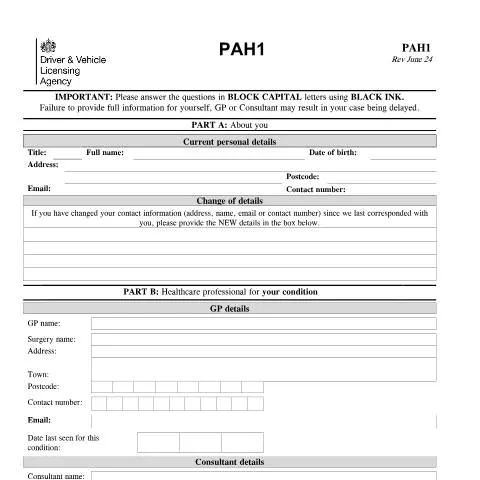
Living with pulmonary arterial hypertension (PAH) presents unique challenges that extend far beyond managing your daily symptoms. For the thousands of drivers across the UK who develop this serious cardiovascular condition, one critical obligation often catches them unprepared: the legal requirement to notify the Driver and Vehicle Licensing Agency. The PAH1 form serves as your formal declaration to DVLA, ensuring your driving privileges remain legally valid while protecting both yourself and other road users.
This isn't merely administrative paperwork. Failing to report PAH to DVLA constitutes a criminal offence under current driving regulations, potentially invalidating your insurance and exposing you to prosecution. The condition's propensity to cause sudden blackouts or fainting episodes makes this notification particularly crucial, as these symptoms can occur without warning whilst behind the wheel.
The PAH1 form specifically addresses two distinct variants of the condition: classic pulmonary arterial hypertension and chronic thromboembolic pulmonary hypertension. Both require immediate disclosure, regardless of how well-controlled your symptoms might appear or whether you've experienced any driving-related incidents.
Recognising Your Legal Obligation to Report
The duty to complete a PAH1 form arises automatically upon receiving a confirmed diagnosis of either form of pulmonary arterial hypertension. This obligation exists independently of symptom severity or treatment effectiveness. Even patients whose condition remains stable under medication must notify DVLA, as the Agency requires ongoing medical oversight of all PAH drivers.
Your reporting timeline becomes critical once diagnosed. While the regulations don't specify an exact deadline, the general principle requires "immediate" notification of any condition that might affect safe driving. Most medical professionals advise completing the PAH1 within two weeks of diagnosis, though urgent cases—particularly those involving recent blackout episodes—should trigger immediate submission.
The form's scope extends beyond newly diagnosed patients. Existing PAH patients must submit updated PAH1 forms when their condition deteriorates, treatment changes significantly, or when requested by DVLA during periodic reviews. This ensures the Agency maintains current medical information for licensing decisions.
Specialist Hospital Attendance Requirements
Section 2 of the PAH1 form highlights a crucial aspect of PAH management: attendance at designated specialist centres. The form specifically lists eight leading hospitals recognised for PAH treatment:
- Freeman Hospital, Newcastle
- Golden Jubilee Hospital, Glasgow
- Great Ormond Street Hospital, London
- Hammersmith Hospital, London
- Papworth Hospital, Cambridgeshire
- Royal Brompton Hospital, London
- Royal Free Hospital, London
- Royal Hallamshire Hospital, Sheffield
If you attend any of these centres—even if you also receive local care—you must indicate this on the form and provide your consultant's details. This information significantly influences DVLA's assessment process, as these centres maintain the highest expertise levels in PAH management and can provide the most comprehensive medical reports.
Blackout Episodes: The Critical Safety Factor
The PAH1 form dedicates substantial attention to blackout episodes, reflecting their paramount importance in driving safety assessments. These incidents encompass fainting, collapse, or even feeling that you might faint or collapse—the latter being particularly significant as it indicates the unpredictable nature of PAH-related symptoms.
DVLA distinguishes carefully between single episodes and recurrent blackouts. A solitary incident typically triggers a thorough medical review but may not automatically disqualify you from driving, provided appropriate medical management prevents recurrence. However, multiple blackout episodes generally result in licence suspension until medical evidence demonstrates adequate symptom control.
| Episode History | Typical DVLA Response | Required Evidence |
|---|---|---|
| Single blackout, PAH-related | Medical review, possible temporary restriction | Consultant report on treatment effectiveness |
| Multiple episodes, PAH-related | Licence suspension pending control | Extended monitoring data, treatment optimization |
| Episodes with unknown cause | Comprehensive investigation required | Full cardiological and neurological assessment |
| Episodes due to other conditions | Assessment based on underlying cause | Specialist reports for specific condition |
The timing of your most recent episode carries particular weight. Recent blackouts (within the past year) typically prompt more stringent assessments, while older episodes may be viewed more favourably if accompanied by evidence of sustained medical control.
Treatment Documentation Requirements
When reporting blackout episodes, DVLA requires detailed information about preventive treatments you've received. This extends beyond medication to include lifestyle modifications, activity restrictions, or surgical interventions. The Agency particularly values evidence that treatments have successfully prevented further episodes over a substantial period.
Your healthcare professional's assessment of fitness to drive holds significant influence over DVLA's decision. If any medical practitioner has advised you that PAH makes you unfit to drive, this must be declared on the form. Such advice typically reflects severe symptoms or inadequate treatment response, often resulting in immediate licence suspension.
Completing Your Medical Professional Details
Part B of the PAH1 form requires comprehensive information about both your GP and any specialist consultants managing your PAH. This dual requirement reflects the collaborative nature of PAH care, where general practitioners handle routine monitoring whilst specialists provide expert treatment decisions.
For GP details, ensure you provide current contact information including the surgery's direct telephone number and email address where available. DVLA frequently contacts GP surgeries directly to verify information or request additional medical records, making accurate contact details essential for avoiding delays in your case processing.
Consultant information proves particularly crucial given PAH's complexity. You must include your consultant's full name, medical specialty, hospital department, and complete contact details. The "date last seen" field requires precision—DVLA uses this information to assess how recently your condition has been professionally evaluated.
Managing Multiple Healthcare Relationships
Many PAH patients receive care from several specialists simultaneously: cardiologists, respiratory physicians, and sometimes cardiac surgeons. While the PAH1 form only requests details for one consultant, you should choose the practitioner most actively involved in your PAH management. If multiple consultants share equal responsibility, select the one you've seen most recently or who manages your primary PAH medications.
Patients receiving care at multiple locations—perhaps combining local monitoring with specialist centre visits—should prioritise the specialist centre consultant on their PAH1 form. These practitioners typically possess the most comprehensive understanding of your condition and can provide the detailed medical reports DVLA requires for licensing decisions.
Navigating the Authorisation and Declaration Process
The final section of the PAH1 form contains legally binding authorisations and declarations that cannot be modified. This section grants DVLA explicit permission to access your medical records and share relevant information with various healthcare professionals involved in assessing your fitness to drive.
Your signature authorises doctors to disclose medical information about your PAH to DVLA. This authorisation extends beyond your named GP and consultant to include any registered healthcare professional who may be consulted about your case. The scope encompasses orthoptists at eye clinics, paramedical staff at driving assessment centres, and members of the Secretary of State's Honorary Medical Advisory Panels.
The declaration section requires you to confirm the accuracy of all information provided. The form explicitly warns that making false declarations constitutes a criminal offence, emphasising the serious legal implications of providing incorrect information. This extends to omissions as well as active misrepresentations—failing to disclose relevant symptoms or medical advice can result in prosecution.
Electronic Communication Preferences
The PAH1 form offers options for electronic communication both with medical professionals acting for DVLA and for general correspondence about your application. Selecting email or SMS options can significantly accelerate communication, particularly when DVLA requires clarification or additional information.
However, consider your circumstances carefully before authorising electronic communication. If you share email accounts or mobile phones with family members, postal communication may provide greater confidentiality. Additionally, ensure any email addresses provided remain active throughout your case processing period, as DVLA may attempt electronic contact several months after your initial submission.
Submission Strategy and Processing Expectations
Successful PAH1 submission requires meticulous attention to detail, as incomplete forms invariably delay processing. The form explicitly states that missing information about yourself, your GP, or consultant will slow your case progression. Before submission, verify that every requested field contains accurate, current information written in block capitals using black ink.
Submit your completed PAH1 form to DVLA's medical department rather than general correspondence addresses. While the form itself doesn't specify submission addresses, DVLA's standard medical enquiry processes direct PAH1 forms to: Medical Enquiries, DVLA, Swansea, SA6 7JL. Include all five pages of the form, ensuring your signature appears clearly on the declaration page.
Processing timescales vary significantly based on your individual circumstances. Straightforward cases with stable PAH and no blackout history may receive responses within 4-6 weeks. However, complex cases requiring specialist medical reports or driving assessments can extend processing to several months. During this period, you may continue driving unless DVLA specifically instructs otherwise, provided you haven't been advised by medical professionals that you're unfit to drive.
Supporting Documentation Considerations
While the PAH1 form doesn't explicitly request supporting documents, providing relevant medical reports can expedite processing. Recent consultant letters, echocardiogram results, or exercise tolerance test reports help DVLA's medical advisers understand your condition without requesting additional information from your healthcare providers.
If you've experienced blackout episodes, consider including witness statements or detailed personal accounts of these incidents. Such information helps medical advisers assess episode characteristics and potential driving risks more accurately than brief form responses alone.
Understanding DVLA's Assessment Framework
DVLA evaluates PAH cases using established medical standards that balance public safety with individual mobility rights. The Agency's medical advisers consider multiple factors: your specific PAH type, symptom severity, treatment response, blackout history, and specialist medical opinions. This comprehensive assessment determines whether you can retain unrestricted driving privileges, require regular medical reviews, or face licence restrictions.
For Group 1 licences (ordinary cars and motorcycles), DVLA typically permits continued driving when PAH remains well-controlled under appropriate treatment and no blackout episodes have occurred. However, the Agency usually imposes regular review periods—commonly annual or biennial medical assessments—to monitor condition progression.
Group 2 licences (lorries and buses) face more stringent requirements due to enhanced public safety responsibilities. PAH patients rarely retain Group 2 entitlements, particularly if any blackout episodes have occurred. The demanding physical nature of commercial driving, combined with extended journey durations, creates unacceptable risks for most PAH patients.
Specialist centre attendance significantly influences assessment outcomes. Patients receiving care at recognised PAH centres often face fewer restrictions, as DVLA trusts these institutions' expertise in optimising treatment and monitoring condition stability. Conversely, patients managed solely in general cardiology settings may encounter more conservative licensing decisions.
Understanding the Assessment Process After Submission
Once your completed PAH1 form reaches the DWP assessment team, your case enters a structured evaluation process that can vary significantly depending on your specific medical condition and circumstances. The initial screening typically occurs within two to three weeks of receipt, during which administrative staff verify that all required sections have been completed and supporting evidence has been provided.
The assessment team comprises healthcare professionals including disability assessors, occupational health specialists, and medical advisers who review cases based on their area of expertise. For instance, mental health conditions are typically assigned to assessors with psychiatric or psychological backgrounds, whilst musculoskeletal conditions go to those with relevant physiotherapy or orthopaedic experience.
Your PAH1 form is evaluated alongside other evidence in your case file, including any existing medical reports, previous assessment decisions, and supporting statements from healthcare providers. The assessors apply the specific criteria relevant to your benefit claim - whether that's the Work Capability Assessment descriptors for ESA and Universal Credit, or the daily living and mobility components criteria for PIP.
In approximately 30-40% of cases, the information provided on the PAH1 form and accompanying evidence is sufficient to make a determination without requiring a face-to-face or telephone assessment. This is more likely when you have well-documented, stable conditions with clear functional impacts, or when you're already receiving ongoing treatment from specialist services.
However, if additional information is needed, you may be invited to attend a consultation with a healthcare professional. This isn't an indication that your PAH1 form was inadequate - rather, it's part of the standard process for gathering comprehensive evidence. During these consultations, assessors often refer back to specific points you've raised in your PAH1 form, so consistency between your written submission and verbal explanations is important.
The assessment timeline can extend from several weeks to several months, particularly if your case involves complex conditions or if additional medical evidence is requested from your treating clinicians. You'll typically receive written notification of any delays, and you can contact the relevant helpline for updates on your case progress.
Managing Multiple Conditions and Fluctuating Symptoms
Many claimants face the challenge of accurately representing multiple health conditions or symptoms that vary significantly over time on their PAH1 form. The DWP recognises that conditions rarely exist in isolation, and the assessment process is designed to consider the cumulative impact of all your health issues.
When completing your PAH1 form with multiple conditions, it's crucial to explain how these conditions interact and compound each other's effects. For example, if you have both depression and chronic pain, describe how the pain affects your mood and motivation, whilst the depression makes it harder to manage your pain effectively through self-care or attending medical appointments.
For fluctuating conditions such as multiple sclerosis, fibromyalgia, or bipolar disorder, the PAH1 form allows you to describe your functioning on both good and bad days. The key principle applied by assessors is whether you can reliably carry out activities - meaning you can do so safely, repeatedly, and in a reasonable timeframe on the majority of days.
Consider using a symptom diary approach when completing your form, even if you haven't kept a formal diary. Think through a typical week and identify patterns in your symptoms. For instance, you might note that joint stiffness is worst in the morning, fatigue peaks in the afternoon, or that stress significantly worsens your condition during certain periods.
When describing unpredictable symptoms, be specific about their frequency and impact. Rather than stating "I sometimes have panic attacks," explain "I experience panic attacks approximately twice weekly, lasting 20-30 minutes, during which I cannot leave the house or concentrate on any tasks." This level of detail helps assessors understand the real-world implications of your condition.
For progressive conditions, describe your current level of functioning whilst acknowledging the trajectory of your illness. The PAH1 form is assessed based on your present circumstances, but noting whether your condition is stable, improving, or deteriorating provides important context for decision-makers.
Don't forget to mention secondary conditions that have developed as a result of your primary health issue. These might include depression following a chronic pain diagnosis, anxiety about leaving the house due to mobility issues, or sleep disturbances caused by medication side effects. These interconnected effects are legitimate parts of your overall health picture.
Special Considerations for Different Types of Conditions
The PAH1 form is designed to accommodate the full spectrum of health conditions, but certain types of conditions require particular attention to detail and specific approaches when completing your submission.
Mental health conditions often present unique challenges when completing the PAH1 form, as their impacts may be less visible but equally disabling. When describing conditions such as depression, anxiety, PTSD, or bipolar disorder, focus on functional limitations rather than just symptoms. Instead of simply stating you feel anxious, explain how anxiety prevents you from using public transport, shopping in crowded places, or maintaining concentration for work-related tasks.
Cognitive impacts of mental health conditions are particularly important to document. Describe difficulties with memory, concentration, decision-making, or processing information, and provide concrete examples of how these affect your daily life. For instance, explain if you struggle to remember appointments, find it difficult to follow written instructions, or become overwhelmed when faced with multiple tasks.
For neurological conditions such as epilepsy, multiple sclerosis, or Parkinson's disease, the PAH1 form should capture both the direct symptoms and the broader impact on your functioning. Include information about medication effects, such as drowsiness from anti-epileptic drugs or nausea from Parkinson's medications, as these can significantly affect your ability to work or carry out daily activities.
Invisible conditions like chronic fatigue syndrome, fibromyalgia, or autoimmune disorders require careful explanation of their impact. These conditions are often misunderstood, so be thorough in describing how fatigue differs from normal tiredness, how pain affects your mobility and concentration, or how brain fog impacts your cognitive abilities.
When dealing with rare conditions, consider including a brief explanation of your diagnosis, as assessors may not be familiar with your specific condition. However, focus primarily on the functional impacts rather than medical details. You might reference reputable medical sources or patient organisation information if it helps explain your condition's typical progression or symptoms.
For conditions with social stigma attached, such as HIV, hepatitis, or certain mental health diagnoses, remember that DWP staff are bound by strict confidentiality requirements. Your medical information is protected under data protection legislation, and you should provide full and accurate information to ensure your case is properly assessed.
Substance dependency issues, whether current or historical, should be addressed honestly in your PAH1 form. The DWP distinguishes between addiction as a primary condition and addiction that has developed secondary to other health issues such as chronic pain or mental health conditions. If your substance use is related to managing other health conditions or is a symptom of underlying mental health issues, make this connection clear.
Learning disabilities and developmental conditions require specific consideration of how these affect your understanding of the benefit system itself. If you have difficulty completing forms or understanding correspondence, mention this in your PAH1 submission and consider whether you need support from an advocate or representative throughout the assessment process.