Navigating the Tachograph Plaque Record Process
In the complex landscape of road transport regulation within the UK, the Tachograph Plaque Record serves a pivotal role. This document is essential for tachograph centres, ensuring compliance with legal standards surrounding vehicle operation. Understanding the intricacies of this form is crucial for anyone involved in managing tachographs, from calibration technicians to fleet managers. This guide aims to demystify the process of recording tachograph plaques issued by your centre, detailing everything from completion to submission.
The Legal Framework: Why This Record Matters
The operation of tachographs in the UK is governed by strict regulations aimed at enhancing road safety and ensuring fair competition among transport operators. The Driver and Vehicle Standards Agency (DVSA) oversees these regulations, and the necessity of maintaining accurate records of tachograph plaques is enshrined in various legal provisions. The Road Traffic Act 1988 and subsequent regulations stipulate that tachograph centres must keep detailed records for accountability and transparency.
This record serves not just as an inventory of issued plaques but also as a safeguard against fraudulent activities, such as tampering or misuse of tachograph equipment. By maintaining this record, centres contribute to a broader effort to ensure that all commercial driving activities adhere to established standards.
Understanding the Document: An In-Depth Look
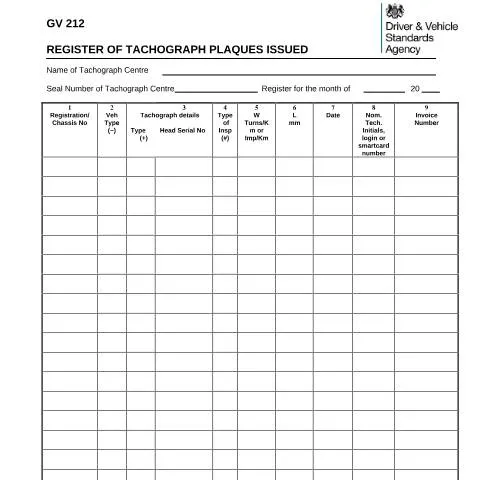
The Record of Tachograph Plaques Issued is a structured document that typically includes fields for the following information:
- Name of Tachograph Centre: Essential for identification.
- Seal Number: A security feature ensuring authenticity.
- Registration/Chassis Number: Linking the plaque to a specific vehicle.
- Tachograph Details: Including type and serial number.
- Date: Date of issuance.
- Initials and identification: The individual responsible for the entry.
- Invoice Number: Reference for transaction records.
Furthermore, the document uses specific codes to categorize vehicles and tachographs, such as:
| Code | Description |
|---|---|
| G | Goods vehicle |
| P | Passenger vehicle |
| A | Analogue tachograph |
| D | Digital tachograph |
Compiling the Record: Essential Steps and Tips
Completing the tachograph plaques record is not merely a matter of filling out a form; it involves meticulous attention to detail and adherence to specific guidelines. Here’s how to ensure your document is correctly completed:
- Gather Necessary Information: Before you begin, collect all relevant details about the tachographs you have issued, including vehicle types and tachograph specifics.
- Follow the Format: Adhere strictly to the format outlined on the form. This includes using the correct codes as specified for vehicle type and tachograph type.
- Keep Detailed Notes: For entries where tampering is suspected, document each case carefully, as evidenced by the * notation for digital tachographs.
- Ensure Accuracy: Double-check each entry for accuracy to avoid issues during inspections.
Submission and Retention of Record
Once the record is completed, it must be submitted to the appropriate authority as per the regulations set forth by the DVSA. Here’s what you need to know about submission:
- Retention Period: The completed record must be kept at the calibration centre for a minimum of six years. This is crucial for compliance and audit purposes.
- Submission Process: Although the document is primarily for internal record-keeping, should the DVSA request it for an audit, ensure it is readily available.
- Follow-Up: If there are discrepancies or questions raised by the DVSA, be prepared to provide clarification or additional documentation as needed.
Special Circumstances: Handling Complex Cases
While the general process for recording tachograph plaques is straightforward, certain situations may complicate the matter:
- Multiple Vehicles: For centres handling numerous vehicles, maintaining an organized system is vital. Consider using spreadsheets or databases to track issued plaques more efficiently.
- Changes in Regulation: Stay updated on any changes in tachograph regulations that might affect your recording practices.
- International Vehicles: If your centre handles foreign vehicles, ensure you understand the different compliance needs and record accordingly.
Implications of Non-Compliance
Failure to accurately maintain the tachograph plaques record can have serious repercussions for tachograph centres. Here are some of the potential consequences:
- Legal Penalties: Non-compliance with DVSA regulations may result in fines or sanctions against your centre.
- Operational Delays: Inaccurate records can lead to delays in vehicle operation, impeding business operations.
- Reputation Risks: Trust is pivotal in the transport sector. Non-compliance can tarnish your centre's reputation, making it less attractive to clients.
A Comparative Look: Tachograph Records vs. Other Forms
It is easy to confuse the tachograph plaques record with other official documents related to vehicle operation. Here’s a differentiation of key forms:
| Form | Purpose | Key Differences |
|---|---|---|
| Tachograph Plaques Record | Record issued tachograph plaques | Specific to tachograph centres; focuses on equipment |
| Vehicle Registration Document (V5C) | Register vehicle ownership | Focuses on ownership details, not equipment |
| Driver’s Hours Record | Log driving hours for compliance | Related to driver activity, not equipment issuance |
Final Practical Tips for Tachograph Centre Operators
To ensure a smooth processing experience, here are some practical suggestions for those tasked with managing the tachograph plaques record:
- Regular Training: Ensure staff are well-trained in filling out and managing tachograph records to minimize errors.
- Utilize Technology: Consider leveraging software solutions designed to manage tachograph data, which can help simplify the process.
- Establish Clear Procedures: Develop clear internal procedures for handling tachograph plaques, ensuring every staff member understands their role in maintaining compliance.
The accurate and timely completion of the Record of Tachograph Plaques Issued is crucial not only for compliance but also for operational efficiency within transport services. By adhering to these guidelines and understanding the importance of this document, tachograph centres can navigate the complexities of regulatory requirements effectively.
Understanding Tachograph Records: Types and Importance
In the UK, tachographs play a vital role in ensuring road safety and compliance with driving regulations. There are two primary types of tachographs: analogue and digital. Analogue tachographs use a physical disc to record driving times, speeds, and rest periods, while digital tachographs upload this data electronically, allowing for easier monitoring and storage.
The importance of maintaining accurate tachograph records cannot be overstated. Not only do they help drivers comply with the EU regulations regarding driving hours and rest periods, but they also ensure that employers meet their legal obligations. In case of an inspection by the Driver and Vehicle Standards Agency (DVSA), having well-organised tachograph records can protect a company from potential fines and legal issues.
It's essential to train your staff on how to properly operate tachographs and understand the regulations surrounding them. Regular audits of tachograph data can also help identify trends, such as frequent speeding or underutilisation of rest periods, allowing for proactive measures to be taken. This not only promotes safety but can also lead to improved operational efficiency.
Tachograph Compliance: Relevant Legislation and Penalties
The use of tachographs in the UK is governed by several pieces of legislation, including the Road Traffic Act 1988 and the EU Regulation 561/2006, which outlines the rules on drivers’ working hours. Understanding these regulations is crucial for any business operating commercial vehicles.
Failure to comply with tachograph regulations can lead to significant penalties. For instance, if a driver is found to be exceeding the legally allowed driving hours, both the driver and the employer could face fines. Additionally, the DVSA has the authority to suspend or revoke the operating licence of a business that repeatedly breaches tachograph regulations.
It's important for centres issuing tachograph records to stay updated on changes in legislation to ensure compliance. Regular training sessions can help keep all personnel informed of current regulations and best practices, reducing the risk of violations and fostering a culture of safety and compliance within the organisation.
Best Practices for Managing Tachograph Data
Effectively managing tachograph data is crucial for any business that relies on commercial vehicles. Here are some best practices to consider:
- Regular Data Downloads: For businesses using digital tachographs, it's essential to download data at least every 28 days. This ensures that records are kept up to date and can be accessed in case of an inspection.
- Implement a Record-Keeping System: Establish a systematic approach to record-keeping—this could be a physical filing system or a digital database. Ensure that records are easily accessible and clearly labelled to avoid confusion.
- Conduct Periodic Reviews: Schedule regular audits of tachograph data to identify any patterns or issues. This could help in recognising frequent breaches of regulations or inefficiencies in driving practices.
- Stay Informed on Changes: The regulatory landscape surrounding driving hours and tachographs can shift. Regularly review guidance from the DVSA and industry bodies to keep abreast of changes that may affect operations.
By implementing these best practices, businesses can not only ensure compliance with regulations but also enhance driver safety and efficiency, leading to overall improved operational performance.