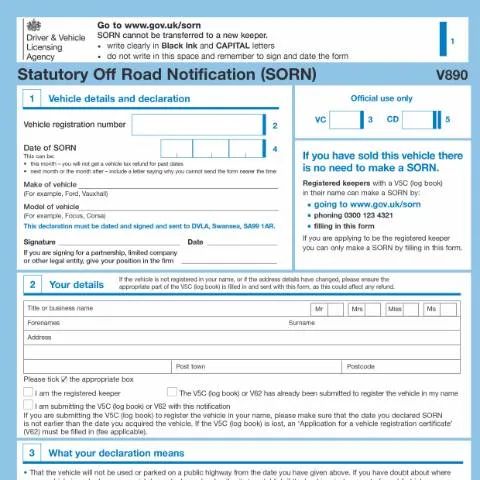
When Your Vehicle Leaves the Public Highway: The SORN Declaration Process
Every vehicle owner in the UK faces a moment when their car, motorcycle, or van will no longer grace public roads—whether due to mechanical failure, planned restoration, export abroad, or simple storage. At this juncture, the Statutory Off Road Notification becomes not just relevant but legally mandatory. The V890 form serves as your formal declaration to DVLA that your vehicle has withdrawn from public highway use, triggering important changes to your tax obligations and legal responsibilities.
The SORN system operates on a fundamental principle: if your vehicle exists but isn't being used on public roads, you must actively notify DVLA rather than simply allowing your vehicle tax to expire. This notification protects you from accumulating penalties while ensuring the vehicle register remains accurate. The process involves more nuance than many motorists realise, particularly around timing, eligibility, and the distinction between different keeper scenarios.
Decoding Your Legal Standing: Keeper Status and Declaration Authority
The V890 form distinguishes carefully between different types of applicants, each carrying distinct obligations and procedures. Registered keepers hold the primary authority to make SORN declarations and benefit from multiple submission methods including online processing, telephone declarations, or paper form completion. Their details appear on the V5C registration certificate, establishing clear legal responsibility for the vehicle's status.
For individuals applying to become registered keepers, the situation becomes more restrictive. These applicants can only use the V890 paper form—online and telephone options remain unavailable until keeper registration completes. This limitation reflects DVLA's need to verify identity and legal standing before processing off-road notifications.
Partnership and company vehicles introduce additional complexity. When signing on behalf of legal entities, the form requires specific position declarations within the firm. Directors, partners, or authorised signatories must clearly state their role, as DVLA may request verification of authority to act for the organisation.
The V5C Submission Requirement
A critical aspect often misunderstood involves V5C log book submission timing. If you're registering as keeper while simultaneously declaring SORN, you must include the V5C or V62 documentation with your V890 form. However, the effective SORN date cannot predate your vehicle acquisition date—a logical safeguard preventing retrospective declarations for periods when you held no legal responsibility.
Strategic Timing: When Your SORN Declaration Takes Effect
The date you enter on your V890 form carries significant financial and legal implications that extend beyond simple record-keeping. DVLA processes SORN notifications to take effect from the beginning of the month you specify, but this creates both opportunities and pitfalls for vehicle owners.
Consider the refund calculation mechanism: declaring SORN mid-month yields no additional refund for that partial month compared to declaring it at month-end. However, delaying your declaration beyond the actual off-road date continues your vehicle tax liability and potential penalty exposure. The form explicitly warns that next month's declaration won't secure refunds for past dates, creating a "use it or lose it" scenario for tax recovery.
| Declaration Timing | Refund Calculation | Risk Exposure |
|---|---|---|
| Same month as off-road date | Full month refund possible | Minimal penalty risk |
| Following month | No refund for previous month | Continued tax liability |
| Multiple months delayed | No retrospective refunds | Accumulated penalties likely |
The "complete calendar months remaining" calculation means your refund covers only full months from your SORN effective date through your current tax period expiry. Partial months receive no pro-rated treatment, emphasising the importance of prompt declaration.
Beyond the Basic Declaration: Special Circumstances and Exceptions
Several scenarios create variations in the standard SORN process, each requiring specific attention to avoid complications or delays.
Export and Permanent Disposal
The V890 explicitly states its invalidity for vehicles being sold, permanently exported, or scrapped. These scenarios require different procedures entirely—attempting to use SORN for exported vehicles may create registration complications if the vehicle later returns to UK roads. Export notifications follow separate processes through DVLA, while scrappage requires authorised treatment facility involvement.
Motor Trade Considerations
Motor traders face unique SORN requirements based on their business operations. Vehicles temporarily held in trade premises generally don't require SORN unless the business intends long-term storage or the vehicle isn't registered in the trader's name. However, trade plate usage doesn't eliminate SORN requirements for vehicles genuinely off public roads for extended periods.
Lost Documentation Scenarios
When V5C log books go missing, the V890 process becomes more complex but remains achievable. DVLA requires completion of form V62 (application for vehicle registration certificate) alongside your SORN declaration. This dual submission ensures proper keeper registration while establishing off-road status, though processing times typically extend compared to standard applications.
DVLA Processing: What Happens After Submission
Once DVLA receives your V890 form, several automated processes activate that affect your ongoing relationship with the agency. Understanding these mechanisms helps you track progress and identify when intervention might be necessary.
Registered keepers can expect automatic refund processing to the address shown on their V5C registration certificate within four weeks of DVLA receiving the notification. This refund calculation excludes any Direct Debit arrangements, which DVLA cancels separately. The acknowledgement letter arrives within the same timeframe, providing official confirmation of your SORN status.
Digital Integration and Future Communications
Modern DVLA operations increasingly integrate with digital communication preferences. Vehicle owners can now elect to receive tax reminders via email rather than postal communication, streamlining future correspondence. This option becomes particularly relevant when your SORN period ends and vehicle tax obligations resume.
The form's reference to privacy policies and data protection reflects DVLA's compliance with UK GDPR requirements. Your information may be shared with police and other enforcement bodies as legally permitted, but the agency maintains strict controls over commercial data usage.
Common Pitfalls and Administrative Challenges
Despite its apparent simplicity, the V890 form generates numerous processing complications that can delay refunds, create penalty exposure, or invalidate declarations entirely.
Signature and Dating Requirements
The form's emphasis on black ink and capital letters isn't mere preference—it reflects DVLA's automated processing systems that struggle with certain ink colours and handwriting styles. Similarly, the mandatory signature and date requirements serve legal purposes beyond bureaucratic formality. Unsigned forms face automatic rejection, creating delays that may push your effective SORN date into subsequent months.
Address Synchronisation Issues
One frequently overlooked requirement involves address consistency between your V890 form and existing DVLA records. When your address details don't match V5C information, DVLA may delay processing pending verification. This becomes particularly problematic for recent movers who haven't updated their registration certificates.
The form provides checkbox options for registered keepers versus those submitting V5C documentation simultaneously. Selecting incorrect options can route your application through inappropriate processing channels, extending handling times significantly.
Legal Implications and Compliance Obligations
The V890 form creates binding legal declarations with serious implications for non-compliance. Section 3 explicitly warns that making false declarations constitutes an offence, carrying potential prosecution and penalty consequences beyond simple administrative corrections.
Your SORN declaration commits you to ensuring the vehicle remains off public highways from your specified date forward. This includes seemingly minor infractions like parking partially on public roads or using private roads that connect to public highways without proper barriers. Local authority consultation may be necessary when parking locations present ambiguous public/private status.
Ongoing Monitoring and Renewal
SORN status doesn't automatically renew—it continues until you actively change it by taxing the vehicle, selling it, or permanently disposing of it. However, DVLA maintains ongoing monitoring of SORN vehicles through various data sharing arrangements with police and local authorities. Vehicles spotted on public roads while under SORN status trigger automatic penalty procedures.
The acknowledgement process serves dual purposes: confirming your declaration and establishing an audit trail for potential future disputes. Retaining this documentation proves essential for penalty appeals or administrative queries that may arise months or years after your initial declaration.
Integration with Broader Vehicle Administration
The SORN system interconnects with numerous other DVLA processes and external agencies in ways that extend beyond immediate tax implications. Understanding these connections helps vehicle owners navigate related administrative requirements effectively.
Insurance obligations continue despite SORN status unless you arrange specific off-road coverage or formal policy cancellation. Many insurers offer reduced premiums for SORN vehicles, but maintaining some coverage protects against theft, fire, or damage while stored. The relationship between SORN status and insurance requirements often creates confusion, as legal obligations differ from practical risk management needs.
MOT and Roadworthiness Considerations
SORN vehicles don't require valid MOT certificates, providing financial relief for owners storing vehicles long-term. However, when returning SORN vehicles to road use, both tax and MOT requirements activate simultaneously. This can create timing pressures for vehicle owners who must coordinate testing appointments with tax applications while ensuring continuous legal compliance.
The V890 process also affects vehicle history records that potential buyers access through various checking services. SORN periods appear in vehicle histories, potentially influencing resale values or buyer perceptions about vehicle condition and usage patterns.
Understanding SORN Duration and Renewal Requirements
A statutory off road notification remains valid for as long as you continue to own the vehicle and keep it off public roads. However, the SORN status isn't permanent in the traditional sense—it requires careful management to avoid inadvertent breaches of the law.
The SORN declaration automatically expires when you sell, transfer, or permanently export your vehicle. If you sell the car to a dealer or private buyer, the new keeper must either tax the vehicle immediately or make their own SORN declaration. This creates a crucial handover period where responsibility shifts, and both parties should understand their obligations.
When you acquire a vehicle that's already under SORN, you inherit that status temporarily. You have a brief grace period—typically until the end of that calendar month—to either tax the vehicle or submit your own SORN declaration. This prevents gaps in compliance that could trigger penalty notices.
For vehicles approaching their MOT expiry date whilst under SORN, you face a strategic decision. You cannot drive the vehicle to an MOT test centre once the certificate expires, even briefly. The only legal exception allows driving directly to a pre-booked MOT appointment, but this requires the vehicle to be taxed first, which automatically cancels the SORN status.
Many vehicle owners encounter complications when their circumstances change unexpectedly. If you need to move a SORN vehicle to a different private location, you must arrange professional transportation or trailer recovery. Even moving the car across your own driveway onto a public road surface, however briefly, constitutes a breach of SORN conditions.
Seasonal vehicle users, such as classic car enthusiasts or motorcycle riders, often implement annual SORN cycles. They'll declare SORN during winter months, then tax and insure their vehicles for summer use. This approach requires careful timing—you must have valid insurance before taxing the vehicle, as the DVLA's systems verify insurance coverage during the taxation process.
Business owners with commercial vehicle fleets should note that SORN declarations apply individually to each vehicle. Company cars, delivery vans, or agricultural machinery each require separate V890 submissions. Fleet managers often maintain detailed spreadsheets tracking SORN dates, insurance renewals, and MOT requirements to prevent compliance failures across multiple vehicles.
Common Mistakes and How to Avoid Them
The most frequent SORN-related error involves misunderstanding the timing requirements. Many vehicle owners assume they can use their car "just occasionally" while under SORN, particularly for short local journeys. This misconception leads to significant penalties, as there's no provision for limited or emergency use under SORN regulations.
Insurance confusion represents another major pitfall. While SORN vehicles don't require road insurance, many owners cancel their policies entirely, then struggle to obtain immediate coverage when they want to return their vehicle to road use. Insurance companies often require several days to process new policies, creating a gap where you cannot legally tax your vehicle.
Some motorists believe that parking on private land automatically qualifies for SORN status, regardless of location accessibility. However, if your private parking space connects directly to a public road without clear physical barriers, enforcement agencies might challenge the SORN validity. Driveways that cross public pavements, for instance, can create grey areas in SORN compliance.
Documentary evidence becomes crucial if disputes arise. Vehicle owners should photograph their SORN vehicle's storage location, showing clear separation from public highways. Keep copies of your V890 submission confirmation, insurance cancellation notices, and any correspondence with the DVLA. These records prove invaluable if penalty notices arrive incorrectly.
Inherited vehicles create particular complications for SORN compliance. When someone dies leaving a vehicle under SORN, the estate executors must either maintain that status or arrange proper disposal. The vehicle cannot be driven to valuation appointments or potential buyers without first being taxed and insured, which requires probate documentation and executor authority.
Address changes while owning a SORN vehicle require immediate notification to the DVLA. If you move house but leave the vehicle at the old address, you must update your keeper details using form V62 or the online service. Failing to maintain accurate address records can result in penalty notices being sent to incorrect locations, leading to escalated enforcement action.
European Union residents who previously held UK-registered vehicles face complex SORN obligations post-Brexit. If you've relocated permanently to an EU country but retain a UK-registered vehicle in storage, you must continue SORN declarations until you formally export or dispose of the vehicle through official channels.
Special Circumstances and Exemptions
Agricultural vehicles benefit from specific SORN provisions that differ from standard passenger cars. Tractors, combine harvesters, and other farm machinery used exclusively on private agricultural land may qualify for different notification requirements. However, if these vehicles cross public roads between fields, even briefly, they require full taxation and insurance coverage.
Historic vehicles over 40 years old receive automatic exemption from MOT requirements but remain subject to SORN obligations if kept off-road. The age calculation uses the vehicle's original registration date, not its manufacturing date. These classic vehicles can benefit from reduced insurance premiums through specialist policies, but owners must ensure coverage remains valid before cancelling SORN status.
Disabled drivers using Motability scheme vehicles face unique SORN considerations. If health conditions prevent driving for extended periods, you might consider SORN declaration rather than returning the vehicle early. However, Motability vehicles remain under lease agreements with specific terms, so consult your regional centre before making SORN declarations independently.
Military personnel deployed overseas encounter special provisions for vehicle storage during service periods. While standard SORN rules apply, military families often benefit from extended grace periods for compliance and reduced penalties for genuine overseas deployment situations. Contact the DVLA's military liaison services for specific guidance matching your deployment circumstances.
Diplomatic vehicles registered in the UK follow modified SORN procedures reflecting international law obligations. Embassy staff and consular officials should coordinate SORN declarations through their administrative offices, as diplomatic immunity provisions may affect penalty enforcement and payment procedures.
Vehicles involved in insurance claims require careful SORN management during repair periods. If your car suffers accident damage requiring extensive workshop time, consider SORN declaration to avoid ongoing tax obligations. However, ensure your insurance policy covers storage risks during the SORN period, as some policies restrict coverage for unroadworthy vehicles.
Students studying away from home often benefit from SORN declarations for family vehicles left unused during term time. However, coordinate carefully with parents or guardians who might need emergency access to the vehicle. Remember that any family member driving the car, even briefly, requires it to be properly taxed and insured first.
Commercial vehicle operators facing seasonal business fluctuations can use SORN strategically to reduce operational costs. Construction companies, for example, might declare SORN on specialist equipment during winter months when building work decreases. Ensure your operator's licence conditions permit temporary vehicle withdrawal from service, as some commercial licences require minimum fleet availability.