Understanding the Low Emissions Certificate: Operational Necessity in London
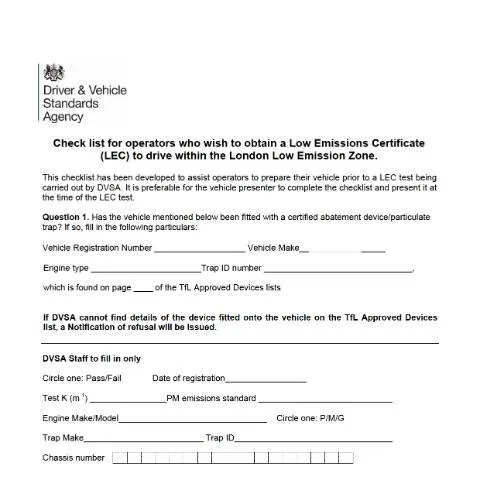
For operators intending to navigate the bustling roads of London, the Low Emissions Certificate (LEC) stands as a crucial document. The LEC demonstrates compliance with the stringent emission standards enforced in the Low Emission Zone (LEZ). As an operator, being equipped with this certificate is not merely a regulatory formality; it embodies a commitment to environmental responsibility and sustainable transport solutions. This checklist has been meticulously crafted by the Driver and Vehicle Standards Agency (DVSA) to facilitate the preparation of your vehicle prior to the LEC test.
Prerequisites for Obtaining the Low Emissions Certificate
To successfully acquire the Low Emissions Certificate, several specific prerequisites must be met. Operators need to ensure their vehicles are equipped with certified abatement devices or particulate traps. This section outlines the fundamental criteria that must be satisfied:
- Vehicle Registration: Ensure your vehicle registration number is readily available.
- Device Certification: Verify that the vehicle is fitted with a Transport for London (TfL) approved abatement device.
- Engine Type Identification: Clearly identify the engine type installed in your vehicle.
Preparing for the LEC Test: Step-by-Step Guide
Preparation is key when it comes to the LEC test. Operators who follow this step-by-step guide will find themselves more than ready to present their vehicle for assessment. Here’s how:
- Verify Emission Standards: Confirm that your vehicle meets the required emissions standards set forth by the DVSA.
- Gather Necessary Documentation: Collect all relevant documents, including your vehicle registration and proof of the installed abatement device.
- Complete the DVSA Checklist: Utilize the checklist developed by DVSA to ensure that all aspects of your vehicle are compliant prior to the test day.
- Schedule Your Test: Book your appointment with a DVSA-approved testing centre.
Who Can Apply for the Low Emissions Certificate?
The eligibility to obtain an LEC extends beyond just vehicle owners. Various operators can apply for this certification, provided they meet certain criteria laid out by the DVSA. Key eligible parties include:
- Individual Vehicle Owners: Owners of personal vehicles that comply with emission standards.
- Fleet Operators: Companies managing fleets of vehicles that meet the necessary requirements.
- Public Transport Services: Operators of buses and taxis within the LEZ area.
Conditions for Issuance
To be granted the Low Emissions Certificate, applicants must meet the following conditions:
| Condition | Description |
|---|---|
| Installation of Approved Devices | The vehicle must have a certified abatement device installed. |
| Adherence to Emission Standards | The vehicle must pass the emissions test according to set standards. |
| Document Verification | All documentation must be accurate and verifiable by DVSA staff. |
Usage of the Low Emissions Certificate: Where Is It Mandatory?
The Low Emissions Certificate possesses significant value within various operational frameworks. Specifically, its usage is mandated in the following contexts:
- Driving in the Low Emission Zone: All vehicles operating within London's LEZ must display a valid LEC.
- Regulatory Compliance: Authorities may require proof of an LEC during inspections or audits related to environmental compliance.
- Insurance Purposes: Some insurers may ask for proof of compliance with emission standards when underwriting vehicles.
The Role of the DVSA and Transport for London
The DVSA plays a pivotal role in the issuance and regulation of the Low Emissions Certificate. Alongside Transport for London (TfL), the DVSA ensures that vehicles operating in the LEZ adhere to stringent environmental regulations. Both organisations collaborate to provide guidance and support to operators wishing to meet these standards.
Addressing Common Issues: What to Do in Case of Disputes or Errors
Operators may occasionally face challenges related to the Low Emissions Certificate. Whether it's a dispute regarding the validity of the certificate or errors on the documentation, it is essential to know how to handle these situations:
- Disputed Test Results: If you believe the test result is inaccurate, you should contact the DVSA immediately to discuss the possibility of a retest.
- Document Errors: Should you find discrepancies in your issued LEC, reach out to the DVSA to request corrections.
- Lost Certificates: In the event of a lost certificate, operators can apply for a replacement through the DVSA’s customer service.
Contacting the DVSA for Support
Operators can reach out to the DVSA through various channels for assistance:
- Phone: Directly call the DVSA’s customer service hotline.
- Email: Utilize the official DVSA email support for inquiries.
- Website: Access the DVSA's website for comprehensive guidance and resources.
Duration and Renewal: Keeping Your LEC Valid
The Low Emissions Certificate is not a one-time document. Understanding its duration and the renewal process is vital for continuous compliance:
- Validity Period: LECs are generally valid for a specific duration which operators must adhere to.
- Renewal Process: To renew your certificate, operators must again demonstrate compliance through a new test.
Conditions for Renewing Your Low Emissions Certificate
Operators looking to renew their Low Emissions Certificate should consider the following:
| Condition | Required Action |
|---|---|
| Passing Emissions Test | Re-test vehicle to ensure it meets current emission standards. |
| Documentation Review | Submit updated documentation if vehicle modifications have occurred. |
| Timely Submission | Submit renewal application before the expiration date of the current certificate. |
Conclusion: The Importance of Compliance in Today’s Transport Landscape
In a world increasingly focused on sustainability, obtaining a Low Emissions Certificate is not merely an administrative step; it is a commitment to reducing environmental impact. By understanding the requirements and processes involved in acquiring and maintaining an LEC, operators not only comply with regulations but also contribute to the broader goal of cleaner urban environments. With the DVSA and TfL working hand in hand, navigating the complexities of emission compliance can be a straightforward task for conscientious operators.
Understanding the Low Emissions Certificate (LEC) Test: What You Need to Know
Before delving into preparation for the Low Emissions Certificate (LEC) test, it’s essential to understand its implications and requirements. The LEC is part of the UK's efforts to promote cleaner air by reducing harmful emissions from vehicles, as outlined in the UK’s Clean Air Strategy. Essentially, this certificate is vital for vehicles that are considered low emission, allowing owners to benefit from various incentives, including potential tax reductions and exemptions from congestion charges in certain areas.
The test assesses emissions of carbon dioxide (CO2), nitrogen oxides (NOx), and particulate matter (PM) to ensure that vehicles meet specific environmental standards. Knowing what the LEC entails will help you appreciate the significance of preparation and compliance with regulations set forth by the Driver and Vehicle Standards Agency (DVSA).
The criteria to qualify for the Low Emissions Certificate can differ based on vehicle type and age. For instance, petrol and diesel vehicles have distinct emissions thresholds. Therefore, it's crucial to verify the exact standards relevant to your vehicle category before embarking on the preparation process.
Preparing for the LEC Test: A Comprehensive Checklist
Your preparation for the LEC test should be thorough to ensure your vehicle meets the required standards. Below is a detailed checklist that outlines essential steps and considerations to undertake before the test.
- Review Emissions Standards: Familiarise yourself with the specific emissions standards applicable to your vehicle make and model. Resources such as the UK Government website provide updated guidelines and emissions limits that are crucial for passing the test.
- Vehicle Maintenance: Ensure that your vehicle is in optimal working condition. Key maintenance checks should include:
- Regular oil changes to improve engine efficiency.
- Inspecting and replacing air filters to enhance airflow and combustion.
- Checking and maintaining the exhaust system for leaks or damages, which could impact emissions levels.
- Fuel quality – using high-quality fuel can help reduce emissions significantly.
- Ensuring that the engine management system is functioning correctly. A malfunctioning system can lead to increased emissions.
- Diagnostic Tests: Consider conducting a pre-test diagnostic check using an OBD-II scanner. This tool can help identify any faults in the vehicle’s emissions system. Addressing these issues in advance can save time and increase the likelihood of obtaining your LEC.
- Consider Professional Help: If you’re unsure about how to prepare your vehicle for the LEC test, consulting a professional mechanic experienced with emissions testing can be beneficial. They can provide insights into any specific modifications or repairs needed to meet the standards.
- Documentation: Gather all relevant documents such as your vehicle registration, previous inspection reports, and proof of any recent repairs or modifications. Having these on hand can streamline the process on test day and may be required by the testing authority.
- Plan for the Test Day: Choose a reputable testing centre that is authorised to perform the LEC test. Make sure to schedule your appointment in advance, as slots can fill up quickly. Arrive with ample time to spare on the day of the test to avoid any last-minute rush.
Post-LEC Test Considerations: What to Do Next
Once you have completed the LEC test, there are several follow-up actions you should be aware of. Understanding the outcomes of your test can determine your next steps and ensure compliance with UK regulations.
- Interpreting Test Results: If your vehicle passes the LEC test, you will receive the certificate, which is valid for a specified period. Keep this document safe, as you might need it for tax purposes or when applying for congestion charge exemptions.
- In the Case of Failing the Test: If your vehicle does not meet the low emissions standards, you will receive a report detailing the reasons for the failure. Take prompt action to rectify the identified issues. This may involve repairs or modifications to your vehicle's emissions control systems.
- Re-testing: After addressing any issues, you may choose to schedule a re-test. Keep in mind that another test may involve additional costs, so be prepared for potential expenses related to repairs and the re-testing fee.
- Understanding Regulations and Compliance: Once you receive your LEC, it’s imperative to remain compliant with any regulations tied to vehicle emissions. This includes adhering to local emissions laws and being aware of any changes in legislation that may affect your vehicle’s status.
- Utilising Your LEC Benefits: With your Low Emissions Certificate in hand, you may be eligible for various benefits, such as reduced vehicle tax rates or access to certain low-emission zones without incurring additional fees. Be proactive in researching available incentives to maximize your benefits.
Staying informed and proactive about your vehicle's emissions standards and compliance efforts can help you navigate the complexities of the Low Emissions Certificate landscape in the UK.