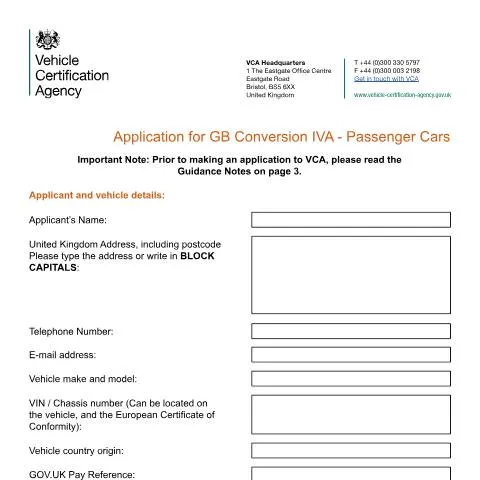
Converting European Vehicles for UK Roads: The GB Conversion IVA Process
When you've purchased a passenger car from mainland Europe and need to register it for UK roads, you'll encounter specific requirements that differ from standard vehicle registration procedures. The GB Conversion Individual Vehicle Approval (IVA) represents a streamlined certification process designed specifically for European-specification vehicles entering the UK market. Unlike the comprehensive IVA testing required for kit cars or significantly modified vehicles, this conversion process focuses on essential safety adaptations that ensure your European vehicle meets British road safety standards.
The Vehicle Certification Agency (VCA) administers this scheme as part of the Department for Transport's vehicle approval framework. This process acknowledges that modern European vehicles already meet high safety and environmental standards through their original European Certificate of Conformity, but requires specific modifications to comply with UK traffic patterns and regulations.
Essential Safety Modifications Required Before Application
The GB Conversion IVA centres on three critical safety modifications that reflect the unique characteristics of UK driving conditions. These aren't merely administrative requirements—they address fundamental safety concerns arising from the transition between right-hand and left-hand traffic systems.
Headlight Beam Pattern Conversion
The most crucial modification involves headlight beam patterns. European vehicles are designed with headlight beams that dip to the right to illuminate the roadside and oncoming traffic lane on continental roads. In the UK, this creates dangerous blind spots and can dazzle oncoming drivers. The VCA accepts several approaches to address this:
- Factory adjustment systems: Many modern vehicles include built-in mechanisms to switch beam patterns, typically operated through the vehicle's electronic systems or a manual lever
- Complete headlight replacement: Installing UK-specification headlights designed for left-hand traffic
- Flat-beam configuration: Acceptable only when this represents a standard vehicle feature, not a makeshift adjustment
Critical note: Temporary solutions such as beam deflectors, stickers, or adhesive modifications are explicitly rejected by the VCA. The modification must represent a permanent, professional solution that maintains the headlight's original safety standards.
Speedometer Compliance Requirements
UK regulations mandate that speedometers display miles per hour as the primary or co-primary measurement. European vehicles typically feature kilometre-per-hour displays, necessitating modification or replacement. The VCA's requirements are precise:
| Modification Type | Requirements | Evidence Needed |
|---|---|---|
| Digital reprogramming | Permanent mph display capability | Manufacturer documentation or professional certificate |
| Professional overlay | Applied to dial face (not glass), visible day/night | Installer invoice with specifications |
| Complete replacement | UK-specification unit with proper graduations | Parts invoice and installation documentation |
The speedometer must display graduations at 1, 2, 5, or 10 mph intervals, with numerical values appearing at least every 20 mph. Makeshift solutions, including handwritten modifications or multiple stickers, cannot be accepted.
Rear Fog Light Configuration
European and UK regulations differ regarding rear fog light positioning. The VCA accepts three configurations: dual rear fog lights (both sides), a single centre-mounted unit, or a single right-side fog light. This requirement addresses visibility standards specific to UK weather conditions and traffic density patterns.
Documentation Requirements and Evidence Standards
The application process demands comprehensive documentation that proves both the vehicle's European compliance and the successful completion of required modifications. The VCA operates on the principle that documentation must be contemporary, specific, and professionally generated.
Core Documentation
Every application must include the vehicle's European Certificate of Conformity, either as an original document or high-quality scan. This certificate proves the vehicle's compliance with European safety and environmental standards, forming the foundation for the conversion approval. Additionally, you must provide a vehicle-specific invoice or statement from a recognised garage, dated within three months of application.
The 17-digit Vehicle Identification Number (VIN) must be clearly documented and match across all submitted paperwork. This number, typically found on the vehicle itself and the Certificate of Conformity, serves as the primary identifier throughout the process.
Modification Evidence
For each required modification, you must submit specific evidence demonstrating professional completion. This might include:
- Garage invoices detailing parts supplied and work completed
- Manufacturer documentation for factory adjustment procedures
- Professional certificates for speedometer modifications or headlight adjustments
- Photographic evidence showing completed modifications in situ
The VCA requires that modification evidence comes from recognised automotive professionals. DIY modifications, while potentially meeting technical standards, typically cannot provide the professional certification that the approval process demands.
Application Submission and Processing Procedures
The GB Conversion IVA application follows a structured submission process designed to ensure complete documentation and appropriate fee payment. The current fee stands at £100 per vehicle, payable either through the GOV.UK Pay system for card payments or by cheque made payable to "DFT – Vehicle Certification Agency".
Payment Processing Timelines
Payment method significantly affects processing timelines. Card payments through GOV.UK Pay allow immediate application processing, while cheque payments result in a 10 working day hold period before assessment begins. This delay reflects standard cheque clearance procedures and cannot be expedited.
Submission Channels
Applications can be submitted electronically to [email protected] or posted to the VCA's Bristol headquarters. For postal submissions, the VCA strongly recommends recorded or special delivery to ensure document security. Electronic submission typically results in faster processing and reduced risk of document loss.
The VCA processes applications in received order, with complete applications taking priority over those requiring additional information or documentation. Incomplete submissions result in processing delays while missing elements are requested and provided.
Eligibility Criteria and Vehicle Scope
The GB Conversion IVA applies specifically to European-specification passenger cars imported from other European countries. This scope reflects the scheme's design purpose: facilitating the registration of vehicles that already meet high safety standards but require specific adaptations for UK conditions.
Vehicle Age and Specification Requirements
While the scheme doesn't specify maximum vehicle ages, it assumes that qualifying vehicles possess modern safety features as standard. Vehicles must already include side indicators and, where rear seats are present, appropriate rear seat belts. These represent baseline safety requirements that the conversion process doesn't address—vehicles lacking these features require additional modification before application submission.
Exclusions and Limitations
The scheme specifically excludes vehicles that don't hold valid European Certificates of Conformity or those requiring substantial modification beyond the three core requirements. Significantly modified vehicles, kit cars, or vehicles with non-standard configurations typically require full Individual Vehicle Approval rather than the streamlined conversion process.
Commercial vehicles, motorcycles, and other non-passenger car categories fall outside this scheme's scope and require alternative approval routes through the VCA's broader certification framework.
Certificate Value and Practical Applications
Upon successful completion of the GB Conversion IVA process, the VCA issues certification that enables UK vehicle registration through the Driver and Vehicle Licensing Agency (DVLA). This certification carries significant legal weight, representing official acknowledgment that your European vehicle meets UK road safety requirements.
Registration Process Integration
The GB Conversion IVA certificate integrates directly with DVLA registration procedures. Unlike some certification processes that require additional validation steps, this approval provides immediate eligibility for UK registration, assuming all other requirements (insurance, address verification, etc.) are met.
The certificate also satisfies insurance company requirements for vehicle coverage in the UK. Many insurers require proof of UK compliance before providing comprehensive coverage, making the GB Conversion IVA essential for both legal registration and practical vehicle use.
Ongoing Validity and Limitations
Once issued, the GB Conversion IVA certificate remains valid for the vehicle's lifetime, assuming no substantial modifications occur. The certification specifically covers the three core safety modifications and doesn't extend to other vehicle systems or future changes.
Should you subsequently modify the vehicle's lighting, speedometer, or other certified systems, you may need additional approval depending on the modification's scope and impact on the original certification.
Professional Support and Documentation Challenges
Many applicants underestimate the documentation requirements and professional standards expected throughout the GB Conversion IVA process. The VCA's emphasis on professional modification and contemporary documentation reflects the certification's legal significance and the safety implications of the required changes.
Working with Automotive Professionals
Successful applications typically involve established automotive professionals who understand both the technical requirements and documentation standards. Independent garages, main dealers, and specialist importers often possess the expertise and certification capabilities that the process demands.
When selecting professionals for modification work, consider their familiarity with VCA requirements and their ability to provide comprehensive documentation. The additional cost of professional modification and certification typically proves worthwhile compared to the delays and complications arising from inadequate documentation.
Common Documentation Issues
The most frequent application delays stem from insufficient or inappropriate documentation rather than technical modification problems. Contemporary invoices, specific modification details, and professional certification represent areas where many applicants encounter difficulties.
Timing considerations also affect documentation validity. The three-month requirement for garage statements means that modification work and application submission must be closely coordinated to ensure documentation remains current throughout the process.
The GB Conversion IVA represents a practical recognition that European vehicle standards align closely with UK requirements while acknowledging the specific safety adaptations necessary for UK road conditions. Understanding both the technical requirements and administrative expectations ensures efficient processing and successful certification for your imported vehicle.
Structural Modifications and Component Compliance During IVA
The Individual Vehicle Approval process for passenger cars involves rigorous scrutiny of any structural modifications made to the vehicle, particularly those affecting safety-critical areas. When converting a vehicle for UK roads, understanding which modifications trigger specific compliance requirements can save considerable time and expense during the approval process.
Bodywork alterations represent one of the most complex aspects of IVA assessment. If you've modified the vehicle's structure—perhaps to accommodate right-hand drive conversion, install additional safety equipment, or adapt the interior layout—each change must demonstrate compliance with relevant construction and use regulations. The Vehicle Certification Agency examiner will pay particular attention to any welding work, ensuring it meets appropriate standards and hasn't compromised the vehicle's structural integrity.
Seat mounting points require specific attention, as these directly impact occupant safety. Any modifications to original seat positions or the addition of extra seats must demonstrate adequate strength through appropriate fixings and mounting structures. The examiner will check that seat belt anchorage points can withstand the prescribed forces, typically requiring supporting documentation or engineering calculations for non-standard installations.
Fuel system modifications often prove challenging for imported vehicles, particularly those originally designed for different fuel specifications or delivery systems. If you've modified fuel lines, relocated the fuel tank, or altered the fuel delivery system, these changes must comply with UK regulations regarding fuel containment and fire safety. The use of appropriate materials, correct routing away from heat sources, and proper ventilation requirements all form part of the assessment criteria.
Electrical system modifications require careful documentation, especially where additional equipment has been installed or original wiring harnesses modified. The examiner will verify that any additional electrical loads don't exceed the alternator's capacity and that all additions use appropriate fusing and relay protection. Modifications to lighting circuits need particular attention, as these directly affect the vehicle's legal compliance for road use.
Brake system alterations demand extensive verification, as these modifications directly impact vehicle safety. If you've upgraded brake components, modified the brake balance, or altered the brake bias, you'll need to demonstrate that the changes maintain or improve the vehicle's braking performance. This often requires providing technical data from component manufacturers or engineering calculations showing the modifications meet regulatory requirements.
Engine modifications, while sometimes necessary for emissions compliance or performance requirements, introduce additional complexity to the IVA process. Changes to engine management systems, exhaust configurations, or induction systems may require recalibration of emissions control equipment. You'll need to demonstrate that any modifications don't adversely affect the vehicle's emissions performance or safety characteristics.
Documentation Requirements and Technical Evidence
Successful IVA applications rely heavily on comprehensive documentation that demonstrates compliance with UK construction and use regulations. The Vehicle Certification Agency requires specific types of evidence, and understanding these requirements early in the conversion process can prevent delays and additional costs during the approval procedure.
Technical drawings and engineering calculations often form the cornerstone of complex IVA applications, particularly for vehicles with significant modifications. These documents must clearly show how modifications comply with relevant regulations, including load calculations for structural changes, electrical load analyses for additional equipment, and thermal calculations for heat-sensitive components. Professional engineering input may be necessary for complex modifications, though the regulations don't mandate specific professional qualifications for all documentation types.
Component certification documentation proves crucial when non-standard parts have been used during the conversion process. Each significant component should ideally carry appropriate certification marks—E-marks for European approval, or equivalent standards recognition for components from other regions. Where original manufacturer documentation isn't available, you may need to source alternative compliance evidence or arrange for independent testing of critical components.
Manufacturing records and build documentation help establish the vehicle's construction history and modification timeline. These records should detail what work was performed, when modifications were made, and which components were used. Photographic evidence of the build process can prove particularly valuable, especially for modifications that become hidden once assembly is complete.
Emissions testing certificates require careful attention, as these directly affect the vehicle's environmental compliance classification. If your converted vehicle requires emissions testing—either due to engine modifications or age-related requirements—ensure the testing facility is appropriately accredited and that the test procedures align with UK requirements rather than those from the vehicle's country of origin.
Insurance and roadworthiness documentation from the vehicle's previous registration can provide useful supporting evidence, particularly for vehicles that were previously road-legal in their original configuration. However, this documentation supplements rather than replaces UK-specific compliance evidence, and the Vehicle Certification Agency will focus primarily on compliance with domestic regulations.
Parts traceability becomes particularly important for safety-critical components such as brake systems, steering components, and structural elements. Maintaining clear records of component sources, part numbers, and specifications helps demonstrate that appropriate quality components have been used throughout the conversion process.
Common Technical Challenges and Solutions
Converting passenger cars for UK road use through the IVA process presents recurring technical challenges that can significantly impact both the conversion timeline and associated costs. Understanding these common issues and their typical solutions helps applicants prepare more effectively for the approval process.
Lighting compliance represents one of the most frequent stumbling blocks for converted vehicles, particularly those originally manufactured for left-hand drive markets. The challenge extends beyond simple headlight beam pattern adjustment to encompass the entire lighting system's compliance with UK regulations. European-specification vehicles may require headlight unit replacement or professional modification to achieve correct beam patterns, while vehicles from other markets might need comprehensive lighting system upgrades to meet UK requirements.
Side marker light positioning often requires modification for vehicles originally designed for different markets, as UK regulations specify particular positions and visibility angles for these safety devices. The solution typically involves relocating existing units or installing additional lighting to ensure compliance with UK visibility requirements from all prescribed angles.
Speedometer calibration presents another common challenge, particularly for vehicles with non-standard wheel and tyre combinations or those originally equipped with different final drive ratios. The Vehicle Certification Agency requires accurate speed indication in both mph and km/h, with specific accuracy tolerances that must be maintained across the vehicle's speed range. Professional speedometer calibration or replacement may be necessary to achieve compliance.
Emissions compliance difficulties often arise with older vehicles or those equipped with modified engine management systems. The challenge involves not only meeting current emissions standards but also ensuring that all required emissions control equipment functions correctly and remains tamper-evident. Solutions may include recalibrating engine management systems, upgrading catalytic converters, or installing additional emissions control equipment to meet UK requirements.
Noise compliance issues can affect vehicles with modified exhaust systems or those originally designed for different noise regulations. The UK maintains specific noise limits for different vehicle categories, and achieving compliance may require exhaust system modification or replacement with appropriately silenced components that maintain the vehicle's performance characteristics.
Weight distribution challenges sometimes emerge during the approval process, particularly for vehicles that have undergone significant modification or component relocation. The Vehicle Certification Agency verifies that the vehicle's weight distribution remains within safe parameters and that axle loading limits aren't exceeded. Solutions may involve relocating heavy components, adjusting suspension settings, or installing additional strengthening to accommodate changed loading patterns.
Windscreen and glazing compliance requirements can present unexpected challenges, especially for vehicles with modified bodywork or those originally equipped with glazing that doesn't meet UK standards. All glazing must carry appropriate certification marks and meet specified safety standards, potentially requiring replacement of non-compliant units with appropriately certified alternatives.
Interior safety compliance encompasses seat belt mounting, dashboard padding, and various other occupant protection measures that may require modification for UK approval. The solutions often involve retrofitting additional safety equipment, modifying interior components to meet impact requirements, or installing supplementary protection systems to achieve the required safety standards.