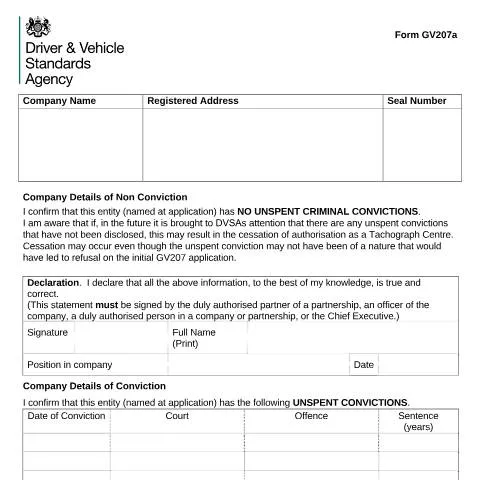
Navigating the Approval Process: The Role of Form GV207a
When setting up an Approved Tachograph Centre in the UK, the submission of Form GV207a is a crucial step that cannot be overlooked. This document acts as a declaration concerning the criminal convictions of partners and company directors, ensuring that only compliant entities operate within the tachograph framework regulated by the Driver and Vehicle Standards Agency (DVSA). The stakes are high, and understanding the nuances of this form is key to a successful application.
Understanding the Implications of Unspent Convictions
At the heart of Form GV207a lies the requirement for applicants to declare any unspent criminal convictions. The Rehabilitation of Offenders Act 1974 safeguards individuals' rights, allowing certain convictions to be disregarded after a specified period. However, any unspent convictions must be disclosed in this form, with the potential for severe repercussions if not appropriately addressed.
- Ownership and Responsibility: The individual responsible for submitting this form could be a partner, company secretary, or director. It is their duty to confirm the status of any convictions accurately.
- Consequences of Non-Disclosure: Failure to declare unspent convictions can lead to the revocation of the centre's authorisation, even if those convictions might not have impacted the original application.
Step-by-Step Submission Process: From Application to Approval
The journey of submitting Form GV207a starts with the decision to establish an Approved Tachograph Centre, and it involves several key steps:
1. Gathering Required Information
Before proceeding with form completion, it's essential to collect all necessary information, which includes:
- Details of the company or partnership applying.
- Personal details of each partner or director, including any unspent convictions.
- Relevant dates related to any convictions, if applicable.
2. Completing the Form
Each section of Form GV207a requires careful attention. Ensure that the following is meticulously filled out:
- Company Information: This includes the name, registered address, and any seal number, essential for the DVSA’s records.
- Declarations of Convictions: Both non-conviction and conviction declarations need to be signed by the appropriate individuals.
3. Submission to DVSA
Once the form is completed, it must be submitted to the DVSA. Ensure that you send it to the correct address, as specified in the DVSA guidelines. Keeping a copy of the submitted form for your records is advisable.
What Happens After Submission?
After form submission, the DVSA will process your application. Understanding the timeline and potential outcomes can help alleviate any anxiety throughout this phase.
Processing Timeframes
The DVSA aims to process applications efficiently. Generally, you can expect the following:
- Initial review of the documentation within four to six weeks.
- If there are issues or missing information, the DVSA will reach out for clarification, which may extend the processing time.
Potential Outcomes
There are several possible outcomes following your application:
- Approval: If everything checks out, the DVSA will grant your centre the necessary authorisation.
- Request for Further Information: Additional details may be necessary if the initial submission raises questions.
- Rejection: Should the application be denied, the DVSA will provide reasons, which could include undisclosed convictions.
Handling Refusals and Errors in Submission
The possibility of encountering a refusal or the need for resubmission is a reality in the administrative process. Understanding how to navigate these challenges is crucial.
Addressing a Rejection
If your application is rejected, it is vital to:
- Review the Reasons: The DVSA will outline the basis for their decision. Understanding these reasons can inform your next steps.
- Submit an Appeal: Depending on the grounds for rejection, you may have the option to appeal the decision. Ensure that you follow the DVSA’s guidelines meticulously.
Correcting Errors in Your Application
Should you discover errors after submission, it is critical to notify the DVSA immediately. The steps include:
- Contacting the DVSA through the designated channels to inform them of the errors.
- Providing a corrected version of Form GV207a if required.
Decoding the Form: A Closer Look at Each Section
Understanding the form's layout and requirements can help prevent errors and ensure a smooth submission process. Below, we break down each critical section of Form GV207a.
| Section | Details Required | Common Pitfalls |
|---|---|---|
| Company Details | Name, registered address, seal number | Incorrect company name or address |
| Non-Conviction Declaration | Each partner/director must sign and confirm no unspent convictions | Missing signatures or incorrect titles |
| Conviction Declaration | Date of conviction, court, offence, sentence | Falsifying information or missing details |
| Data Protection Statement | Awareness of the Data Protection Act | Neglecting to understand data handling responsibilities |
Post-Submission Tracking and Follow-Up
Once you've submitted the form, it’s important to stay proactive regarding your application status. Here’s how to effectively track your submission:
Monitoring Your Application Status
After submitting Form GV207a, consider the following:
- Keep Records: Maintain copies of all submitted forms and correspondence with the DVSA.
- Contact DVSA: If it’s been over six weeks without a response, reach out to the DVSA for an update.
Maintaining Communication with the DVSA
Effective communication can facilitate a smoother process. Here are some tips:
- Be clear and concise in your inquiries.
- Maintain a professional tone, even if you are frustrated.
Future Considerations: Keeping Your Tachograph Centre Compliant
Once established, maintaining the operation of your Approved Tachograph Centre hinges on staying compliant with DVSA regulations. Here’s how to ensure long-term success:
Regular Reviews of Compliance
It’s vital to review your operations regularly. This includes:
- Ensuring all staff understand regulations concerning tachographs.
- Updating any changes in personal circumstances for partners or directors that may affect compliance.
Understanding the Importance of Disclosure
Always remember that transparency regarding criminal convictions is not just a one-time requirement; it’s an ongoing obligation. Any changes in conviction status must be reported to the DVSA immediately, as failure to do so can jeopardize your centre's authorisation.
Resources and Support
Once you’ve navigated the initial application process, ongoing support and resources are available to help ensure your Tachograph Centre’s continued compliance:
DVSA Resources
The DVSA provides a range of resources, including:
- Guidelines and manuals for operating a tachograph centre.
- Contact information for specific queries regarding compliance and authorisation.
Networking with Other Centre Operators
Connecting with others in the sector can provide valuable insights.
- Consider joining professional associations that focus on tachograph compliance.
- Engage in forums or groups that share best practices and updates on regulations.