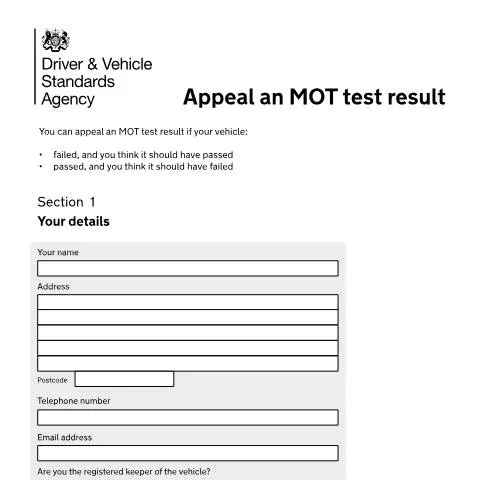
Contesting MOT Decisions: When Test Results Don't Match Reality
Every year, millions of British motorists face the annual ritual of the MOT test, yet few realise they possess the right to challenge outcomes they believe are incorrect. Whether your vehicle has unexpectedly failed on what seems like a minor issue, or conversely, you suspect a dangerous fault has been overlooked during a pass, the Driver and Vehicle Standards Agency provides a formal appeals mechanism through their dedicated complaint form.
This appeals process serves a dual purpose in maintaining road safety standards. It protects vehicle owners from potentially incorrect failures that could result in unnecessary repair costs and inconvenience, whilst simultaneously ensuring that vehicles with genuine safety defects don't slip through the testing net due to oversights or inadequate examination.
The Legal Framework Behind MOT Appeals
The MOT testing scheme operates under statutory authority, with the Driver and Vehicle Standards Agency holding responsibility for maintaining consistent standards across all approved testing stations. This regulatory framework includes provisions for investigating complaints where test results appear questionable, recognising that human error and varying interpretation of defects can occur even within a structured testing environment.
The appeals process isn't merely administrative courtesy—it forms part of the quality assurance mechanism that underpins the entire MOT system. DVSA enforcement officers possess the authority to reinspect vehicles, interview testers, and where necessary, take regulatory action against testing stations that fail to maintain proper standards.
Under the Road Traffic Act 1988 and subsequent regulations, MOT testers must follow prescribed procedures and apply consistent criteria when assessing vehicle safety, roadworthiness aspects, and environmental standards. When these standards appear to have been misapplied, the appeals mechanism provides redress whilst feeding valuable data back into the system for continuous improvement.
Identifying Valid Grounds for Appeal
Not every disagreement with an MOT outcome constitutes valid grounds for appeal. The DVSA investigates cases where there's reasonable evidence that the test result was incorrect based on the vehicle's actual condition at the time of testing.
Scenarios Warranting Failed Test Appeals
Common situations where failed test appeals prove successful include cases where testers have applied incorrect interpretation of defect severity. For instance, surface rust on structural components might be classified as a dangerous defect when it actually represents only minor deterioration not affecting structural integrity. Similarly, emissions failures sometimes occur due to testing equipment calibration issues rather than genuine engine problems.
Lighting defects represent another frequent area of dispute, particularly where bulb failures are recorded despite functioning equipment, or where beam alignment measurements fall within acceptable tolerances but are incorrectly classified as defective.
Challenging Incorrect Passes
Less common but equally important are appeals against vehicles that have incorrectly passed their MOT. These typically arise when obvious safety defects—such as severely worn brake components, dangerous tyre conditions, or significant structural corrosion—have been overlooked during testing. Such appeals often originate from subsequent professional inspections or insurance assessments that identify missed defects.
Navigating the Five-Section Appeal Structure
The DVSA appeal form follows a logical progression designed to capture all relevant information whilst building a comprehensive case file for investigation.
Personal Details and Standing Requirements
Section 1 establishes the complainant's identity and legitimate interest in the appeal outcome. Registered keepers automatically possess standing, but other parties must demonstrate valid reasons for involvement. This might include hire purchase companies with financial interest in the vehicle, fleet managers responsible for company vehicles, or family members acting on behalf of the registered keeper with appropriate authorisation.
The telephone number and email address prove crucial for case management, as DVSA investigators often need to clarify details or arrange reinspection appointments at short notice.
Vehicle Identification Precision
Section 2 requires comprehensive vehicle identification details. The chassis number or VIN serves as the definitive identifier, particularly important for older vehicles where registration transfers might create confusion. Current mileage helps investigators assess whether recorded readings were accurate and whether the vehicle's condition aligns with its recorded usage.
The storage location question addresses cases where vehicles are kept at different premises from the owner's address, which can affect reinspection logistics and may indicate commercial rather than private use.
Testing Station Documentation
Section 3 captures detailed information about the testing facility and personnel involved. The vehicle testing station number uniquely identifies the facility within DVSA records, enabling investigators to access historical performance data and identify any patterns of questionable testing practices.
Individual tester identification, whilst not always available to vehicle owners, helps focus investigations where specific competency concerns arise. The MOT test number provides direct access to the electronic test record, including detailed defect descriptions and photographic evidence where captured.
| Information Required | Purpose | Investigation Priority |
|---|---|---|
| Testing Station Number | Facility identification and compliance history | High |
| Tester Name | Individual competency assessment | Medium |
| MOT Test Number | Electronic record access | Critical |
| Previous Testing Stations | Pattern analysis and comparison | Low |
Building Your Case: The Complaint Narrative
Section 4 represents the heart of the appeal, where complainants must articulate their specific concerns in sufficient detail to guide the investigation. Generic statements like "the test was wrong" provide little value—investigators need specific technical grounds for questioning the original decision.
Effective Complaint Formulation
Successful appeals typically include detailed descriptions of the disputed defects, reference to relevant testing manual provisions where known, and supporting evidence such as subsequent professional opinions or repair invoices that contradict the original findings.
For failed test appeals, focus on why specific defects were incorrectly classified or identified. For example: "The tester recorded dangerous corrosion on the nearside sill, but subsequent inspection by a qualified engineer confirmed only surface scaling with no structural compromise. The load-bearing sections remain sound with metal thickness within acceptable limits."
Post-test modifications present particular challenges, as any alterations to the vehicle after the original test can invalidate appeal grounds. The form explicitly addresses this issue, requiring full disclosure of any repairs, adjustments, or modifications. Complete honesty here is essential—DVSA investigators possess sufficient expertise to identify undisclosed changes during reinspection.
Understanding Investigation Procedures and Costs
The declaration section includes acknowledgment that appellants may face charges for reinspection services. This isn't automatic—fees typically apply only where appeals are found to be without merit and a full reinspection is required to demonstrate the original test's accuracy.
Reinspection Logistics
When DVSA decides to proceed with physical reinspection, they'll contact the appellant to arrange suitable timing and location. Vehicles must be presented in the same condition as during the original test, meaning any repairs or modifications undertaken since the disputed test will invalidate the comparison.
Reinspections involve qualified DVSA vehicle examiners using calibrated testing equipment. These professionals possess extensive experience and access to definitive technical guidance, making their assessments highly authoritative in resolving disputes.
Submission Channels and Processing Timelines
The DVSA accepts appeals through two primary channels, each with distinct advantages and processing characteristics.
Electronic Submission Benefits
Email submission to [email protected] offers several advantages: immediate delivery confirmation, automatic case numbering, and faster initial processing. Electronic submissions integrate directly with DVSA case management systems, reducing administrative delays and enabling quicker investigator assignment.
Digital submissions also facilitate easier follow-up communication and document sharing during the investigation process. However, ensure all sections are clearly legible if submitting scanned documents, as poor image quality can delay processing.
Postal Submission Considerations
Traditional postal submission to the Swansea office remains available for those unable to access email facilities. Allow additional processing time for postal delivery and manual data entry into electronic systems. Use recorded delivery for valuable cases to ensure receipt confirmation.
The Ellipse facility in Swansea serves as DVSA's primary customer service centre, handling appeals alongside other regulatory functions. Processing times may vary based on case complexity and current workload, but initial acknowledgment typically occurs within five working days of receipt.
Post-Investigation Outcomes and Further Actions
DVSA investigations conclude with one of several possible outcomes, each carrying different implications for the appellant and the testing station involved.
Where appeals are upheld, the original MOT result may be amended in electronic records, potentially affecting the vehicle's legal status and any associated costs. Testing stations may face regulatory action ranging from additional training requirements to formal enforcement measures where systematic failings are identified.
Rejected appeals don't necessarily indicate frivolous complaints—they may reflect cases where the original test was technically correct despite the appellant's genuine concerns. In such instances, DVSA often provides detailed explanations to help vehicle owners understand the technical reasoning behind test outcomes.
The appeals process forms part of a broader quality assurance framework that helps maintain public confidence in MOT testing standards. Even unsuccessful appeals contribute valuable data about testing practices and help identify areas where guidance or training might be enhanced to prevent similar disputes arising in future.
Understanding the Different Types of MOT Appeals
The MOT appeals process recognises that not all disputes are identical, and the Driver and Vehicle Standards Agency (DVSA) has established distinct pathways depending on the nature of your concern. Understanding these categories helps determine which route offers the best prospect of success and ensures you're directing your appeal appropriately.
Technical appeals form the most common category and focus on disagreements over specific defects identified during testing. These might involve disputes over brake efficiency readings, emissions levels, or structural assessments where you believe the tester's judgement was incorrect. For instance, if your vehicle failed on "excessive corrosion" to a suspension component, but you have recent professional evidence showing the part was replaced or adequately repaired, this constitutes grounds for a technical appeal.
The DVSA examines these cases by reviewing the original tester's notes, photographs taken during the inspection, and any supporting documentation you provide. They may also conduct their own physical inspection if the vehicle remains in its original condition. Success often hinges on demonstrating that the defect either didn't exist at the time of testing or fell below the failure threshold specified in the MOT testing manual.
Procedural appeals challenge how the test was conducted rather than its technical findings. Common examples include situations where the testing station failed to follow proper protocols, such as not allowing you to observe the test when requested, testing components in the wrong sequence, or failing to provide adequate explanation of identified defects. These appeals can succeed even when the technical failures were legitimate if you can demonstrate that procedural irregularities may have affected the outcome.
Documentation becomes crucial for procedural appeals. CCTV footage from the testing bay, witness statements, or records showing the tester deviated from standard practice can strengthen your case significantly. The DVSA takes procedural compliance seriously, as it underpins public confidence in the MOT system's integrity.
Administrative appeals address errors in paperwork, incorrect vehicle identification, or disputes over fee charging. While less dramatic than technical disagreements, these issues can have significant practical consequences, particularly if they affect your vehicle's legal status or insurance validity. Examples include incorrect registration details on the MOT certificate, charges for tests not actually performed, or failure to update the electronic MOT database correctly.
Preparing Your Technical Evidence and Documentation
The strength of your MOT appeal often depends on the quality and relevance of supporting evidence you can provide. The DVSA operates on factual assessment rather than subjective opinion, making thorough documentation essential for success.
Photographic evidence requires careful consideration of timing and perspective. Images taken immediately after the failed MOT carry more weight than those captured days later, as they better represent the vehicle's condition during testing. Focus on clear, well-lit photographs that directly contradict the stated failure reasons. If disputing a "severely corroded" component, capture multiple angles showing the actual condition, including close-ups that demonstrate the metal's thickness and structural integrity.
Include reference objects for scale—a coin or ruler can help DVSA assessors gauge the extent of any damage. Timestamp evidence where possible, either through camera metadata or by including dated newspapers or receipts in the frame. Remember that digital images can be scrutinised for authenticity, so avoid any editing beyond basic brightness or contrast adjustments.
Professional assessments from qualified mechanics, automotive engineers, or specialist inspection services can provide powerful supporting evidence, particularly for complex technical disputes. However, the DVSA weighs such evidence according to the assessor's relevant qualifications and independence from your case. A report from an RAC or AA technical specialist typically carries more influence than one from a local garage with potential commercial interests.
Ensure any professional assessment directly addresses the specific failure points identified in your MOT. Generic statements about overall vehicle condition hold less value than targeted analysis of disputed components. Request that assessors reference relevant sections of the MOT testing manual and explain their methodology for reaching conclusions that differ from the original tester's findings.
Maintenance records and receipts demonstrate your vehicle's service history and can support claims that identified defects were recently addressed or couldn't have developed since the last successful MOT. Organise these chronologically and highlight entries directly relevant to failed components. For example, if your vehicle failed on brake disc condition, include receipts showing recent brake service, along with any warranty documentation covering the work performed.
Parts suppliers' specifications and warranty information can also support your case, particularly when disputing premature component failure. If a suspension spring that was replaced six months ago has allegedly failed again, manufacturer specifications about expected service life become relevant evidence.
Previous MOT certificates help establish patterns and identify inconsistencies in testing approaches. If your vehicle has passed multiple MOTs without advisory notices on a component that suddenly becomes a major failure, this timeline supports questions about the current assessment's accuracy. However, remember that component condition can deteriorate rapidly, so focus on cases where immediate dramatic change seems implausible.
Navigating the Appeals Timeline and Potential Outcomes
Understanding the MOT appeals process timeline helps manage expectations and plan appropriate actions while your case progresses through DVSA review procedures. The system operates within defined timeframes, though complexity of individual cases can affect actual processing duration.
Initial review period typically spans 10-15 working days from receipt of your complete appeal submission. During this phase, DVSA administrative staff verify that your appeal meets basic criteria and contains sufficient information for technical assessment. They may contact you requesting additional documentation or clarification of specific points, which can extend the timeline if prompt response isn't provided.
This preliminary stage focuses on completeness rather than merit, so rejection at this point usually indicates missing documentation, unclear vehicle identification, or appeals submitted outside the eligible timeframe rather than disagreement with your technical arguments. Use this period to ensure all supporting evidence remains accessible and that your vehicle stays in the condition that existed during the disputed MOT test.
Technical assessment phase involves qualified DVSA technical specialists reviewing the original test documentation, your supporting evidence, and potentially conducting independent examination of your vehicle. This represents the substantive evaluation of your appeal's merit and typically requires 4-6 weeks for completion, though complex cases involving multiple failure points may take longer.
The DVSA may arrange to inspect your vehicle during this phase, particularly for appeals involving structural defects, complex mechanical issues, or cases where photographic evidence proves inconclusive. They'll contact you to arrange convenient inspection times, usually at DVSA facilities rather than private locations. Failure to make your vehicle available for inspection when reasonably requested can result in appeal dismissal regardless of other evidence strength.
Possible outcomes extend beyond simple success or failure, with several intermediate positions reflecting the nuanced nature of MOT assessments. Complete appeal success results in your MOT failure being overturned and a pass certificate issued, along with potential refund of retest fees if you've already had corrective work performed.
Partial success occurs when some but not all disputed failure points are upheld by the DVSA review. In these cases, you receive a revised failure certificate listing only the confirmed defects, potentially allowing you to address fewer issues before retesting. This outcome often applies when appeals cover multiple unrelated components with varying evidence quality.
Appeal rejection confirms the original MOT result, requiring you to address all identified defects before retesting. However, rejection doesn't preclude further action if you believe procedural errors occurred during the appeals process itself. The DVSA provides detailed reasoning for rejection decisions, which can inform whether escalation to their customer service complaints procedure might prove worthwhile.
Impact on vehicle legal status during the appeals process requires careful attention to avoid inadvertent driving offences. Your vehicle remains legally unroadworthy throughout the appeal period unless you obtain a valid MOT certificate through retesting. You cannot drive on public roads except for journeys directly to pre-arranged MOT tests or necessary repairs, regardless of appeal progress.
Consider arranging alternative transport during extended appeal periods, particularly if the process extends beyond your current MOT certificate's expiry date. Some insurance policies may also require valid MOT certification, making prompt resolution important for maintaining comprehensive cover even if you're not actively driving the vehicle.