Understanding the Necessity of Registering a New Vehicle from Northern Ireland
In the current landscape of cross-border transactions within the European Union, the registration of a newly bought vehicle by an EU VAT-registered enterprise in Northern Ireland has become a significant administrative hurdle. This process, especially vital for businesses seeking to optimize their VAT obligations and streamline their operations in the EU, demands careful attention to detail and precise compliance with HM Revenue & Customs (HMRC) regulations.
The Context: Post-Brexit Taxation and Vehicle Registration
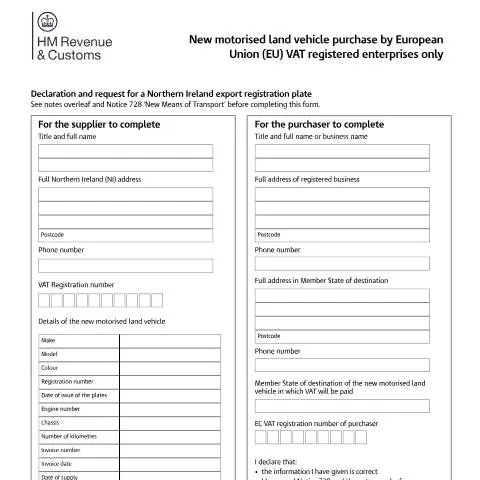
The complexities of registering a vehicle in the UK have been accentuated post-Brexit, particularly for VAT-registered entities in the EU. The VAT 411A form, which is mandated for businesses acquiring new motorized land vehicles in Northern Ireland, serves a critical purpose. It enables these enterprises to declare their intentions to transport the vehicle to another Member State, ensuring compliance with both UK and EU VAT regulations.
Under the framework provided by Notice 728, businesses must navigate the unique requirements imposed by the HMRC to avoid potential VAT liabilities. Understanding these regulations is essential for any VAT-registered enterprise operating across borders.
Preparing Documentation: Key Considerations for Smooth Submission
Prior to filling out the VAT 411A form, certain documents and information must be gathered to ensure a seamless application process. These can vary based on the specific circumstances of the transaction.
Essential Documentation Checklist
- Business Registration Details: Ensure your business name, full address, and VAT registration number are up-to-date and accurate.
- Vehicle Information: Collect details regarding the make, model, colour, engine number, and chassis number of the vehicle.
- Purchase Invoice: Have the invoice ready, which includes the purchase price and VAT status.
- Destination Information: Know the Member State to which the vehicle is being transported, including the full address and VAT registration of the recipient business.
Identifying Stakeholders: Who is Directly Involved?
The registration process involves two primary parties: the purchaser and the supplier (dealership). Each party has distinct responsibilities to fulfill during the registration procedure.
The Purchaser: Responsibilities and Requirements
- Completing the VAT 411A form accurately, ensuring all information is correct and up to date.
- Signing the declaration, which includes intentions regarding the vehicle’s removal from Northern Ireland within two months of acquisition.
- Communicating with HMRC if there are any changes in plans concerning the vehicle's transport.
The Supplier: Critical Obligations
- Filling out their section of the VAT 411A form, ensuring compliance with Notice 725 regarding VAT and the Single Market.
- Attaching the completed form to the application for vehicle registration with the DVLA.
- Submitting the VAT 101 form to HMRC to report the transaction as an EC supply.
Navigating the Registration Form: A Step-by-Step Analysis
The VAT 411A is structured into distinct sections aimed at capturing comprehensive details regarding the transaction. Each section plays a pivotal role in ensuring correct processing by HMRC.
1. Purchaser's Information
This section requires the full name or business name and contact details of the purchaser, alongside their VAT registration number. Accuracy here is critical as errors can lead to delays or complications.
2. Details of the Vehicle
In this part of the form, critical specifications of the vehicle must be provided. Ensure to double-check:
- Make and model
- Colour and registration number
- Engine and chassis numbers
3. Declaration Statement
Both the purchaser and the supplier must sign the declaration, confirming that all provided information is correct and that both parties intend to comply with VAT regulations as outlined in Notice 728.
Submitting Your Application: Step-by-Step Guidance
The completion of the VAT 411A form is only the first step in a broader procedural chain. Submitting this application correctly is equally important to ensure compliance and avoid penalties.
Submission Process Overview
- Complete the VAT 411A form, ensuring all sections are filled out accurately.
- Attach the form to the vehicle registration application with the DVLA.
- As the supplier, submit the VAT 101 form to HMRC concurrently.
Post-Submission Procedures: What Happens Next?
After submission, businesses must be prepared for various potential outcomes. Understanding the next steps is crucial for maintaining compliance and ensuring the effective registration of the vehicle.
Tracking Your Application
Following the submission of the VAT 411A form, businesses should be proactive in tracking the status of their application. It is advisable to:
- Keep records of all submitted documents and communications with HMRC and DVLA.
- Follow up with HMRC if a response is not received within a reasonable timeframe.
- Consult HMRC's guidance documents to remain informed about any changes to the process.
Addressing Issues: Errors, Refusals, and Missing Information
In the event of problems arising during or after the registration process, knowing how to address them promptly is key.
What to Do in Case of Refusal
Should the application be refused, the reasons must be clearly understood. Typically, refusals can stem from:
- Incorrect information provided on the VAT 411A form.
- Failure to comply with the two-month removal requirement.
- Incomplete documentation or lack of required signatures.
Each of these issues requires specific actions, including potentially re-submitting the form with corrections or seeking further clarification from HMRC.
Handling Missing Information
If certain documents are missing, promptly contacting HMRC is essential. Providing additional information may resolve the issue swiftly. Always ensure that all forms are complete and that the necessary documentation is attached to avoid these complications.
Final Thoughts on Compliance and Best Practices
In navigating the bureaucracy surrounding the registration of a new vehicle from Northern Ireland, awareness of the requirements and diligent preparation can make a significant difference. Ensuring compliance not only helps avoid VAT liabilities but also fosters smoother operations within the EU marketplace.
Businesses should stay informed by regularly reviewing HMRC updates, engaging with professional advisors if needed, and maintaining meticulous records of all transactions. By doing so, they can ensure that they operate efficiently and in accordance with the ever-evolving regulations governing cross-border vehicle transactions in the post-Brexit landscape.
Understanding the VAT Implications for EU Businesses
When an EU VAT-registered enterprise purchases a vehicle in the UK, it's crucial to understand the VAT implications that arise during the registration process. The UK operates its own VAT system, and post-Brexit, businesses must navigate these regulations carefully.
If you're an EU business purchasing a vehicle, you'll be required to provide your VAT registration number to HMRC. This is particularly important because you can potentially reclaim the VAT paid on the vehicle if the vehicle is used for business purposes. This reclaim process can involve submitting a VAT refund application through HMRC, along with supporting documentation to prove the vehicle's use in your business activities.
Moreover, you should be aware of the 'use and enjoyment' rules. If the vehicle is used in the UK for business purposes within specific contexts, you may need to account for VAT differently. It’s advisable to consult with a tax advisor familiar with cross-border VAT regulations to ensure compliance and maximise your recovery options.
Steps for Vehicles with Special Considerations
Some vehicles fall under specific categories and may have additional requirements when being registered. For instance, if your vehicle is classified as a 'commercial vehicle' or a 'specialist vehicle' (such as a motorhome or a vehicle designed for transporting people with disabilities), the registration process may differ slightly from standard passenger vehicles.
For commercial vehicles, you must ensure that the vehicle meets the necessary safety and emissions standards. This typically involves presenting a Vehicle Approval Certificate, which confirms that your vehicle complies with UK regulations. If the vehicle is a used commercial vehicle imported from the EU, you will need to provide proof of its history and previous registrations.
Similarly, if your vehicle is a specialist vehicle, additional paperwork might be required to confirm its intended use. It’s crucial to gather relevant documentation that supports your application, such as the vehicle’s type approval certificate and any modifications made for its specialist use.
Always check with the DVLA or a professional for specific requirements pertaining to your vehicle’s category to avoid delays in registration.
Dealing with Local Authorities and Additional Fees
Once you have gathered all the necessary documentation, you will need to submit your application for vehicle registration to the DVLA. This process may involve not only the standard fee for vehicle registration but also additional fees depending on the type of vehicle and its use. For example, if you are registering a vehicle that is subject to the London Congestion Charge or the Ultra Low Emission Zone (ULEZ), further fees may apply.
It’s also important to inquire whether you need to pay road tax (Vehicle Excise Duty) at the time of registration. The rate for road tax varies based on the vehicle's emissions and age, and businesses may be eligible for specific exemptions depending on the vehicle's use.
Local councils may have additional requirements or fees applicable to businesses operating vehicles within their jurisdiction. Engaging with your local authority early in the process can help you avoid unexpected costs and legal issues later on.
Moreover, if your vehicle is intended for a specific purpose (for instance, as a taxi or for public hire), additional licensing from the local authority may be necessary. Be sure to check the requirements for your specific location, especially if you are planning to operate the vehicle commercially.