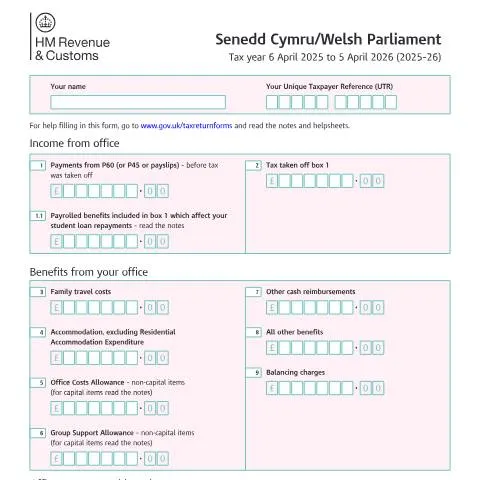
Understanding the Significance of the SA102MS Form
The SA102MS form is a vital piece of documentation for individuals engaged in specific roles within the Senedd Cymru, or Welsh Parliament. Unlike standard tax return forms, this document caters specifically to members and staff of the Welsh Parliament, ensuring they accurately report their income and any associated expenses. The unique nature of this form reflects the responsibilities tied to public service and the financial accountability expected from those in such positions.
Who Needs to File the SA102MS?
Filers of the SA102MS typically include Members of the Senedd (Welsh Parliament) and those employed within its administrative structure. It is crucial for these individuals to demonstrate transparency in their financial dealings, particularly when public funds are involved. Here are key categories of individuals required to submit this form:
- Members of the Senedd receiving salaries.
- Individuals claiming reimbursements for office costs or support allowances.
- Staff members engaging in official capacities representing the Welsh Parliament.
A Deep Dive into the Sections of the SA102MS
Completing the SA102MS involves navigating various sections that detail income, expenses, and other claims pertinent to parliamentary duties. Below is a breakdown of the key sections of the form, highlighting their importance and possible pitfalls during completion.
Section 1: Payments from P60, P45, or Payslips
This section requires filers to list payments received before tax deductions. It is critical to ensure that the amounts entered here correspond to the figures on the official documents (P60 or P45). Common mistakes include:
- Incorrectly transcribing figures from payslips.
- Failing to include all relevant payments that affect tax liabilities.
Ensuring accuracy in this section is essential, as discrepancies can lead to complications in self-assessment calculations.
Section 2: Tax Taken Off
In this area, individuals report the amount of tax that has already been deducted from their income. This figure plays a crucial role in determining how much tax relief or repayment may be due. One common oversight is:
- Not including tax deductions associated with benefits, which can significantly alter overall tax calculations.
What Distinguishes the SA102MS from Other Forms?
The SA102MS stands out from other tax forms such as SA100 (the standard self-assessment tax return) due to its targeted focus on those involved with the Welsh Parliament. While the SA100 provides a comprehensive overview for general taxpayers, the SA102MS zeroes in on specific income sources and expenses within the parliamentary context. This includes:
- Office Costs Allowance specific to parliamentary functions.
- Reimbursements that pertain strictly to work-related expenses.
Failing to recognize these differences can lead to inappropriate filings, which can trigger audits or additional scrutiny from HM Revenue & Customs (HMRC).
Interplay with Other HMRC Documentation
The SA102MS is interlinked with various other HMRC documents. For instance, a P60 or P45 is necessary for accurately completing the income-related sections. Understanding how these documents complement each other can simplify the filing process and ensure thorough compliance.
Navigating the Process: From Initiation to Submission
The path from deciding to file the SA102MS to its submission involves several steps that must be handled with care.
Initiating the Self-Assessment Process
- Verify your eligibility: Ensure that your role warrants the use of the SA102MS.
- Gather necessary documentation: Collect your P60, P45, and any relevant payslips.
- Review the guidelines provided by HMRC regarding the SA102MS.
Completing the Form
When filling out the SA102MS, it is essential to be meticulous. Each section should be filled out as accurately as possible to prevent any future inquiries from HMRC. If you encounter issues, consider reaching out to HMRC or consulting with a tax professional for guidance.
Submission Channels: Digital vs. Paper
The form can be submitted via various channels: online through the HMRC portal, by post, or in person at local HMRC offices. Each method has its benefits:
| Submission Method | Pros | Cons |
|---|---|---|
| Online | Immediate confirmation; easier to track | Requires an online account; possible technical issues |
| Postal | Familiar process; no need for tech | Longer processing times; risk of lost mail |
| In-Person | Direct assistance; resolve queries instantly | Limited to local office hours; travel may be required |
Implications of Failing to Submit or Errors in the Form
Neglecting to file the SA102MS or submitting incorrect information can have significant repercussions. Individuals may face penalties from HMRC, including:
- Financial fines based on the severity of the oversight.
- Potential legal implications for non-compliance with public accountability standards.
- Delays in receiving any rebates or payments due.
It is critical for filers to understand their obligations and ensure compliance to mitigate these risks.
Addressing Common Issues
Should you encounter a problem with your submission, such as missing documentation or an error in the reported figures, it is advisable to act swiftly. Here are steps to follow:
- Contact HMRC immediately to explain your situation.
- Follow their guidance on how to amend your submission or provide the missing information.
- Retain a record of all communications for your reference.
Rights and Obligations: Understanding Your Position
Filing the SA102MS entails a series of rights and responsibilities that are crucial for maintaining compliance and ensuring that financial affairs are in order.
Your Rights as a Filer
- You have the right to seek clarification from HMRC concerning any uncertainties about the form.
- You are entitled to appeal any decisions made by HMRC that you believe to be erroneous.
- Access to support services provided by HMRC for completing your filing correctly.
Your Obligations
- Ensure all information provided is accurate and truthful.
- File the SA102MS by the deadline of 31 January to avoid penalties.
- Maintain records of all documents and communications related to your submissions.
Conclusion: The Path Ahead
Completing the SA102MS is more than just a bureaucratic exercise; it is a commitment to transparency and accountability as a public servant within the Welsh Parliament. Each step in the process is essential to ensuring compliance and maintaining the integrity of public service. By understanding the nuances of the SA102MS and approaching it with diligence, individuals can navigate the complexities of self-assessment with confidence.
Understanding the SA102MS Form: Key Components and Sections
The SA102MS form is essential for individuals in specific professions or those operating as partners within partnerships in Wales. This form primarily serves to declare income from self-employment or partnership activities and is an integral part of the broader Self Assessment tax return process.
When filling out the SA102MS form, you’ll encounter several key sections, each designed to capture specific information about your income and expenses. Here’s a breakdown of what each section entails:
- Section 1: Income from Self-Employment — This area requires you to declare your gross income. Be prepared to provide detailed information regarding the nature of your trade, including a description of your business, the dates of operation, and gross turnover. It’s advisable to have your sales records, invoices, and any additional documentation readily available to ensure accuracy.
- Section 2: Allowable Business Expenses — Here, you will list your allowable expenses, which can significantly reduce your taxable profit. Familiar expenses include costs for materials, utilities, and travel related to business activities. However, it’s crucial to differentiate between personal and business expenditures to comply with HMRC regulations.
- Section 3: Calculation of Profits — This section is where you calculate your taxable profit from self-employment. Deduct allowable business expenses from your total income, and ensure calculations are clear and transparent. If you are part of a partnership, these figures may need to reflect your percentage of the partnership's income and expenses.
- Section 4: Other Income — If you have other income sources, such as rental income or investments, those must be reported in this section. Each source may have different implications for your overall tax situation, and you should consult with a tax advisor if you're uncertain about how to properly report these amounts.
- Section 5: Signature and Declaration — Finally, the form requires your signature and declaration that the information provided is accurate to the best of your knowledge. This section underscores the importance of honesty and integrity when reporting your financial details to HMRC.
Completing the SA102MS form accurately is vital, as inaccuracies can lead to penalties or further inquiries from HMRC. If you are unsure about any aspect of your self-employment income or expenses, consider seeking professional advice to ensure you meet all filing requirements.
Common Mistakes to Avoid When Submitting the SA102MS
Avoiding common pitfalls can greatly simplify your Self Assessment experience, especially when filling out the SA102MS form. Here are some frequent mistakes that individuals make, along with tips on how to avoid them:
- Inaccurate Income Reporting — One of the most common errors is underreporting or overreporting income. Ensure that you have recorded every source of income accurately, including cash payments and transactions from multiple revenue streams. Regularly updating your financial records can help prevent discrepancies.
- Neglecting to Keep Receipts — Many taxpayers fail to keep adequate records of their business expenses. This oversight can lead to lost deductions and higher tax liability. Establish a routine for collecting and organizing receipts, invoices, and bank statements as they come in to support your declared expenses on the SA102MS form.
- Missing Submission Deadlines — It's critical to be aware of the deadlines associated with Self Assessment. The deadline for submitting your SA102MS as part of your overall Self Assessment return is 31 January following the end of the tax year. Late submissions can incur penalties, so set reminders well in advance.
- Ignoring Changes in Tax Regulations — Tax laws and regulations can change. It’s important to stay informed about any updates that may affect your self-assessment obligations or allowable deductions. Regularly consult HMRC's official publications or engage with a tax professional who specializes in self-employment.
- Failure to Claim All Allowable Expenses — Some taxpayers overlook legitimate deductions they are entitled to claim. Take the time to thoroughly research what expenses are allowable under HMRC guidelines, including home office expenses, vehicle costs, and professional development courses related to your trade.
By proactively addressing these potential issues, you can enhance the accuracy of your submission, thereby ensuring compliance with HMRC and optimizing your tax position.
Resources and Support for Completing the SA102MS
Although the process of completing the SA102MS form can seem daunting, a wealth of resources and support is available to assist you. Here are several avenues to consider:
- HMRC Guides and Tutorials — The HM Revenue and Customs website offers a comprehensive library of guides and resources tailored to Self Assessment, including specific instructions for completing the SA102MS form. Be sure to utilize these materials for a clearer understanding of your tax obligations.
- Local Business Support Centres — Many regions in Wales have local business support centres that offer free or low-cost advice and resources for self-employed individuals. These centres can provide guidance on everything from tax obligations to business planning and growth strategies.
- Professional Accounting Services — Engaging a certified accountant can provide peace of mind. An accountant can help you navigate complex tax laws, ensure your submissions are accurate, and advise on tax-saving strategies specific to your circumstances.
- Online Forums and Community Groups — Consider joining online communities or forums where self-employed individuals share their experiences and solutions to common problems. These networks can be valuable for gaining insights and learning from others who have successfully completed their Self Assessment.
- Workshops and Webinars — Look for workshops or webinars hosted by financial advisors or local chambers of commerce. These events often cover essential topics such as self-employment taxes, deductions, and the specifics of completing HMRC forms like the SA102MS.
Utilizing these resources can make the process of completing your SA102MS form more manageable and increase your confidence in your ability to meet your tax obligations.