When overseas assignments lead to unexpected tax bills in the UK
Foreign nationals working in the UK often find themselves navigating a complex web of tax obligations that can result in significant overpayments to HMRC. Whether you're on a temporary assignment, part of an international transfer programme, or working under specific visa arrangements, the interaction between UK tax rules and your home country's tax system frequently creates situations where you've paid more Income Tax than legally required.
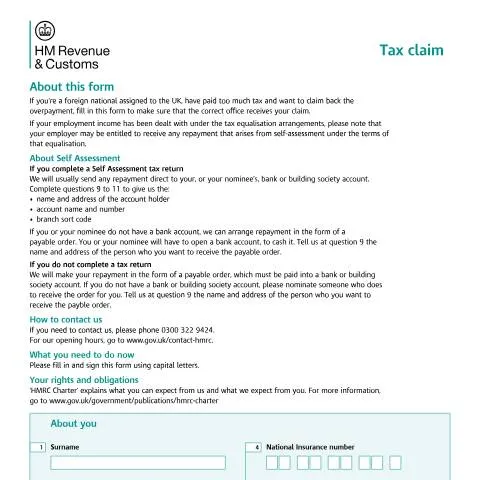
The R38 (Expat) form serves as your gateway to recovering these overpayments, but it's far from a simple refund request. This specialised HMRC document addresses the unique circumstances faced by foreign nationals whose tax affairs span multiple jurisdictions, often involving complex arrangements like tax equalisation schemes where employers manage the overall tax burden to ensure employees aren't financially disadvantaged by their international assignment.
Understanding when and how to use this form can mean the difference between losing hundreds or thousands of pounds in overpaid tax and successfully recovering what's rightfully yours. The stakes are particularly high for those whose assignments straddle multiple tax years or involve changes in residency status during their UK posting.
Navigating the intersection of Self Assessment and PAYE for expatriate workers
The R38 form uniquely addresses a common predicament for foreign nationals: being caught between two different tax collection systems. Many expats find themselves subject to both PAYE deductions through their employer and Self Assessment obligations, creating potential for double taxation or overpayment scenarios that standard HMRC processes aren't designed to handle efficiently.
If you complete Self Assessment returns, HMRC typically processes refunds directly through the SA system. However, foreign nationals often have employment income processed under tax equalisation arrangements, which fundamentally changes who receives any eventual refund. Under these arrangements, your employer may be entitled to receive repayments arising from Self Assessment, as they've typically been managing your overall tax liability to ensure cost neutrality.
For those not required to complete Self Assessment returns, the process differs significantly. HMRC will issue refunds as payable orders rather than direct bank transfers, requiring you to have access to a UK bank account to cash them. This creates practical challenges for expats who may not have established full UK banking relationships or who plan to leave the country shortly after their assignment ends.
| Tax Collection Method | Refund Mechanism | Key Consideration |
|---|---|---|
| Self Assessment filer | Direct bank transfer (usual) | Employer may be entitled to refund under equalisation |
| PAYE only | Payable order | Requires UK bank account to cash |
| Mixed PAYE/SA | Depends on source of overpayment | Form ensures correct HMRC office handles claim |
Decoding the critical date ranges and reference numbers
The precision required in completing sections 7 through 11 of the R38 form cannot be overstated. The date range you specify for your refund claim directly impacts which HMRC office processes your case and how they calculate any repayment due. These dates must align with specific tax years and employment periods, not simply the duration of your UK assignment.
Your National Insurance number serves as the primary identifier, but the interplay between Self Assessment references and employer PAYE references determines the processing pathway. If you're completing Self Assessment returns, your SA reference takes precedence and directs your claim to the Self Assessment processing centre. However, if you're PAYE-only, your employer's PAYE reference becomes crucial for HMRC to locate your employment records and tax history.
The complexity increases when assignments span multiple tax years or involve changes in employment status. For instance, if you arrived mid-tax year or your assignment was extended beyond the original planned duration, the date ranges must reflect the actual periods of UK tax liability, not your physical presence in the country. Getting these dates wrong can result in your claim being processed by the wrong HMRC department, leading to significant delays or incorrect calculations.
Understanding the PAYE reference format requirements
The employer PAYE reference follows a specific format that many expats find confusing. It typically consists of a three-digit tax office number followed by a slash and a reference unique to your employer. If you're unsure of this reference, it appears on your P60 certificate, payslips, and any P45 you received when leaving employment. For those on secondments or complex international assignments, multiple PAYE references may apply if you've had different UK employers or if your assignment structure changed during your stay.
The nominee and agent framework: who can receive your refund
Section 8 of the R38 form presents three options that carry significant practical and legal implications. Choosing to receive the refund yourself seems straightforward, but for expats who may have left the UK or lack UK banking facilities, nominating someone else to receive the payment often proves more practical.
The nominee option allows you to designate any individual to receive your refund on your behalf. This could be a family member, friend, or professional contact who maintains a UK bank account. However, this arrangement creates a trust relationship where the nominee becomes legally responsible for ensuring you receive the funds. HMRC provides no oversight of this arrangement once the payment is made.
Professional agents, typically tax advisers or accountants, offer a more structured approach. When you designate an agent, they must provide their professional reference number, and HMRC maintains records of the arrangement. This provides additional security and professional accountability, particularly valuable for larger refund amounts or complex cases involving multiple tax years.
Banking arrangements for non-UK residents
The banking details required in section 11 present unique challenges for expats. UK banks often close or restrict accounts when customers become non-resident, yet HMRC's refund mechanisms assume access to UK banking facilities. Building society accounts sometimes offer more flexibility for maintaining accounts post-departure, though this varies significantly between institutions.
The sort code format (six digits displayed as XX-XX-XX) and account number requirements follow strict UK banking standards. International account numbers or IBAN codes cannot be substituted, reinforcing the need for UK-based banking arrangements or nominee arrangements with someone who maintains appropriate UK accounts.
Tax equalisation arrangements and their impact on refund entitlement
Perhaps the most complex aspect of expat tax refunds involves understanding how tax equalisation arrangements affect your entitlement to receive any refund personally. These arrangements, common in multinational corporations, are designed to ensure employees neither gain nor lose financially from international assignments due to tax differences between countries.
Under typical tax equalisation, your employer calculates a "hypothetical tax" based on what you would have paid in your home country, deducts this amount from your salary, and then covers all actual tax liabilities in both your home country and the UK. When overpayments occur in this scenario, the refund technically belongs to the employer, as they've borne the actual tax cost.
However, not all international assignments involve full tax equalisation. Some arrangements involve tax protection (where the employer covers additional costs but allows employees to benefit from tax savings) or laissez-faire approaches where employees manage their own tax affairs. The R38 form's reference to equalisation arrangements serves as a crucial reminder to verify your arrangement's terms before assuming personal entitlement to any refund.
Documentation requirements for equalisation arrangements
If you're unsure about your equalisation arrangements, key documents to review include your assignment letter, international transfer agreement, and any tax policy documents provided by your employer. These typically specify whether tax savings belong to the employee or employer. For complex cases, employers often engage specialist tax firms to manage these arrangements, and these firms may need to be involved in the refund process.
Processing pathways and the significance of correct office allocation
The R38 form's primary function is ensuring your refund claim reaches the appropriate HMRC processing office. This seemingly administrative detail has profound implications for processing speed, accuracy, and your ability to track progress. HMRC operates different processing centres for Self Assessment and PAYE matters, each with distinct procedures, timescales, and contact points.
Claims routed through the Self Assessment pathway typically integrate with existing SA records and can be processed alongside annual return assessments. This often results in faster processing but requires your SA reference and may trigger reviews of your broader tax affairs. PAYE-routed claims follow different procedures, often requiring manual review of employment records and more detailed verification of your right to work and tax status during the relevant periods.
The BX9 1AS address represents a central processing facility that acts as a sorting point rather than the final processing location. Your completed R38 form undergoes initial review here before being allocated to the appropriate specialist team based on your Self Assessment status, PAYE arrangements, and the complexity of your case.
Tracking your claim through HMRC systems
Once submitted, tracking R38 claims requires understanding which HMRC system is handling your case. Self Assessment-routed claims can often be tracked through your online SA account, while PAYE claims may require telephone contact with HMRC's dedicated expat helpline (0300 322 9424). The processing office will typically acknowledge receipt within 15 working days, though this initial acknowledgement doesn't indicate when processing will complete.
Timeline considerations and the four-year limitation period
The dates you specify in section 7 must fall within HMRC's four-year limitation period for refund claims, calculated from the end of the tax year in which the overpayment occurred. For the 2020-21 tax year (ending 5 April 2021), you have until 5 April 2025 to submit your claim. However, this limitation period can be extended in cases involving genuine mistakes or where HMRC provided incorrect information.
The complexity for expats often involves determining which tax years are relevant to their claim. Changes in residence status, split-year treatment, or double taxation relief claims can affect multiple tax years, requiring careful analysis of when overpayments actually occurred versus when they were discovered.
Processing times vary significantly based on case complexity. Simple PAYE overpayments might resolve within 6-8 weeks, while cases involving multiple tax years, foreign income, or double taxation relief can take several months. Cases requiring international information exchange or verification of foreign tax credits can extend beyond six months.
Managing expectations around processing delays
HMRC's published service standards for expat refund claims acknowledge longer processing times compared to standard domestic refunds. Factors contributing to delays include verification of employment authorisation, confirmation of residence status during relevant periods, and liaison with foreign tax authorities where double taxation relief is involved. Understanding these potential complications helps set realistic expectations and informs decisions about whether to engage professional assistance.
Strategic considerations for departing expats and ongoing UK tax obligations
The timing of your R38 submission relative to your departure from the UK carries strategic implications beyond simple refund recovery. If you're planning to leave the UK permanently, resolving all tax matters before departure simplifies future compliance and reduces the risk of ongoing HMRC correspondence to foreign addresses.
However, submitting refund claims can trigger broader HMRC reviews of your tax affairs, potentially identifying additional obligations or discrepancies that require resolution. This is particularly relevant for expats who may have had complex income arrangements, foreign investments, or who qualify for remittance basis taxation. A refund claim might prompt HMRC to review whether you should have been completing Self Assessment returns throughout your UK assignment.
For those maintaining ongoing UK connections—perhaps through property ownership, continued employment, or family ties—the R38 process establishes important precedents for future tax treatment. The information provided helps HMRC understand your circumstances and may influence how they approach your tax affairs if you return to the UK or maintain UK income sources from abroad.
The signature requirement in section 12 creates a legal declaration that the information provided is complete and accurate. For expats, this carries particular weight as HMRC's ability to verify information may be limited by international information-sharing agreements and practical constraints of overseas verification processes. Providing incomplete or inaccurate information can result in penalties and may affect future UK tax treatment, making thorough preparation essential before signing and submitting the form.