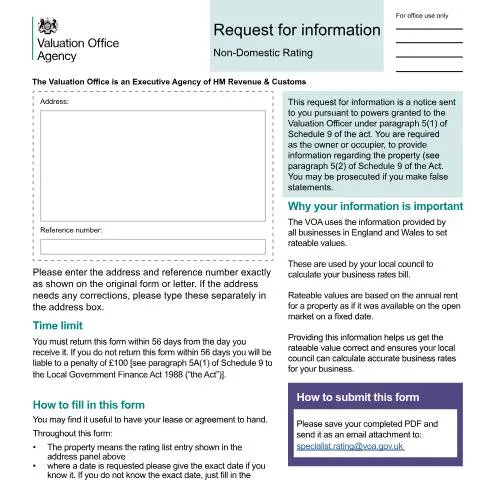
Navigating the VO 6031: Understanding the Request for Rental Information
Receiving a form VO 6031 from the Valuation Office Agency (VOA) can seem daunting at first glance. This document is more than just paperwork; it plays a crucial role in the broader context of non-domestic rating in England and Wales. For property owners and occupiers, understanding this form and its implications is vital for ensuring compliance and accuracy in business rates calculations.
The Importance of Accurate Rental Information
The VO 6031 is not merely a bureaucratic requirement; it acts as a cornerstone in the process of determining the rateable value of non-domestic properties. Rateable values are essential as they inform the local council’s calculations of business rates bills, thereby impacting financial planning for businesses. The information you provide through this form is pivotal for ensuring that the rateable value reflects a fair market estimation of the property’s worth.
Specifically, the VOA uses the data collected to maintain and compile accurate rating lists, which are instrumental in the local government finance landscape. The data must be precise, as inaccuracies could result in either inflated or deflated business rates, which can place undue financial pressure on the property owner or occupier.
Who is Responsible for Submitting the VO 6031?
The responsibility for completing the VO 6031 falls on the owner or the occupier of the property specified in the notice. This requirement is underpinned by legal obligations, which can include penalties for non-compliance. Failing to return the form within the mandated timeframe may incur a £100 penalty, highlighting the importance of timely response.
Decoding the Sections of the VO 6031
To effectively complete the VO 6031, it’s essential to understand the different sections of the form. Each part is designed to elicit specific information that contributes to establishing an accurate rating. Here’s a breakdown:
Part A: Identifying Information
- Current Occupier: Provide the name of the individual or entity currently occupying the property.
- Address Verification: Confirm that the address displayed on the front of the notice is correct.
- Rent and Lettings: If the occupier receives rent from sub-letting, detail the number of lettings.
Errors in this section can lead to significant complications, especially if the address is incorrect. Always double-check this information against official documents to ensure compliance.
Part B: Lettings and Sub-Leases
- Tenure Type: Specify whether the property is freehold, leasehold, or under any other arrangement.
- Details of Lettings: For each letting, detail the name of the tenant, current annual rent, and the nature of the business being conducted on the premises.
This section requires careful attention to detail. Misrepresenting the number of lettings or their terms can result in fines and could mislead the VOA in determining the rateable value.
Part C: Concessions or Franchises
In this section, you will document any income received from concessions or franchise agreements. This includes income for the right to sell goods or provide services within the premises.
- Income Details: Clearly outline the income structure from franchises, if applicable.
It’s crucial to differentiate between straightforward lettings and concession agreements here, as these can have different implications for rateable value.
Part D: Trading Receipts
This is perhaps the most intensive section of the VO 6031. You are required to provide detailed gross receipts over the last three financial years, breaking them down by category. Typical categories include:
- Admissions: Box office receipts and membership subscriptions.
- Food and Beverage Sales: Including meals, refreshments, and bar sales.
- Miscellaneous Income: Advertising, grants, and any other relevant financial inflows.
The accuracy of these figures is essential for the VOA to assess the rateable value effectively. Documentation such as certified accounts or profit and loss statements may also be needed, so keep these records accessible.
Legal Framework and Historical Context
The requirements for the VO 6031 are grounded in the Local Government Finance Act 1988. This legislation underpins the non-domestic rating system and grants the Valuation Officer specific powers to request information necessary for fulfilling their duties.
The historical significance of this act cannot be overstated, as it established the framework for local government funding in the UK. The VO 6031 is a modern extension of these principles, ensuring that property rates are fair and reflective of current market conditions.
Who Might Need to Complete the VO 6031?
The VO 6031 primarily targets businesses occupying non-domestic properties. However, there are various scenarios where specific groups may find the request particularly relevant:
- Landlords and Tenants: Both parties in a leasing arrangement may need to coordinate to ensure accurate submissions, especially if rent adjustments or multiple lettings are involved.
- Franchise Holders: Those operating under a franchise agreement should be aware that the income generated via these channels must be reported distinctly.
- Businesses in Transition: Companies undergoing restructuring may need to revisit past submissions to ensure all data is current and accurate.
Each profile comes with distinct nuances; for instance, landlords may need to provide different information compared to tenants regarding rental income and agreements.
Common Challenges and How to Overcome Them
Filling out the VO 6031 can present challenges, and it’s vital to be aware of potential pitfalls:
Complex Structures
For businesses with complex ownership structures or multiple tenancies, collating the required information can be a daunting task. It is advisable to involve legal or financial advisors who specialize in property taxation to help navigate this process.
Time Constraints
The form must be returned within 56 days of receipt. To avoid penalties, create a timeline for gathering data and filling out the form as soon as it arrives. Early preparation can significantly reduce the stress of meeting the deadline.
Accuracy and Documentation
The accuracy of the information provided is paramount. Errors can not only lead to penalties but also affect the rateable value, resulting in financial repercussions. Establish a system where documents are double-checked, and consider retaining a copy of the submitted form for your records.
Tracking Your Submission with the VOA
Once you have successfully submitted the VO 6031, it’s important to monitor the status of your submission. You can follow up with the VOA directly to ensure your form has been received and is being processed. This can be done through:
- Contacting the Valuation Officer: Use the contact details provided on the form or via the VOA’s official channels.
- Online Portal: If available, utilizing any online tracking systems offered by the VOA can provide additional transparency.
Conclusion: Ensuring Compliance and Fairness
The VO 6031 serves a vital function in the non-domestic rating system. By understanding its importance, the required information, and the implications of accurate reporting, property owners and occupiers can contribute to a fairer system that accurately reflects market conditions. Preparation and diligence are essential in navigating the complexities of this official request, ultimately ensuring compliance and potentially saving money on business rates.
Understanding the VO6031 Form: In-Depth Breakdown
The VO6031 form is specifically designed for landlords and property owners in the UK who need to provide rental information for properties they own. Understanding the context and purpose of this form is essential for compliance and accurate reporting. When filling out the VO6031 form, it is crucial to include comprehensive and accurate details regarding rental receipts, which serve as evidence of the income generated from your property. This is particularly important for properties that are subject to taxation.
When you submit the VO6031 form, you will be required to list all rental income received during the specified tax year. This includes any payments made by tenants, such as rent deposits, and any additional income from ancillary services attached to the rental agreement (e.g., cleaning, maintenance). Accurate rental receipts should be maintained for all transactions to ensure you can substantiate your claims during any tax assessments conducted by HM Revenue & Customs (HMRC).
Moreover, landlords must pay close attention to how they record their rental receipts. It's advisable to keep a clear ledger or digital records of all transactions. This not only aids in completing the VO6031 form but also helps in the event of an inquiry from HMRC. Properties that have suffered from void periods (times when the property is not rented out) should also be documented, as such information can impact the taxation calculations performed by HMRC.
Common Mistakes to Avoid When Submitting VO6031
Even seasoned landlords can make errors when submitting the VO6031 form. Here are some common pitfalls to avoid:
- Inaccurate Income Reporting: Make sure to report only the actual rental income received. Overestimating or inaccurately reporting rental receipts can lead to investigations by HMRC and potential penalties.
- Failure to Include All Properties: If you own multiple rental properties, ensure that you provide information for each one. Omitting a property can not only skew your reported income but might also raise suspicion.
- Improper Documentation: Always keep evidence of rental transactions, such as bank statements or signed tenancy agreements. Inadequate documentation may result in claims being rejected or delayed.
- Not Keeping Records for Sufficient Duration: HMRC generally recommends maintaining financial records for at least six years. Failing to do so could put you at risk during an audit.
To ensure compliance, consider using a checklist based on the requirements of the VO6031 form to verify that all necessary information is present. This proactive approach can save you from potential complications down the line.
The Impact of Rental Income on Personal Taxes
When you declare rental income through the VO6031 form, it directly impacts your tax liabilities. Under UK tax law, rental income is considered taxable income and must be reported on your Self Assessment tax return. Here's what landlords should understand regarding how this process affects personal taxation:
All rental income must be recorded for the tax year running from 6 April to 5 April the following year. This aligns with the reporting obligations you have with HMRC. It's important to note that while you can deduct certain allowable expenses from your rental income (like maintenance and repairs, letting agent fees, and mortgage interest), you must first declare the total rental income received before calculating your tax due.
Moreover, your National Insurance contributions may also be influenced by your rental income. If your rental profits exceed the £1,000 threshold, you may be liable for Class 2 and Class 4 National Insurance contributions, which can add to your overall tax burden. Furthermore, landlords who fall into higher tax brackets need to be especially cautious as their effective tax rate may significantly increase with substantial rental income.
Tax relief may be available; landlords should explore options such as the Rent-a-Room scheme, which allows you to earn up to £7,500 per year tax-free if you rent out a furnished room in your home. Understanding these nuances can help in financial planning and long-term investment strategies.