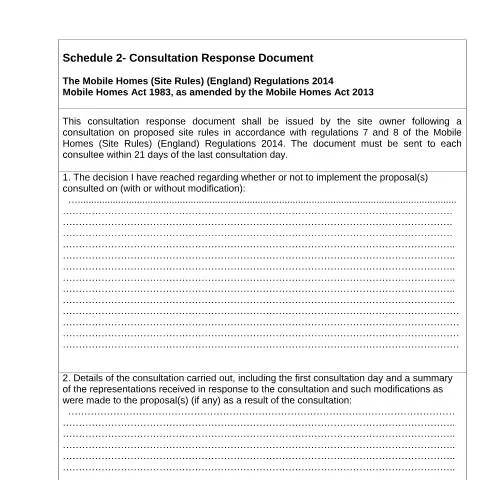
A Deep Dive into the Park Homes: Consultation Response Document
Understanding the mechanics behind the Park Homes: Consultation Response document is crucial for stakeholders in the mobile homes sector. This document acts as a formal response from site owners to the statutory consultation process regarding proposed site rules. It not only reflects the owner’s decisions but also illustrates their adherence to the Mobile Homes (Site Rules) (England) Regulations 2014, thereby ensuring compliance with the overarching Mobile Homes Act 1983 and its amendments.
The Unique Role of the Consultation Response Document
Unlike other regulatory paperwork, the Consultation Response Document serves a distinct purpose within the framework of mobile home site management. This document is issued following a consultation period where site owners engage with residents and other relevant parties to gather feedback on proposed site rules. Its role is critical, as it formalizes the owner’s response to these consultations and outlines any modifications made to the initial proposals.
Key Aspects of the Document
- Decision Making: Site owners must clearly state whether to implement the proposed rules with or without modifications.
- Summarization of Consultations: The document must provide a summary of the consultation process, detailing the feedback received.
- Notification Requirements: Owners are required to inform stakeholders about the implementation timelines and processes.
- Right to Appeal: This outlines the grounds on which affected parties can appeal the owner’s decisions.
Navigating the Consultation Process
Before the Park Homes Consultation Response can be issued, several steps must be taken. The consultation process itself is pivotal, as it allows residents to voice their opinions on proposed site rules. Site owners must adhere to specific regulations, including holding consultations within a defined timeframe and adequately notifying residents.
Steps Involved in the Consultation Process
- Preparation of Proposed Rules: Owners draft proposed site rules based on current regulations and best practices.
- Conducting the Consultation: A consultation period is initiated, allowing for feedback from residents and consultees.
- Documenting Feedback: All responses must be collected and documented, highlighting key concerns and suggestions.
- Issuing the Response Document: Within 21 days of the consultation’s conclusion, the owner must issue the response, addressing all feedback received.
Completing the Consultation Response Document
Filling out the Park Homes: Consultation Response Document requires attention to detail as each section serves an important purpose. Below is a breakdown of key sections one must be aware of when completing this document:
Sectional Breakdown
| Section | Purpose | Key Considerations |
|---|---|---|
| Decision Summary | State the decision regarding the proposed site rules. | Be clear and concise; failure to elaborate may lead to confusion. |
| Consultation Details | Document how the consultation was carried out. | Include dates, methods, and key points raised by consultees. |
| Site Rules Submission | Attach any proposed site rules for local authority deposit. | Ensure rules are correctly formatted and comply with regulations. |
| Deletion Notice | Outline any rules that are to be deleted. | Be specific about which rules are being removed and why. |
| Notification Timeline | Confirm the timeline for notifying parties of rule deposits. | Follow the statutory requirements to avoid penalties. |
| Right of Appeal | Inform consultees of their right to appeal. | Include all grounds for appeal as specified in the regulations. |
Submission Channels for the Document
Once completed, the Park Homes: Consultation Response Document must be submitted in accordance with regulatory guidelines. The preferred channels for submission are critical, as they impact both the timeline and compliance status. Here’s how to navigate the submission process:
Channel Options
- Online Submission: Many local authorities offer digital platforms for document submission. Check your local council’s website for specific instructions.
- Postal Submission: If submitting by post, ensure you send the document via recorded delivery for tracking purposes.
- In-Person Delivery: Some site owners may prefer to deliver documents in person. This method allows for immediate confirmation of receipt but can be time-consuming.
After Submission: Keeping Track of Your Document
Once the Consultation Response Document has been submitted, it’s essential for site owners to keep track of the status of their submission. Communication with the local authority is vital to ensure all parties understand the implications of the response.
Follow-Up Actions
- Notification of Deposit: Site owners will receive notification within 7 days regarding the deposit of the site rules or deletion notice.
- Monitoring Appeals: Be aware of any appeals made by consultees within the specified 21-day period.
- Implementation of Rules: New rules or deletions come into force at the end of the 21-day period unless an appeal is lodged.
Understanding the Right of Appeal
One of the unique aspects of the Consultation Response Document is the built-in mechanism for appeals. If residents feel that the owner’s response is unsatisfactory or non-compliant, they have the right to appeal, which is an essential part of the regulatory framework.
Appeal Grounds Explained
- Non-compliance with Procedures: If the owner did not follow the correct consultation process.
- Unreasonable Decisions: If the proposal does not consider valid representations from residents or other factors affecting the site.
- Site Rule Provisions: If a new site rule covers prescribed matters outlined in the regulations.
To lodge an appeal, residents must notify the owner within 21 days of receiving the consultation response document, ensuring they keep track of all communications and deadlines.
The Importance of Accurate Documentation
Each section of the Park Homes: Consultation Response Document must be filled out meticulously. Incomplete or inaccurate information can lead to confusion, delays, or even invalidation of the consultation process. It is advisable to consult legal professionals or regulatory experts when drafting this document to ensure compliance with all relevant regulations.
Common Pitfalls to Avoid
- Neglecting to document feedback from consultations adequately can undermine the consultation process.
- Failing to meet submission deadlines can lead to fines or invalidations.
- Overlooking local authority requirements or specific formatting guidelines might result in rejections or delays.
Conclusion: Enhancing Compliance through Understanding
The Park Homes: Consultation Response Document is not merely a bureaucratic requirement; it embodies the principles of transparency and accountability in the mobile homes sector. Understanding its nuances and requirements is key to effective site management and fostering a positive relationship with residents. By following the outlined processes and ensuring meticulous attention to detail, site owners can navigate the complexities of consultation responses and reinforce their compliance with UK housing regulations.
Understanding Park Homes: Regulations and Compliance
Park homes, often referred to as mobile homes, are a unique type of accommodation in the UK, typically situated on designated sites. These homes are governed by specific regulations aimed at protecting the rights of residents. The Mobile Homes Act 2013 plays a pivotal role in regulating the sale, ownership, and management of park homes.
One of the fundamental aspects of this legislation is the requirement for site owners to provide a written statement of the terms of the agreement to park home residents. This statement must detail important information regarding site rules and regulations, as well as the rights and responsibilities of both the site owner and the resident. It is imperative for residents to carefully review this document, as it sets the foundation for their living conditions and legal protections.
Moreover, park home residents are entitled to a variety of rights under this framework, including the right to live in their home without undue interference from the site owner, the right to sell their home, and protections against eviction. Residents should also be aware that any changes to the site rules must be communicated in writing and should not contravene existing agreements.
In addition to these regulations, it is crucial for residents to stay informed about compliance issues. Local councils are responsible for enforcing health and safety standards within park home sites, ensuring that they meet essential criteria for habitability and safety. Therefore, periodic inspections and checks may occur, and residents should be proactive in reporting any concerns they may have regarding site management or conditions.
The Role of Local Authorities in Park Home Management
Local authorities play a significant role in the oversight and management of park homes, ensuring compliance with relevant laws and safeguarding the interests of residents. Each local council has a designated team responsible for dealing with issues related to park homes, including licensing and enforcement of regulations. Residents should familiarize themselves with their local authority’s specific procedures for reporting issues or seeking guidance.
In cases of disputes between residents and site owners, local authorities often serve as mediators and can provide resources for resolution. They can offer advice on navigating legal processes or pursuing complaints regarding site management or breaches of the Mobile Homes Act. Councils also maintain records of licensed sites, which can be invaluable for residents seeking information about the legitimacy and compliance of their park home site.
Residents experiencing problems may benefit from engaging with their local authority’s surveys or consultations regarding park home living. These consultations often inform policy changes and improvements to the management of park homes, providing residents a voice in shaping their living conditions.
Financial Considerations for Park Home Residents
Financial management is an essential aspect of living in park homes, as residents must navigate various costs associated with ownership and maintenance. While park home site fees can vary significantly, typically, they encompass charges for services provided by the site owner, including maintenance of communal areas, waste collection, and sometimes utility fees. It is crucial for residents to fully understand these charges and how they may change over time.
Residents should also be aware of the potential for additional costs arising from local taxation, such as council tax. Depending on individual circumstances, park home residents may qualify for certain reliefs or discounts, which can ease financial burdens. Careful budgeting and financial planning are essential for ensuring that residents can manage these fees effectively.
Another consideration is the impact of depreciation on the value of park homes, as these homes generally do not appreciate at the same rate as traditional brick-and-mortar properties. When planning for the future, residents should consider how this may affect their investment and financial security.
Furthermore, understanding the implications of any potential sale of the park home is vital. Residents should familiarize themselves with the requirements for selling, including notifying the site owner and any applicable fees that may be levied during the sale process. Proper financial planning and consultation with professionals can aid residents in making informed decisions about their park home investments.