Understanding the Notice of Admission: A Comprehensive Insight
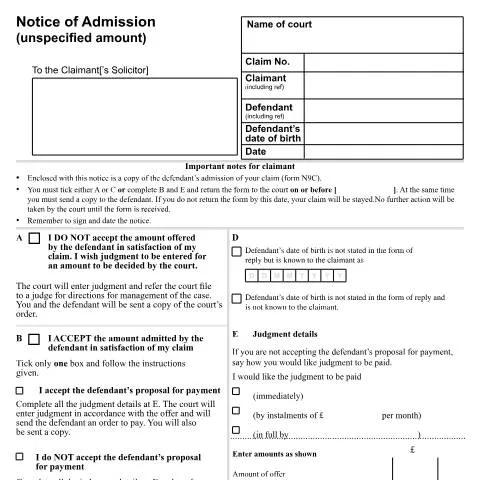
Receiving a Notice of Admission (Form N226) from the HM Courts & Tribunals Service can initiate various responses and decisions for claimants in legal proceedings. This document serves a critical role in civil litigation, particularly when a defendant admits part or all of a claimant's allegations. It is essential to grasp not only its content but also the implications of the choices presented within the form. This guide aims to demystify the Notice of Admission, clarifying its use, key considerations, and the step-by-step process for claimants.
Decoding the Notice: Key Elements Explained
The Notice of Admission is structured as a communication tool that informs claimants about a defendant's acknowledgment of liability. Here are the essential components embedded in the notice:
- Name of Court: Identifies where the claim is being processed.
- Claim Number: A unique reference crucial for tracking the claim's progress.
- Claimant and Defendant Details: Essential for all parties to recognize their roles clearly.
- Date of Birth: A specific detail requested from the defendant that could influence the case's proceedings.
- Key Instructions: Directions on how to respond, detailing the importance of making a selection among multiple boxes representing different responses to the defendant's admission.
Initial Considerations
Upon receipt, it is pivotal to analyze the options presented in the Notice. These options determine how the case progresses and affect subsequent actions. The notice prominently features tick boxes that lead to different judicial outcomes based on the claimant’s response:
- A: I DO NOT accept the amount offered by the defendant.
- B: I ACCEPT the amount admitted by the defendant.
- C: The defendant has admitted liability but has not made any proposal for payment.
Each choice bears significant consequences; thus, careful consideration is required before proceeding.
Responding to the Notice of Admission: Step-by-Step Guide
Responding accurately to the Notice of Admission is crucial to maintaining the momentum of your legal proceedings. Here’s a structured approach to navigating this process:
Step 1: Review the Notice Thoroughly
Verify that all information is correct, including the court, claim number, and the details of both claimant and defendant. Any discrepancies might result in procedural setbacks.
Step 2: Select Your Response
Reflect on the options available:
- If accepting the defendant's proposal, select option B, ensuring you complete the required judgment details.
- If rejecting the proposal, select option A. Prepare your rationale for the objection, as you will need to articulate this clearly to the court.
- In cases where the defendant admits liability without a payment proposal, option C is appropriate, prompting the court to take further action.
Step 3: Complete the Judgment Details
This section requires filling in specifics regarding how you desire the judgment to be executed. Options include:
- Immediate Payment: If you expect prompt resolution.
- Payment by Instalments: If a gradual payment plan is necessary for the defendant’s financial circumstances.
- Payment in Full: Specify a deadline for full payment if not opting for immediate or instalment options.
Step 4: Submission to the Court
Your completed notice must be returned to the court by the specified deadline, while also providing a copy to the defendant. Missing this deadline results in your claim being stayed, meaning that no further actions will be undertaken until the notice is received.
Avoiding Common Pitfalls: What to Watch Out For
While navigating the Notice of Admission, being aware of potential pitfalls can save time and prevent complications:
- Missing Deadlines: Failing to return the notice promptly can lead to serious delays.
- Incomplete Information: Ensure all sections are filled correctly to avoid rejection or confusion.
- Overlooking the Rationale: If disputing a payment proposal, a clear rationale is necessary to guide the court's decision.
Understanding these common misunderstandings fortifies your response strategy.
Scope and Limitations of the Notice of Admission
While the Notice of Admission is a powerful instrument in civil proceedings, it has specific limitations:
- The notice does not automatically result in judgment; it merely serves as a basis for further action.
- Claimants must be prepared for potential follow-up procedures, including hearings or further submissions.
Recognizing these limitations ensures that you remain proactive in your legal engagement.
Who Should Use the Notice of Admission?
The Notice of Admission is most applicable to claimants involved in civil claims where the defendant has acknowledged liability. Circumstances for utilizing this notice include:
- Personal injury claims where a defendant accepts responsibility.
- Contract disputes involving admitted breaches.
- Debt recovery situations where a debtor recognizes the claim and agrees to a settlement.
Assessing your situation in light of these scenarios can clarify whether this notice is applicable to you.
Interconnections with Other Legal Documents
The Notice of Admission does not function in isolation. Various documents interact with it within the litigation landscape:
- Claim Form (N1): Initiates the claim, setting the stage for the Notice of Admission to be relevant.
- Defendant's Response Form (N9C): This document includes the defendant's admission and outlines their proposed payment terms.
- Judgment Order: Once the process moves forward, the court will issue a judgment order based on the details provided in the Notice of Admission.
Familiarity with these interrelations enhances your understanding of the entire process and your position within it.
Final Thoughts: Engaging with the Notice of Admission
Successfully navigating the Notice of Admission is a crucial aspect of managing your legal claims effectively. By understanding its elements, responding appropriately, and being aware of the associated pitfalls and limitations, you can actively influence the trajectory of your case. Always consider seeking professional legal advice to ensure that your decisions align with the best practices and legal standards pertinent to your unique circumstances.
Understanding the Notice of Admission Process
The Notice of Admission is a critical document in the UK legal system, particularly in civil litigation. When you receive a Form N226, it's essential to grasp its implications thoroughly. This form indicates that the court has acknowledged the claim made against you and that you are required to respond within a specified timeframe.
The timing of your response is crucial. Typically, after receiving the Notice of Admission, you have 14 days to file any necessary paperwork with the court and respond to the claim. Failing to meet this deadline could lead to a default judgment against you, which may have serious repercussions, including the enforcement of a money judgment or further legal action. Thus, it is prudent to consult with a legal advisor if you have any uncertainties about how to proceed.
Fill in your form directly online
No printing: type your details into the boxes of the official form, tick, then download the PDF ready to send.
- 1Type into the form boxes
- 2Tick in one click
- 3Save and download the PDF
In the event that you pay the amount specified in the Notice of Admission, you may need to consider how this payment will affect any continuance of the case, especially if you also wish to dispute other aspects of the issue at hand. Make sure to keep a record of your payment and any correspondence with the court, as these documents may be essential for future references or if further disputes arise.
Strategies for Responding to Form N226
When you receive Form N226, formulating a strategic approach to your response is vital. Depending on the particulars of your situation, you have several options available. Firstly, if you agree with the claim, you can admit liability and make an arrangement for payment. This can often expedite the resolution process and minimize potential legal costs.
However, if you believe that the claim is unjust or excessive, you may wish to contest it. In this case, it's essential to gather all relevant evidence that may support your case. This includes contracts, correspondence, or any documentation that can substantiate your position. Presenting a well-documented case can be advantageous during court proceedings.
Additionally, there may be an option to negotiate with the claimant before proceeding to court. Engaging in informal discussions may lead to a settlement that avoids the need for a court hearing altogether. If both parties can agree on a resolution, this can save time, reduce stress, and avoid further legal expenses.
Consulting with a specialist solicitor can also provide additional insights into the best strategies for your specific circumstances. They can help you assess the strengths and weaknesses of your case, ensuring that your response is as robust as possible.
The Impact of Admission on Future Proceedings
Admitting liability on a Notice of Admission can have significant implications for any future proceedings related to the case. Once you admit to the claim, it may establish a precedent for the court, affecting how any related issues are handled moving forward. This means that any subsequent disputes can be influenced by your admission, which could limit your options in future negotiations.
Furthermore, if you admit liability, it's essential to understand what this means for your financial obligations. The court may impose additional costs or orders based on your admission, which must be adhered to in a timely manner. If you fail to comply with these orders, you may face further legal action or enforcement measures.
It's also vital to consider how an admission might impact your personal or business reputation. For an individual, it may affect future employment opportunities, while for businesses, it could influence relationships with clients or suppliers. Therefore, careful consideration is necessary before deciding to admit or contest the claim.
In any case, keeping all communications and decisions documented will serve you well in maintaining clarity and ensuring that you can refer back to your actions if needed in the future. Always remember that the law can be complex, and the nuances surrounding admissions can significantly affect your situation, both legally and financially.