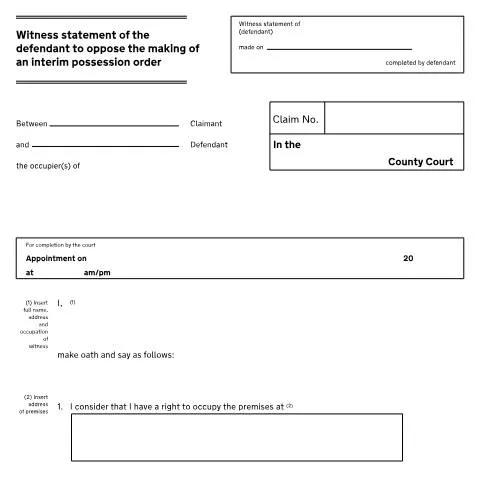
Navigating Form N133: The Defendant's Shield Against Interim Possession Orders
In the realm of property disputes within the UK, the stakes can escalate quickly, especially when issues of tenancy and possession arise. For defendants facing the prospect of an interim possession order, completing Form N133 becomes not just a formality but a vital step in protecting their rights. Understanding the nuances of this document is crucial for those wishing to contest such orders effectively.
Who is the Defendant? Understanding the Role and Context
The term "defendant" in the context of Form N133 typically refers to individuals or entities currently occupying a property and who face legal action for possession initiated by a claimant. This situation often arises in scenarios where the claimant, usually a landlord or property owner, seeks possession of their property due to perceived unlawful occupation.
- Private Tenants: Individuals renting from private landlords often find themselves in a position where they must defend their right to stay in a property.
- Licensees: Those who occupy property under a license rather than a lease may also need to use this form, particularly if their right to occupy is challenged.
- Commercial Tenants: Businesses operating from leased premises can also be defendants, especially if a commercial landlord initiates possession proceedings.
Each of these profiles may have specific circumstances influencing their approach to the form, including the nature of occupancy, length of tenancy, and any agreements in place.
The Significance of the Interim Possession Order
Understanding the context in which Form N133 is used requires a grasp of what an interim possession order (IPO) entails. An IPO is a temporary court order often sought by landowners to regain possession of their property quickly, particularly in cases of squatting or unauthorized occupation. The implications of such an order are profound, as it can lead to immediate eviction if not contested properly.
For defendants, challenging an IPO is essential not only for immediate housing stability but also for safeguarding future tenancy rights. By filing Form N133, the defendant asserts their claim to occupancy and signals their intent to contest the order, ultimately seeking a court hearing.
Completing Form N133: Essential Steps
Filling out Form N133 accurately is paramount, as errors or omissions could undermine the defendant's position. Here’s a detailed breakdown of the key sections of the form:
- Claim Information: This section requires the claim number and the name of the claimant alongside the defendant’s details.
- Statement of Occupancy: Defendants must clearly state their right to occupy the premises, including the duration of their occupancy and any relevant agreements in place.
- Witness Statements: Here, defendants should outline any evidence supporting their claim, such as tenancy agreements or correspondence with the claimant.
- Statement of Truth: This section reinforces the legal weight of the document. The defendant must assert that the information provided is true, acknowledging the potential legal repercussions of false statements.
It is advisable for defendants to review their statements thoroughly, perhaps seeking legal advice if unsure about any aspect of their claim or the implications of the document.
Where and How to Submit Form N133
Submission of Form N133 can occur through several channels, each with its nuances. Understanding these options is critical for ensuring timely and appropriate filing:
- Online Submission: For those who prefer digital processes, many county courts offer online facilities for submitting forms. Ensure you have all necessary information and documents scanned, as you will need to upload them during this process.
- Postal Submission: Send the completed form to the court where the claimant's case is filed. Ensure to retain proof of postage and consider using recorded delivery for important documents.
- In-Person Submission: Defendants may also opt to deliver the form directly to the court. This method allows for immediate confirmation of receipt, but be mindful of court hours and any queues that may affect timing.
Regardless of the submission method, it’s crucial to keep a copy of the completed form and any supporting documents for personal records.
What Happens Next? Understanding the Court Process
After submitting Form N133, the defendant enters a critical phase where the court will evaluate the claim. Here’s what to anticipate:
- Court Review: The court will review the submitted statement and determine whether to schedule a hearing to address the defendant's opposition to the interim possession order.
- Hearing Notification: Defendants will receive notification of the hearing date, typically sent via post. It is essential to attend this hearing to present your case.
- Preparation for Hearing: Defendants should prepare to articulate their case effectively during the hearing. This may involve gathering additional evidence, such as witnesses or documentation supporting their claim to occupancy.
It’s advisable to familiarize oneself with court procedures and consider legal representation if the case is complex.
Addressing Challenges: Refusals, Errors, and Missing Documents
In the event of a refusal or if the court raises issues with the filed Form N133, understanding the options available is crucial:
- Addressing Refusals: If the court refuses to accept your form, they will typically provide a reason. Defendants can rectify any issues and resubmit within the prescribed timeframe.
- Correcting Errors: If an error is identified in your submission, prompt correction is necessary to maintain your claim. Contact the court for guidance on how to amend your statement.
- Dealing with Missing Documentation: If supporting documents are inadvertently omitted, defendants should prepare replacements or explanations for the absence. This information can be crucial for the court’s consideration.
Consulting with legal professionals can be beneficial, especially if the case involves complex tenancy laws or if the claimant has legal representation.
Understanding the Legal Framework Behind Form N133
The use of Form N133 operates within a broader legal context shaped by various laws and regulations regarding property rights and possession proceedings. Key elements include:
- The Housing Act 1996: This legislation outlines the legal framework governing possession claims, including the grounds for possession and the rights of tenants and occupiers.
- The Civil Procedure Rules (CPR): These rules govern the conduct of civil litigation, providing procedural guidance on how possession proceedings should be handled within the courts.
- The Protection from Eviction Act 1977: This act protects tenants from being evicted without due process, emphasizing the importance of lawful procedures in possession cases.
Awareness and understanding of these legal aspects can enhance a defendant's ability to navigate the complexities of their case effectively.
Final Thoughts: Empowering Yourself with Knowledge and Resources
Filling out and submitting Form N133 is a critical step for defendants who wish to contest interim possession orders. Understanding the form's contents, the submission process, and the legal framework surrounding it can significantly influence the outcome of possession disputes. Consider reaching out to legal professionals or tenant advocacy groups for guidance tailored to your specific situation.
As property disputes can deeply affect one’s quality of life, being proactive, informed, and prepared is essential to navigate these challenges successfully.
Understanding Form N133: Key Components Explained
Form N133 is an essential document in the UK legal framework, particularly for defendants facing possession proceedings. This form allows the defendant to submit a witness statement to contest an interim possession order (IPO). Understanding the key components of Form N133 is crucial for ensuring that your statement is correctly framed and effectively communicates your position. Below, we break down the vital sections of the form:
1. Personal Information
At the top of Form N133, you will need to provide personal details, including your name, address, and contact information. This section is crucial because it establishes your identity and your connection to the property in question. Ensure that your information is accurate to avoid any procedural delays.
2. Statement of Truth
The statement of truth is a critical component of Form N133. By signing this section, you affirm that the information you have provided is true to the best of your knowledge and belief. It is important to understand that providing false information can have serious legal consequences. Therefore, careful consideration should be given to all statements made in your witness statement.
Fill in your form directly online
No printing: type your details into the boxes of the official form, tick, then download the PDF ready to send.
- 1Type into the form boxes
- 2Tick in one click
- 3Save and download the PDF
3. Grounds for Opposition
This section is where you articulate your reasons for opposing the interim possession order. You should clearly outline the facts and circumstances that support your case. This may include evidence of your legal right to remain in the property, any procedural irregularities in the landlord's actions, or personal circumstances that could affect your ability to vacate the premises. Remember to keep it factual and concise while ensuring that all relevant points are addressed.
Gathering Evidence to Support Your Witness Statement
When completing Form N133, it is imperative to gather supporting evidence that can strengthen your case. The court relies heavily on the evidence presented to it, and a well-structured witness statement supplemented by solid evidence can significantly bolster your position. Here are some types of evidence you might consider including:
1. Documentation
Collect any relevant documents that support your claims. This could include tenancy agreements, correspondence with your landlord, and any notices you have received regarding the possession proceedings. If you have a history of paying rent on time, include bank statements or receipts as proof of your tenancy.
2. Witness Statements
If there are others who can corroborate your story, consider obtaining witness statements from them. These could be friends, family members, or neighbours who can attest to your situation and the circumstances regarding your occupation of the property. Make sure these statements are clear and signed by the witnesses themselves.
3. Photographic Evidence
Photographs can serve as powerful evidence in possession cases. If there are conditions in the property that support your claims (e.g., maintenance issues that your landlord has neglected), take clear photographs that can be submitted along with your Form N133. Ensure that these images are dated and relevant to your statement.
The Role of Legal Advice in Completing Form N133
While it is possible to complete Form N133 independently, seeking legal advice can provide invaluable support. Understanding the complexities of possession law and the implications of your witness statement can be daunting. Here’s why you might consider consulting with a legal professional:
1. Expert Guidance on Legal Language
Legal documents often contain terminology and phrases that can be confusing. A solicitor can help you articulate your position clearly and accurately, ensuring that your statement is not only persuasive but also adheres to legal standards. This is particularly important when drafting the grounds for opposition, where precise language is key.
2. Tailored Support for Your Circumstances
Every possession case is unique. A legal expert can provide tailored guidance based on your specific situation, helping you identify the best strategies for your defence. Whether it’s arguing for a delay based on exceptional circumstances or challenging the legitimacy of the landlord's claim, professional advice can be instrumental in navigating the complexities of the process.
3. Representation in Court
If the matter proceeds to court, having legal representation can significantly impact the outcome. A solicitor can advocate on your behalf, ensuring that your rights are protected and presenting your case in the most effective manner. This can include cross-examining witnesses, presenting evidence, and making legal submissions to the judge.