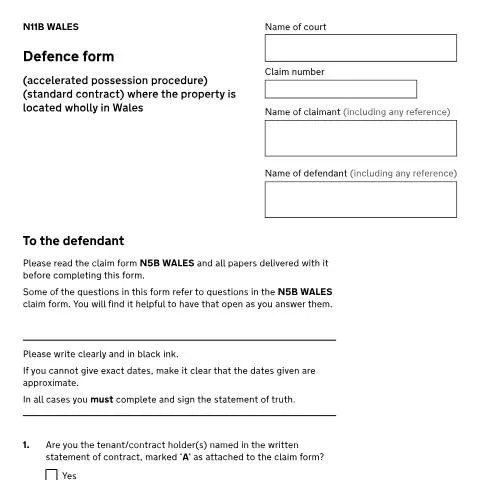
Guide to Defending an Accelerated Possession Claim Using Form N11B Wales in Wales
In Wales, tenants and contract holders faced with an accelerated possession claim can utilize the Form N11B Wales to formally present their defence. This official form is issued by the HM Courts & Tribunals Service and is specifically designed for cases where the property is located wholly within Wales and involves a standard tenancy contract. Understanding the purpose, procedure, and key considerations of this form is essential for anyone involved in such legal proceedings.
Understanding the Context and Purpose of Form N11B Wales
The Form N11B Wales serves as a structured response tool for defendants contesting an accelerated possession claim. Its primary objective is to allow tenants or contract holders to set out their position clearly and to raise any objections or issues regarding the claim made by the landlord or claimant. This form is part of the legal process initiated when a landlord seeks possession of a property under the accelerated procedure, which is typically faster and involves less court time than standard proceedings.
It is important to note that this form is applicable solely to cases where the property is located entirely within Wales, and the claim involves a standard tenancy contract. The form must be completed and submitted to the court within specified deadlines, usually before the hearing date, to ensure the defendant’s right to defend is preserved.
Who Should Use the Form and When?
Defendants who have received a claim form (N5B Wales) and wish to contest the claim should complete Form N11B Wales. The form is used to formally acknowledge the claim, indicate agreements or disagreements with the statements made in the claim, and set out any relevant facts or objections.
Submitting this form is a critical step in the legal process, as it provides an opportunity to challenge the landlord’s assertions, such as the service of notices, compliance with legal requirements, or other grounds for possession. It must be submitted before the court’s deadline, which is usually aligned with the case timetable, often by the date of the hearing.
Key Sections and How to Complete the Form
Particulars of the Defence
The form begins with identification details, including the court name, claim number, and the names of both the claimant and defendant. The defendant must then answer a series of questions, primarily in a yes/no format, regarding their agreement or disagreement with the facts presented in the claim form.
- Question 1: Confirm whether you are the tenant or contract holder named in the written contract.
- Questions 2-4: Address whether you agree with the dates and service of notices as stated by the claimant.
- Questions 5-10: Cover specific details such as receipt of notices, the nature of the tenancy, and whether the property is a house in multiple occupation or subject to licensing requirements.
Additional Defences and Arguments
In the later sections, defendants can set out any other reasons why they believe the claimant should not recover possession. This may include procedural errors, disputes over payments, or other legal grounds.
Postponement and Cost Considerations
Defendants can request an extension of time to vacate the property if they face exceptional hardship, specifying how long they need, up to a maximum of 42 days after the court order. Additionally, if the court orders possession, defendants are asked whether they agree to pay the claimant’s costs and whether they require more than 14 days to pay those costs, based on their financial situation.
Fill in your form directly online
No printing: type your details into the boxes of the official form, tick, then download the PDF ready to send.
- 1Type into the form boxes
- 2Tick in one click
- 3Save and download the PDF
Legal and Procedural Implications
Completing and submitting Form N11B Wales correctly is vital to ensuring that a defendant’s rights are protected during an accelerated possession process. It is recommended to carefully review all statements in the claim form and provide honest, precise responses. Any disagreement should be clearly explained to assist the court in understanding the defendant’s position.
For further guidance, it is advisable to consult the official HM Courts & Tribunals Service resources or seek legal advice, especially if the case involves complex issues or potential defences.
References and Official Guidance
This guide is based on the official HM Courts & Tribunals Service documentation for Form N11B Wales, which is accessible through the UK government’s official channels. The form and related procedural rules are governed by Welsh tenancy law and the civil procedure rules applicable to possession claims in Wales.