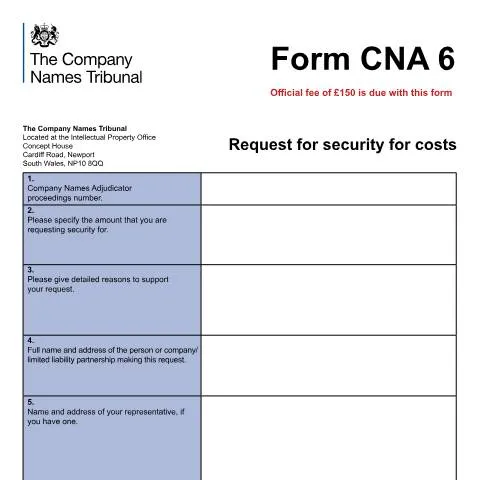
Understanding the CNA 6: The Request for Security for Costs
In the realm of company disputes within the UK, the CNA 6 form plays a critical role in the legal process. This form is initiated when one party seeks to ensure that costs are covered in the event of an unsuccessful claim. It primarily serves to request security for costs in proceedings before the Company Names Tribunal. This document is essential for those involved in disputes regarding company names, particularly when there's a concern about the other party's ability to pay costs if the case does not go in their favour.
Key Components of the CNA 6 Form
The form is structured in a way that requires detailed information to substantiate the request for security. Below, we break down the significant sections of the CNA 6, providing insight into what each requires and common pitfalls to avoid.
1. Company Names Adjudicator Proceedings Number
The first piece of information needed is the unique proceedings number assigned to your case by the Company Names Tribunal. This number is crucial as it links your request directly to your ongoing proceedings. Failing to provide the correct number can lead to delays or dismissals, so double-check all entries for accuracy.
2. The Amount of Security Requested
In this section, you must specify the amount for which you are requesting security. It is vital to provide a clear and justifiable figure, as the Tribunal will assess your request based on its reasonableness. Be cautious here; if you request too high an amount without proper justification, it may undermine your entire application.
3. Justification for Your Request
Perhaps the most important part of the form, you need to provide detailed reasons supporting your request. This is where you articulate the rationale behind your need for security for costs. Include information such as:
- Financial instability of the opposing party
- Previous costs incurred in the proceedings
- Any relevant documentation that supports your claim
This section must be comprehensive and compelling, as it is a significant factor in the Tribunal's decision-making process.
4. Details of the Requesting Party
Here, you will provide the full name and address of the individual or entity making the request. Ensure that your information is accurate and up-to-date. Mistakes in your contact information could lead to difficulties in communication regarding your application.
5. Representative Contact Information
If you have legal representation, you must include the name and address of your representative. This is critical for efficient communication and for ensuring that your application is processed smoothly. If you are self-represented, simply indicate this accordingly.
6. Signature and Contact Information
This section requires your signature, ensuring that you are confirming the accuracy of the information provided. You will also need to include your name in block capitals and the date of submission. Ensure that you provide a contact number for any queries; this will help expedite the process.
7. Payment Information
Accompanying the submission of the CNA 6 is a fee of £150. The payment section requires careful completion, as processing will only occur if it is fully filled out. You can pay via debit or credit card, cheque, or bank transfer. Note that each payment method has specific instructions, and an error here could delay your application:
| Payment Method | Details |
|---|---|
| Debit/Credit Card | Visit the secure payment website and enter your details. Record the 16-digit reference number. |
| Cheque | Make payable to 'Intellectual Property Office' and send it to the address provided. |
| Bank Transfer | Use the provided bank details and include your IPO deposit account number or application number as a reference. |
The Process Following Submission of the CNA 6
Once you have submitted the CNA 6 form along with your payment, it is processed by the Intellectual Property Office. The Tribunal may take a certain period to consider your request, and they may require further information or clarification on your justification. During this time, it is critical to remain responsive to any inquiries they may have.
What Happens if Your Request is Refused?
If your request for security for costs is refused, you will receive a notification outlining the reasons for the decision. You may have the option to appeal this decision, but the grounds for appeal must be carefully considered. It may be beneficial to seek legal advice at this stage to understand your options fully and to prepare a potential appeal.
Addressing Errors or Missing Information
Errors on the CNA 6 form can lead to processing delays or outright refusal. If you realise there’s an error after submission, you should contact the Tribunal as soon as possible to rectify the situation. Providing the correct information promptly could prevent complications later in the process.
Legal Framework Surrounding the CNA 6
The use of the CNA 6 form is governed by regulations that are rooted in the procedural rules of the Company Names Tribunal. Understanding the legal context can provide clarity on why this form is essential within the larger framework of company law. The protection afforded by security for costs aims to ensure that parties can recover expenses incurred in disputes, preventing scenarios where one party might unjustly benefit at the expense of another.
Practical Considerations for Diverse Users
The CNA 6 form, while technical, serves varied users, each with unique circumstances. Considerations may vary significantly based on:
- Foreign Entities: Companies based outside the UK may face additional scrutiny regarding their financial standing and ability to pay costs. They should prepare to provide comprehensive financial documentation.
- Minors or Incorporated Entities: Special provisions exist for minors or companies with complex structures. Legal representation is critical for such cases.
- Urgent Requests: If the matter is urgent, articulating this in your request can help expedite considerations, but you must still substantiate your claims thoroughly.
Final Advice for Completing the CNA 6
Completing the CNA 6 form requires careful attention to detail and a thorough understanding of your case. Always ensure that:
- All sections are filled out completely and accurately.
- Justifications are robust and backed by evidence.
- You keep copies of all submitted documents and payment confirmations for your records.
By following these guidelines and ensuring you understand the implications of your request, you can navigate the complexities of the Company Names Tribunal process more successfully.
Resources for Further Assistance
If you find yourself needing more help, consider consulting with legal professionals who specialise in company law. The Intellectual Property Office also provides resources that can help clarify the submission process and address specific concerns. Given the stakes involved in company name disputes, taking the time to ensure your CNA 6 is meticulously prepared can significantly influence the outcome of your case.
Understanding Security for Costs Requests
In the context of litigation in the UK, a Request for Security for Costs under CPR Part 25 allows a defendant to seek an order requiring the claimant to provide security for the costs that may be incurred in defending the proceedings. This mechanism is crucial for protecting defendants against the risk of being unable to recover costs if successful, particularly when there is reason to believe that the claimant may not be able to cover such costs following a judgment. Various factors come into play when considering whether to grant such a request, including the financial status of the claimant and the merits of the case.
Fill in your form directly online
No printing: type your details into the boxes of the official form, tick, then download the PDF ready to send.
- 1Type into the form boxes
- 2Tick in one click
- 3Save and download the PDF
When making a request for security for costs, the defendant must typically demonstrate that:
- The claimant is an individual or a company that is unlikely to be able to pay the defendant’s costs if ordered to do so.
- The claimant is bringing the claim in bad faith or has no real prospect of succeeding.
- There are other relevant factors that make it just to order security for costs.
Claims against individuals may be scrutinized more closely since individuals may face different financial circumstances compared to corporate entities. Additionally, a claimant's conduct throughout the litigation process can also factor into the decision. For instance, if they have previously failed to adhere to court deadlines or have a history of insolvency, these elements may strengthen the defendant's case for security for costs.
Procedural Steps for Filing a Request
The process for filing a Request for Security for Costs is quite structured and requires adherence to specific procedural rules outlined in the Civil Procedure Rules. Below are the essential steps involved in making such a request:
- Draft the Application: The application must be drafted clearly, setting out the basis for the request and supported by evidence. This typically includes financial documents outlining the claimant's ability to pay costs.
- Filing the Application: Submit the application to the court where the case is being heard. Ensure that it is filed within any prescribed time limits. Failure to adhere to these limits may result in the request being dismissed.
- Serve the Application: Properly serve the application on the claimant, ensuring that they have adequate notice of the request. This is essential for the court to consider the application at the hearing.
- Court Hearing: Attend the hearing where both parties can present their arguments. The judge will consider the merits of the application and make a ruling based on the evidence presented.
- Potential Outcomes: If the request is granted, the court will specify the amount of security required and the time frame within which it must be provided. If denied, the defendant may have to continue defending the claim without the protection of security.
It is advisable for both parties to engage legal representation throughout this process, as navigating the technicalities of court procedures can be quite complex. Moreover, the consequences of a security for costs order can significantly impact the financial viability of the claim.
Consequences of Failing to Provide Security
When a court orders security for costs, the claimant must act within the specified timeframe to comply with the order. If the claimant fails to provide the required security, the court has the authority to dismiss their claim. This can occur without a full hearing on the merits, which underscores the importance of compliance with such orders.
Additionally, if the claimant is a company, it is prudent to consider the implications of their financial standing. In many cases, companies who have been ordered to provide security for costs are forced to review their operational capacity to continue the claim. This may lead to a reassessment of the case's profitability or viability, particularly if the costs of litigation outweigh the potential benefits of pursuing the claim.
It is also essential to understand that the consequences of failing to provide security can extend beyond mere dismissal. It may also affect the claimant's reputation in the industry or sector, especially if the claim was made publicly. The legal ramifications could deter future litigations, and companies may find themselves reluctant to pursue claims without a clear financial strategy in place.
Therefore, both defendants and claimants need to approach security for costs issues with thorough consideration and legal guidance. Engaging with legal professionals who specialize in litigation can provide invaluable insights and help navigate the complexities of this process.