Navigating Complex Family Situations: Form C3 and Its Importance
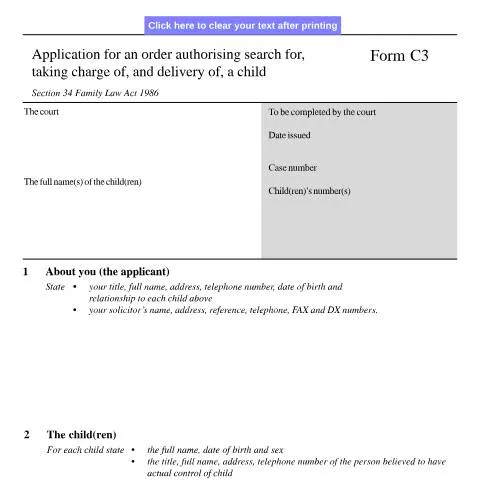
In sensitive family scenarios, the Application for an order authorising search for taking charge of and delivery of a child, commonly referred to as Form C3, serves a crucial role in family law. This document enables individuals to petition the court for the authority to search for, take charge of, and deliver a child from a person believed to be unlawfully withholding the child. Understanding the nuances surrounding the completion and submission of this form can significantly impact the outcome of such cases.
The Legal Framework: Understanding Form C3 in Context
Form C3 operates under the auspices of the Family Law Act 1986, which provides the court with the power to make orders regarding children’s welfare. This act is instrumental in safeguarding children's rights and ensuring their wellbeing in situations of parental dispute or alleged abduction. The authority granted by the court through this application ensures that the child’s needs and safety are paramount.
Form C3 is particularly relevant in situations involving:
- Parental disputes over custody and access
- Cases where children may be at risk of harm or abduction
- Situations where a child may have been taken from their lawful guardian
Who Should Consider Filing Form C3?
Understanding who may file Form C3 is pivotal for the applicants. Generally, the main applicants are:
- Parents: Biological parents can file this form if they believe their child is being unlawfully withheld.
- Guardians: Legal guardians or those with parental responsibility may also take action using this form.
- Other Relatives: In certain circumstances, close relatives may apply if they can demonstrate a legitimate interest in the child's welfare.
Each of these profiles may face unique challenges, thus understanding the implications and regulations surrounding their application is essential.
Preparing to Submit Form C3: Essential Documentation
Before initiating the application process, it's key to gather all requisite information and documentation. The success of Form C3 depends on the applicant's preparation and the strength of the submitted evidence. The following documents should be considered:
- Proof of Relationship: This may include birth certificates or legal guardianship papers that establish the applicant's relationship to the child.
- Evidence of Safeguarding Concerns: Any documentation that indicates the child may be at risk, such as police reports or social services involvement.
- Identification: A valid ID confirming the applicant’s identity and address.
It's also recommended to include a recent photograph of the child, as this can aid in identification during the search process. The inclusion of relevant dates and circumstances surrounding the situation can bolster the application.
Breaking Down Form C3: A Step-by-Step Guide
The Form C3 itself is structured to elicit specific information that the court will consider. Each section must be filled out with care to avoid delays or rejections. Here’s a detailed breakdown of the form:
1. About You (the Applicant)
This section requires the applicant to provide personal details:
- Your title, full name, and address
- Your date of birth and relationship to the child
- Your solicitor’s information, if applicable
Providing accurate and complete information here is crucial, as it establishes the applicant's standing in the case.
2. Details of the Child(ren)
In this part, the form mandates detailed information about the child or children involved, including:
- Full names, dates of birth, and gender of the children
- Contact information of the person believed to be holding the child
- Additional identifying details, including a recent photograph if available
Failure to provide comprehensive information can hinder the court's ability to act swiftly.
3. Grounds for Application
This section is where the applicant articulates the reasons for seeking court intervention:
- Indicate if the application is ex parte (meaning it is made without notifying the other party) and why
- Detail any existing court orders that are being disobeyed
- Provide the best information regarding the child's whereabouts
Specificity and clarity in this section can significantly influence the court's decision, especially in urgent situations.
Submission Process: Where to File Form C3
Once Form C3 is completed, it must be filed with the appropriate court. Typically, this is done at a local Family Court. To ensure smooth processing, the following steps are recommended:
- Check Jurisdiction: Ensure you file the application in the right court that has jurisdiction over family matters involving the child.
- File Timely: Be mindful of time constraints, especially if the situation is urgent and a child’s safety is at risk.
- Retention of Copies: Always keep copies of the submitted form and any additional documents for your records.
Once submitted, a court date will be set, and the submitting party will be informed accordingly.
The Court’s Role After Submission: What to Expect
After filing Form C3, the court will take the following actions:
- Initial Assessment: The court will review the application to determine if the case warrants a hearing.
- Potential Hearing: If the court finds merit in the application, a hearing will be scheduled that may require both the applicant and the other parties to attend.
- Issuing Orders: Depending on the court’s findings, they may issue an order for the search and delivery of the child, which legally empowers authorities to act.
Following the hearing, the court’s decision will be communicated to all relevant parties, ensuring clarity on the next steps.
Tracking Your Case: Monitoring Progress with HM Courts & Tribunals Service
Staying informed about the progress of your application is critical. Applicants can follow these steps to monitor their case:
- Contact the Court: Reach out to the Family Court where the application was submitted to check on the status.
- Use Case Numbers: Have your case number handy when making inquiries, as this will help court staff locate your file quickly.
- Be Proactive: If there are delays in communication or if you believe additional information is required, don’t hesitate to follow up.
Emergency Circumstances: When Urgency Changes Everything
In situations where a child is believed to be in immediate danger, the speed of filing and obtaining an order via Form C3 can be crucial. If the situation is urgent:
- Ex Parte Applications: You may apply without notifying the other party, explaining the urgency to the court.
- Immediate Court Hearing: The court may facilitate an immediate hearing to address the emergency situation.
- Safeguarding Measures: Be prepared to present evidence of risk, and have any necessary contacts with child protection services documented.
Understanding the implications of urgency can make a significant difference in safeguarding a child's welfare.
Understanding the Impacts of Outcomes: Post-Application Scenarios
After an order is granted, the implications vary widely depending on the specific circumstances surrounding the case. Various outcomes may include:
- The Child is Returned: In successful cases, the child may be returned to the lawful guardian or parent.
- Court-Imposed Conditions: The court may impose specific conditions regarding custody or access while further assessments are conducted.
- Further Legal Proceedings: Be prepared for additional legal processes if disputes over custody emerge or if new evidence arises.
Ultimately, the court's decisions aim to prioritize the child's best interests, but they may also lead to further complexities depending on the circumstances.
Conclusion: Empowering Yourself Through Understanding
Filing Form C3 is a significant step towards ensuring a child’s welfare in complex family dynamics. By understanding the role of this form, preparing necessary documents, and knowing what to expect throughout the process, applicants can navigate the system more effectively. Being proactive and informed will not only aid in the immediate situation but also empower you in future interactions with family law.
Understanding the Context of Form C3 Applications
When it comes to child welfare, the legal framework in the UK is designed to prioritise the best interests of the child. Applications for court orders concerning the care and custody of children often arise from complex family dynamics, allegations of harm, or situations where a child may be at risk. Form C3 is specifically used in cases where an applicant seeks court permission to search for a child who may be in danger or unlawfully detained. Understanding when and why to use this form is crucial for both prospective applicants and legal representatives.
The courts have a variety of orders they can issue, ranging from emergency protection orders to more lasting custody arrangements. Each of these orders serves specific purposes and is governed by distinct legal stipulations. A significant aspect of Form C3 is that it often intersects with other legal processes, such as care proceedings or Family Court hearings. Therefore, it’s essential for applicants to be well-prepared, ensuring they have all relevant information to support their application, including any evidence of the child's potential risk.
Key Considerations and Criteria for Submitting Form C3
Before submitting Form C3, applicants must consider several key criteria that could impact the court's decision. Firstly, it’s important to demonstrate that there are reasonable grounds for believing that the child is at risk of harm or that there are concerns regarding their welfare. The applicant must also show that they have made efforts, where possible, to resolve the situation without court intervention. This could involve engaging with social services or other relevant agencies to address concerns about the child's safety.
Additionally, the applicant must outline the specific circumstances that warrant the search order. This could include instances where the child has been taken from their legal guardian or situations where the whereabouts of the child are unknown, and there is a belief they may be in an unsafe environment.
Another important consideration is the role of the child's wishes and feelings in proceedings. Depending on their age and maturity, the court may take the child's views into account when making a decision regarding the application. Understanding these nuances is vital for the applicant, particularly when preparing supporting statements or evidence.
Potential Outcomes of a Form C3 Application
Once a Form C3 application has been submitted, the court will consider the application and any supporting evidence. The potential outcomes can vary greatly based on the specifics of the case, the evidence presented, and the legal arguments made during the hearing.
In some cases, the court may grant the order, allowing the applicant to search for the child. This could include permission to enter premises or engage with law enforcement to locate the child. The court might also impose conditions on how the search should be conducted, ensuring that the child’s safety is prioritised throughout the process.
Alternatively, the court may decide not to grant the order if it believes there is insufficient evidence of imminent risk or if alternative measures could be pursued. In such instances, the applicant may need to explore other legal avenues, possibly involving child welfare agencies or family mediation services.
Should the order be granted, it’s crucial for the applicant to act promptly while adhering to any guidelines set by the court. Failure to comply with court orders can have serious repercussions, not only for the applicant but also for the welfare of the child involved.