When Property Rights Need Formal Recognition: Understanding the AN1 Process
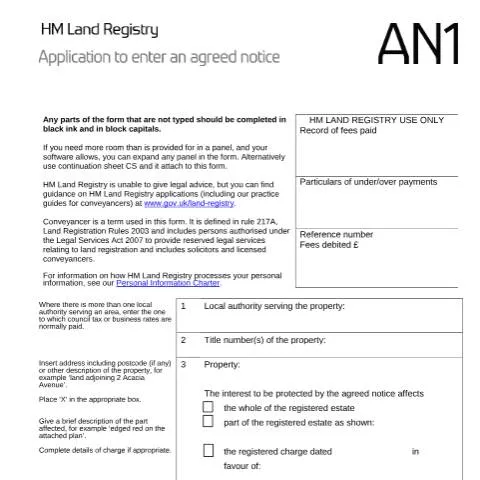
Property transactions in England and Wales often involve interests that exist but aren't yet reflected on the official register. Whether you're dealing with an option to purchase, a right of first refusal, or a restrictive covenant benefiting your land, the Agreed notice: registration (AN1) form serves as your pathway to securing formal recognition of these rights at HM Land Registry.
Unlike unilateral notices that can be entered without the registered proprietor's agreement, agreed notices require either consent from the current owner or evidence demonstrating your clear entitlement to register the interest. This distinction fundamentally shapes how you approach the application process and what supporting documentation you'll need to provide.
The AN1 form operates within a sophisticated system of land registration where timing often proves crucial. A properly registered notice provides priority protection, ensuring your interest ranks ahead of subsequent dealings with the property. However, the form's apparent simplicity can mask complex legal requirements that vary significantly depending on the nature of your interest and your relationship to the registered estate.
Navigating the Four Pathways to Agreed Notice Registration
The AN1 form presents four distinct routes for establishing your entitlement to register an agreed notice, each requiring different evidence and carrying different implications for your application strategy.
Route A: The Registered Proprietor's Direct Application
When you already own the registered estate or charge, Route A offers the most straightforward path. As the registered proprietor, you possess inherent authority to enter notices protecting interests that benefit your property. This commonly applies when you've granted rights to third parties—such as easements or restrictive covenants—and need to ensure these interests appear on the register for transparency and priority purposes.
The key advantage lies in the reduced documentation requirements. HM Land Registry can verify your status directly from their records, eliminating the need for additional proof of ownership. However, you must still provide clear evidence of the interest itself, typically through the deed or agreement that created the right.
Route B: The Entitled Successor's Application
Route B addresses situations where you're legally entitled to be registered as proprietor but the registration hasn't yet been completed. This frequently occurs during property transfers where completion has occurred but the registration process remains pending, or in cases of inheritance where probate has been granted but the estate registration is still in progress.
Success under Route B demands compelling evidence of your entitlement. For purchase transactions, this typically means providing the transfer deed (TR1) and evidence of completion. For inherited property, you'll need the grant of probate or letters of administration, along with documentation showing your specific entitlement under the will or intestacy rules.
Route C: Secured Consent Applications
Route C accommodates applications where you've obtained the registered proprietor's agreement to register your interest. This consent can be provided either as a separate document accompanying your application or within panel 11 of the AN1 form itself.
The consent requirement extends beyond simple agreement—it must be informed consent from someone with legal authority to grant it. When dealing with corporate proprietors, ensure the person giving consent has appropriate authority under the company's constitution. For jointly owned property, consider whether all joint proprietors must consent or whether one can act for all, depending on how the property is held.
Panel 11 consent offers convenience for straightforward cases, but separate documentation may be preferable for complex interests requiring detailed explanation or where the consent includes specific conditions or limitations.
Route D: Alternative Evidence Applications
Route D provides a catch-all category for situations where none of the standard routes apply but you possess other compelling evidence supporting your application. This might include court orders, statutory rights, or contractual arrangements that create automatic entitlements without requiring traditional consent.
Applications under Route D demand particularly careful preparation, as HM Land Registry will scrutinise the evidence closely to ensure it genuinely supports your claimed entitlement to register the interest.
Defining Your Interest with Precision and Legal Clarity
Panel 8 requires you to specify exactly what interest you're seeking to protect through the agreed notice. This isn't merely a formality—the description becomes part of the official register entry and determines the scope of protection your notice will provide.
Common Interest Categories and Their Registration Requirements
| Interest Type | Key Description Elements | Typical Supporting Documents |
|---|---|---|
| Option to Purchase | Exercise period, purchase price mechanism, specific property affected | Option agreement, plan if partial property |
| Right of First Refusal | Trigger events, matching rights procedure, duration | Original covenant document, deed creating right |
| Restrictive Covenant | Specific restrictions, land benefited, land burdened | Deed imposing covenant, evidence of benefit |
| Estate Contract | Purchase terms, completion timeline, conditions | Exchange contracts, deposit receipt |
The description must be sufficiently precise to enable HM Land Registry staff to understand the exact nature and extent of your interest. Vague descriptions like "equitable interest" or "beneficial interest" will likely trigger requisitions asking for clarification. Instead, reference the specific document that created the interest and identify the relevant clauses or paragraphs.
When your interest affects only part of the registered property, you must clearly define the affected area. This typically involves referencing an attached plan with appropriate colouring or hatching. Ensure your plan is drawn to an appropriate scale and clearly shows the boundaries of the affected area in relation to the wider registered estate.
Timing Considerations and Variation Applications
If you're varying an existing notice rather than creating a new one, identify the current notice clearly in panel 8. Variations might involve extending the duration of an option, modifying the exercise terms, or changing the affected area. The variation application should specify exactly what aspects of the existing notice you're seeking to change.
Consider whether your interest has time limitations that should be reflected in the notice description. Some interests, such as options to purchase, naturally expire after specific periods. Including expiry dates in the notice description helps maintain register accuracy and may influence HM Land Registry's approach to any future applications affecting the property.
Strategic Document Assembly and Evidence Presentation
Panel 5's document list requires careful consideration of what evidence will most effectively support your application. The documents you provide must not only prove the existence of your interest but also demonstrate your entitlement to register it under your chosen route.
Primary Evidence Requirements
Every AN1 application must include the document that created or evidences the interest you're seeking to protect. For contractual interests, this means providing the original agreement or a properly certified copy. HM Land Registry's certification requirements are strict—photocopies aren't acceptable unless they bear appropriate professional certification from a solicitor or licensed conveyancer.
When dealing with interests created by deed, ensure you provide the complete document including any schedules, plans, or annexures that form part of the creation. Incomplete documentation frequently leads to requisitions and delays, particularly where the interest's precise terms or extent remain unclear.
Chain of title documentation becomes crucial when you're applying under Route B or D. You must demonstrate how your entitlement flows from the original creation of the interest through to your current position. This might involve multiple transfers, assignments, or succession documents, each properly evidenced.
Supporting Evidence for Complex Situations
Corporate applicants face additional requirements when demonstrating authority to make the application. Board resolutions, powers of attorney, or evidence of signatory authority may be necessary, particularly for Route C applications where you're also providing consent on behalf of the registered proprietor.
Trust situations require careful documentation of trustee authority and beneficial entitlements. Where the interest affects trust property, you may need to provide trust deeds, trustee appointment documents, or court orders defining trustee powers.
Inheritance cases demand comprehensive probate documentation, including the grant itself and any codicils or variations that affect the specific property interest. Where the deceased's estate includes multiple properties or complex arrangements, clearly identify which provisions relate to the property subject to your AN1 application.
Property Identification and Boundary Definition Challenges
Panels 2 and 3 address property identification, but their apparent simplicity conceals potential complications that can derail applications if not handled carefully.
Title Number Accuracy and Multiple Registrations
Verify title numbers directly from official copies rather than relying on older documents or assumptions. Properties sometimes undergo title division or amalgamation, resulting in number changes that may not be reflected in historical paperwork. Where your interest affects multiple registered titles, list all relevant numbers and ensure your supporting documentation covers each title appropriately.
Leasehold properties present particular challenges when the interest affects both the leasehold and freehold titles. Consider whether your interest binds only the immediate leasehold estate or extends to affect the superior interests. This analysis influences which title numbers you should include and may affect your choice of application route.
Partial Property Applications and Plan Requirements
When your interest affects only part of the registered estate, panel 3 requires precise definition of the affected area. The standard approach involves attaching a plan with appropriate edge colouring—typically red for areas subject to new interests, though HM Land Registry may accept other clear marking systems.
Your plan must be drawn to a scale that clearly shows the affected area's relationship to the registered estate boundaries. Ordnance Survey extracts often provide the most reliable base mapping, but ensure your plan includes sufficient detail for HM Land Registry staff to identify the precise area on their own mapping systems.
Consider whether your interest affects vertical elements such as airspace rights or basement areas. Standard plans show only surface boundaries, so interests in upper floors, roof spaces, or underground areas may require additional description or three-dimensional representation.
Fee Structures and Payment Processing Considerations
Panel 4's fee provisions reflect HM Land Registry's current charging structure, but understanding the fee implications helps ensure smooth application processing and avoid unnecessary delays.
Current Fee Framework
Agreed notice applications attract a standard fee regardless of the property value or interest complexity. This differs from some other Land Registry applications where fees vary based on the property's value or the transaction's complexity. However, verify current fee levels through the official government website, as rates change periodically.
The fee becomes payable when you submit your application, not when HM Land Registry completes the registration. This means you cannot withdraw your application to avoid the fee once submitted, even if you discover errors or decide not to proceed.
Direct debit arrangements offer convenience for professional users who regularly submit Land Registry applications. However, ensure your account has sufficient funds available, as failed direct debit attempts can delay application processing and may incur additional charges.
Professional Account Management
Key number holders benefit from streamlined processing and enhanced communication options, but these accounts require ongoing management and compliance with Land Registry's professional user requirements. If you're acting through a conveyancer with a key number account, ensure they understand your specific requirements for communication and updates about your application's progress.
Email communication preferences significantly affect how you receive updates about your application. While traditional postal communication remains available, email typically provides faster notification of requisitions or completion confirmations. However, ensure your chosen email address remains accessible throughout the application period, as missed communications can lead to application cancellation.
Fill in your form directly online
No printing: type your details into the boxes of the official form, tick, then download the PDF ready to send.
- 1Type into the form boxes
- 2Tick in one click
- 3Save and download the PDF
Procedural Integration with Broader Registration Strategies
AN1 applications rarely exist in isolation—they typically form part of broader property transactions or registration strategies that require coordination with other Land Registry processes and external legal requirements.
Coordination with Transfer Applications
When your AN1 application accompanies a transfer application (AP1), careful coordination ensures both applications progress smoothly without conflicting requirements or duplicated documentation. The forms cross-reference each other, allowing you to avoid repeating information or providing duplicate documents.
However, this integration requires consistent information across both forms. Discrepancies in property descriptions, applicant details, or supporting documentation can trigger requisitions affecting both applications. Review both forms together before submission to ensure consistency and completeness.
Consider the timing implications of linked applications. Your agreed notice application may depend on the successful completion of the associated transfer, particularly if you're applying under Route B based on your entitlement to be registered as proprietor.
Priority Protection and Registration Timing
Agreed notices provide priority protection from the application date, but this protection operates within the broader context of Land Registry's priority periods and search systems. Understanding these interactions helps you plan your application timing to maximize protection for your interests.
Official search certificates create priority periods during which subsequent applications receive priority based on their lodgment order. If you're relying on a search certificate's priority period, ensure your AN1 application lodges within the protected period to maintain your priority position.
Electronic lodgment systems enable same-day submission for urgent applications, but require appropriate technical setup and user authentication. Consider whether your application's urgency justifies the additional complexity of electronic submission or whether traditional postal lodgment provides sufficient speed for your requirements.
Managing Complex Consent Scenarios and Third-Party Rights
Panel 11's consent provisions accommodate straightforward consent scenarios, but complex property ownership structures and competing interests often require more sophisticated approaches to securing appropriate consents.
Joint Ownership and Consent Authority
Properties held by joint proprietors raise questions about whose consent is necessary for agreed notice applications. The answer depends partly on how the property is held—as joint tenants or tenants in common—and partly on the nature of the interest you're seeking to protect.
Joint tenants typically hold the property as a single entity, suggesting that any joint tenant can consent to notices affecting the entire property. However, this principle may not apply where the interest you're registering affects only one joint tenant's beneficial interest or where internal agreements between the joint tenants limit individual authority.
Tenants in common hold distinct shares in the property, and interests affecting only one tenant's share may require consent only from that specific tenant. However, interests affecting the physical property itself—such as easements or restrictive covenants—typically require consent from all tenants in common, as they affect the entire registered estate.
Corporate and Trust Consent Requirements
Corporate registered proprietors must provide consent through appropriately authorized individuals. This typically means directors acting within their constitutional authority, but complex corporate structures may require board resolutions or specific authorization procedures. Verify the consenting individual's authority through recent company searches or constitutional documents.
Trust properties present particular challenges where the consent must come from trustees acting within their powers. Some trust deeds limit trustees' authority to consent to certain types of interests or require unanimous trustee agreement for specific decisions. Review the trust documentation carefully to ensure the consent complies with any internal restrictions.
Where the registered proprietor lacks capacity—through mental incapacity, minority, or other legal disability—consent may need to come from appropriately appointed representatives. This might involve deputies appointed by the Court of Protection, guardians, or other legal representatives with authority to deal with the property interests.
Conditional Consents and Protective Provisions
Consent doesn't always mean unconditional agreement. The consenting party may wish to include protective provisions or conditions that limit the scope or duration of the agreed notice. While panel 11 provides space for basic consent, complex conditional arrangements may require separate documentation that clearly sets out all terms and conditions.
Consider whether the consent should include provisions for notice withdrawal or variation in specific circumstances. This might be relevant where the underlying interest has built-in expiry mechanisms or where the consent is being given to facilitate a specific transaction that might not complete.
Time-limited consents require careful consideration of their interaction with the agreed notice registration. Once registered, agreed notices typically remain on the register until formally withdrawn or cancelled, even if the original consent included time limitations. Ensure any temporal restrictions are reflected in the interest description rather than relying solely on consent conditions.