When Trade Mark Protection Becomes a Legal Liability
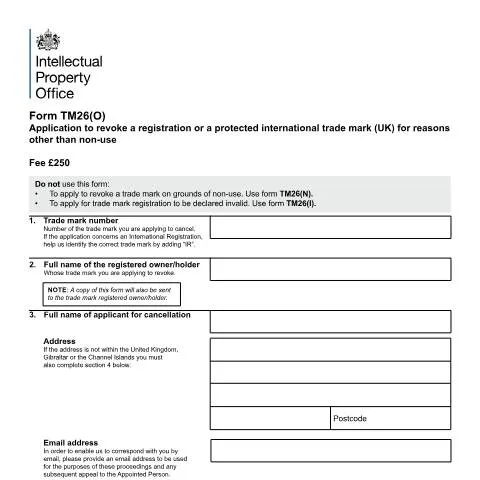
Trade mark revocation proceedings under form TM26(O) represent one of the most sophisticated challenges in UK intellectual property law. Unlike straightforward non-use applications, these cases target fundamental flaws in how a registered trade mark operates in the marketplace. When a trade mark transforms from a distinctive identifier into a generic term, or when its use actively misleads consumers about product origins or quality, the very foundation of its legal protection crumbles.
The Intellectual Property Office processes these complex revocation applications through a structured adversarial system where applicants must demonstrate that a registered trade mark has fundamentally failed in its core function. This isn't merely about unused marks gathering dust in the register—it's about active registrations that have become detrimental to fair competition or consumer understanding.
Two specific legal grounds drive these proceedings: genericisation under Section 46(1)(c) of the Trade Marks Act, where owner inactivity allows a brand name to become the common trade term, and misleading use under Section 46(1)(d), where actual marketplace usage deceives consumers about fundamental product characteristics.
The Strategic Landscape of Non-Use Revocation Applications
Form TM26(O) occupies a distinct position within the UK's trade mark opposition framework. The £250 application fee reflects the substantial evidential burden these cases typically require, contrasting sharply with the more straightforward non-use revocation process handled through form TM26(N).
Professional applicants—ranging from competing businesses to industry associations—typically initiate these proceedings when market conditions create compelling commercial justifications. The process demands extensive factual investigation, consumer research data, and detailed marketplace analysis spanning multiple years of trade mark usage patterns.
| Revocation Ground | Legal Standard | Typical Evidence Required | Success Factors |
|---|---|---|---|
| Section 46(1)(c) - Genericisation | Common name in trade | Industry surveys, dictionary entries, competitor usage | Owner inactivity, widespread generic use |
| Section 46(1)(d) - Misleading use | Liable to mislead public | Consumer confusion studies, product analysis, marketing materials | Demonstrable consumer deception |
International registrations designated for UK protection receive identical treatment, though applicants must specify "IR" alongside the registration number to ensure proper identification within the IPO's systems. This procedural requirement prevents delays and misdirected applications that could compromise carefully timed legal strategies.
Navigating the Genericisation Battleground
Section 46(1)(c) applications target one of intellectual property law's most fascinating phenomena: how distinctive brand names evolve into generic product categories. Classic examples include "aspirin," "escalator," and "thermos"—once-protected trade marks that became victims of their own commercial success.
The legal test focuses intensely on owner conduct and industry acceptance. Successful applications typically demonstrate that registered owners failed to police their marks adequately, allowing competitors, media outlets, and consumers to adopt the trade mark as a standard product descriptor. This isn't about popularity—it's about functional linguistic replacement where the trade mark loses its source-identifying capacity.
Evidence gathering for genericisation cases requires systematic documentation across multiple industry sectors. Applicants compile dictionary definitions, competitor advertising materials, trade publication usage, and consumer survey data showing that relevant market participants no longer associate the mark with a specific commercial source.
The IPO examines whether "the trade mark has in consequence of acts or inactivity of the registered owner, become the common name in the trade for a product or service for which it is registered."
Timing proves crucial in these applications. Genericisation develops gradually through marketplace evolution, making it essential to demonstrate the current state of trade usage rather than historical brand strength. Recent consumer research typically carries more weight than older studies, particularly in rapidly evolving technology and lifestyle sectors.
Industry-Specific Considerations for Generic Usage Claims
Technology sector applications often succeed where software or hardware innovations become standard industry terminology. Healthcare and pharmaceutical marks face particular vulnerability when medical professionals adopt brand names as standard diagnostic or treatment descriptors.
Consumer goods cases require demonstrating that retail environments, product packaging, and customer communications consistently treat the mark as a generic category rather than a brand identifier. This analysis extends beyond simple usage frequency to examine contextual meaning within specific commercial relationships.
Deceptive Trade Mark Usage and Consumer Protection
Section 46(1)(d) revocation applications address a fundamentally different concern: trade marks that actively mislead consumers about product characteristics. These cases protect market integrity by removing registrations whose continued use creates systematic consumer confusion about quality, geographical origin, or product nature.
Unlike genericisation cases focusing on linguistic evolution, misleading use applications examine concrete consumer impact from specific marketing practices. The legal standard requires demonstrating that actual trade mark usage—whether by owners or authorised users—creates a substantial likelihood of consumer deception about fundamental product attributes.
Geographical origin cases represent a significant subcategory, particularly affecting food, beverage, and craft product registrations. When trade marks suggest specific regional origins that don't match actual production locations, consumer protection concerns can override traditional trade mark rights.
Evidential Requirements for Misleading Use Claims
Consumer confusion surveys form the cornerstone of most misleading use applications. Professional market research demonstrating that significant consumer segments misunderstand product characteristics based on trade mark usage provides compelling evidence for revocation proceedings.
- Product analysis documentation comparing advertised characteristics with actual specifications
- Marketing material examination showing systematic misrepresentation patterns
- Competitor impact studies demonstrating market distortion effects
- Consumer complaint records from trading standards authorities or industry bodies
Quality-based misleading use cases often involve luxury goods, professional services, or technical products where trade mark usage implies standards or certifications that products don't actually meet. These applications require detailed technical analysis alongside consumer perception research.
Procedural Requirements and Strategic Timing
The TM26(O) application process incorporates several procedural elements designed to ensure fair resolution of complex commercial disputes. Section 6's revocation notification requirement creates an important strategic consideration: applicants who notify registered owners before filing may strengthen their position for cost awards if applications proceed undefended.
This pre-notification system serves dual purposes: encouraging voluntary surrenders that avoid costly proceedings while establishing applicant good faith for subsequent cost determinations. The IPO doesn't specify exact notification requirements, but standard practice involves formal written notice detailing specific revocation grounds and proposed evidence.
Representative requirements reflect the international nature of modern trade mark practice. Applicants based outside the UK, Gibraltar, or Channel Islands must appoint qualified representatives with addresses in these jurisdictions. This requirement ensures proper service of proceedings and compliance with UK procedural standards throughout complex adversarial processes.
Managing Related Proceedings and Parallel Actions
Section 5's related proceedings disclosure requirement acknowledges that trade mark disputes often span multiple jurisdictions and proceedings types. Applications may run parallel to invalidity actions, opposition proceedings, or EUIPO challenges affecting the same commercial interests.
Coordinating multiple proceedings requires careful strategic planning to avoid contradictory positions or procedural complications. The IPO may stay proceedings pending resolution of related cases, particularly where fundamental questions about trade mark validity affect multiple jurisdictions simultaneously.
Evidence Preparation and Supporting Documentation
The supporting statement section represents the most critical component of any TM26(O) application. Unlike simple form completion, this requirement demands comprehensive legal and factual analysis demonstrating why specific trade mark registrations should be removed from the UK register.
Professional practice typically involves multi-page detailed statements addressing legal precedents, factual evidence, and commercial context supporting revocation claims. These statements function as formal pleadings establishing the scope and strength of applicant cases throughout subsequent proceedings.
Evidence organisation follows established intellectual property litigation standards. Chronological presentation helps demonstrate how trade mark usage evolved over time, while thematic organisation by evidence type supports complex legal arguments about consumer perception or industry practice.
| Evidence Category | Genericisation Applications | Misleading Use Applications |
|---|---|---|
| Consumer Research | Generic usage surveys, brand awareness studies | Confusion surveys, product understanding research |
| Industry Documentation | Trade publication usage, competitor materials | Standards compliance reports, quality certifications |
| Commercial Evidence | Retail presentation, catalogue listings | Marketing materials, product specifications |
| Expert Opinion | Linguistic analysis, market research interpretation | Consumer behaviour analysis, technical assessment |
Digital Evidence and Online Marketplace Analysis
Modern revocation applications increasingly rely on digital evidence reflecting contemporary commercial reality. Search engine results, social media usage patterns, and e-commerce platform presentations provide rich sources of consumer and industry behaviour data.
Online evidence requires careful authentication and contextual analysis. Web archive materials, search analytics data, and social media monitoring reports must demonstrate consistent usage patterns rather than isolated instances of generic or misleading usage.
Post-Application Proceedings and Dispute Resolution
Following TM26(O) submission, the IPO initiates formal adversarial proceedings where registered owners receive opportunities to defend their registrations. The 20 working day initial processing period covers administrative review and service on registered owners, after which substantive examination begins.
Defence strategies typically focus on challenging applicant evidence quality, demonstrating continued distinctive character, or arguing that any misleading usage represents unauthorised third-party conduct rather than owner-sanctioned activity. Owners may file counter-statements supported by their own evidence of proper trade mark usage.
Settlement discussions often occur during early proceedings stages, particularly where commercial relationships allow negotiated solutions. Partial surrenders, usage restrictions, or co-existence agreements may resolve disputes without full adversarial proceedings.
Cost Implications and Risk Management
Beyond the £250 application fee, successful TM26(O) proceedings typically involve substantial professional costs for evidence gathering, expert witnesses, and legal representation. Cost awards favour successful parties, but applicants bear initial financial risks throughout potentially lengthy proceedings.
The pre-notification provision in section 6 becomes particularly relevant for cost calculations. Applicants who provide reasonable surrender opportunities before filing may recover more comprehensive costs if owners defend unsuccessfully, while those proceeding without notice may face restricted cost awards even after successful outcomes.
Risk assessment requires balancing potential commercial benefits from successful revocation against proceedings costs and uncertainty. Strong cases with clear evidence and substantial commercial justification generally justify proceeding, while marginal cases may benefit from alternative commercial strategies.
Electronic Filing and Administrative Efficiency
The IPO's preference for electronic submission via [email protected] reflects modern administrative efficiency while accommodating the complex documentation requirements typical of revocation applications. PDF format submissions allow comprehensive evidence presentation while maintaining proper formatting for legal documents.
Payment processing through the secure online portal at fees.ipo.gov.uk provides immediate transaction confirmation and integrated reference systems linking payments to specific applications. The 10-character reference code system ensures proper payment attribution while maintaining security standards for sensitive commercial proceedings.
Alternative payment methods including IPO deposit accounts, bank transfers, and traditional cheques accommodate different organisational preferences, though electronic methods typically provide faster processing and better audit trails for complex commercial disputes.
Administrative efficiency extends to ongoing case management through electronic communications systems. Email correspondence capabilities streamline complex procedural requirements while maintaining formal legal standards appropriate for adversarial intellectual property proceedings affecting substantial commercial interests.
Revocation for Improper Registration: Challenging the Original Application
Beyond non-use grounds, you may seek revocation on the basis that the trade mark should never have been registered in the first place. This ground operates under Section 47 of the Trade Marks Act 1994, which allows challenges to registrations that contravened absolute or relative grounds for refusal at the time of filing.
Absolute grounds include situations where the mark lacked distinctiveness, was purely descriptive, or consisted exclusively of signs that serve to designate characteristics of goods or services. For instance, if a competitor registered "SUPER SOFT" for textiles, you might argue this merely describes a quality rather than functioning as a trade mark. The Intellectual Property Office will assess whether the mark had acquired distinctiveness through use prior to registration, which can overcome initial objections.
Relative grounds centre on conflicts with earlier rights. You may discover that your own prior trade mark, whether registered or unregistered, takes precedence over the challenged registration. Unregistered marks require proof of goodwill and reputation in the UK before the application date of the contested mark. This involves demonstrating customer recognition, sales figures, and marketing expenditure within relevant geographical areas.
The evidential burden differs significantly from non-use cases. Here, you must prove a negative – that conditions for registration were not met. Contemporary evidence from the original application period becomes crucial. Marketing materials, dictionary definitions, competitor usage, and industry publications from that timeframe help establish whether terms were descriptive or distinctive.
Timing considerations also apply differently. Unlike the five-year non-use window, improper registration challenges face no statutory time limit, though unreasonable delay might affect remedies available. However, if the proprietor has invested substantially in the mark over many years, tribunals may exercise discretion differently regarding costs and transitional arrangements.
Strategic Considerations and Alternative Dispute Resolution
Before initiating formal revocation proceedings, consider whether alternative approaches might achieve your commercial objectives more efficiently. The adversarial nature of tribunal proceedings can strain business relationships and generate significant costs, particularly where ongoing commercial dealings exist between parties.
Negotiated settlements often provide more flexible outcomes than tribunal decisions. You might propose territorial divisions where each party uses the mark in different geographical areas, or product category splits that reflect actual market presence. Licensing arrangements can transform conflicts into revenue streams, particularly where marks have complementary rather than directly competing applications.
Co-existence agreements represent another pragmatic solution, especially in crowded marketplaces where similar marks operate without consumer confusion. These agreements typically include provisions for distinctive presentation, quality standards, and notification procedures for new product launches. The Intellectual Property Office cannot compel such agreements, but will recognise them when assessing likelihood of confusion in future applications.
Consider also the broader intellectual property landscape surrounding your dispute. Patent portfolios, design rights, copyright materials, and domain name registrations might provide additional leverage or alternative protection strategies. A competitor's weak trade mark position might be offset by strong patent protection, affecting the practical value of successful revocation.
International implications deserve careful analysis, particularly post-Brexit. UK trade mark revocation affects only the domestic registration; corresponding EU trade marks remain unaffected unless challenged separately. However, priority claims and international applications might create complex interdependencies requiring coordinated strategy across multiple jurisdictions.
The reputational impact extends beyond immediate legal consequences. Public proceedings generate searchable records that competitors, customers, and potential partners can access. Consider whether the disputed mark's commercial value justifies potential negative publicity, particularly in sectors where brand integrity carries premium importance.
Post-Revocation Implications and Market Re-entry
Successful revocation creates opportunities but also responsibilities that require careful planning. The cancelled registration doesn't automatically grant you exclusive rights; it merely removes the proprietor's statutory protection. Your ability to use the mark depends on avoiding infringement of other existing rights and establishing your own protectable position.
Immediate re-filing carries both advantages and risks. You benefit from eliminating the revoked mark as a citation against your application, but face scrutiny regarding the timing and circumstances of your application. The Intellectual Property Office may question whether your application demonstrates genuine intent to use rather than opportunistic registration following successful opposition.
Market clearance becomes essential before commencing use. Other traders might have developed legitimate interests in similar marks during the period when the revoked registration provided apparent protection. Unregistered rights, particularly passing off claims, can emerge from traders who relied on the cancelled mark's existence when developing their own branding strategies.
Consider the evidential value of revocation proceedings for future enforcement. If you successfully demonstrated that a mark lacked distinctiveness, competitors might use similar arguments against your subsequent registration attempts. Conversely, proving non-use might strengthen your position by demonstrating market availability and your genuine commercial intentions.
The cancelled proprietor retains certain transitional rights that could affect your market entry. Existing stock bearing the revoked mark might continue circulating, potentially causing initial consumer confusion. Long-term licensing agreements might include provisions that survive registration cancellation, creating ongoing commercial complications.
International portfolio management requires updated strategies following UK revocation. If you operate across multiple territories, consider whether similar challenges might succeed elsewhere, or whether the UK revocation creates vulnerabilities in other jurisdictions where the proprietor might seek enhanced protection to compensate for domestic losses.
Documentation and record-keeping throughout the revocation process serve multiple future purposes. Evidence gathered might support subsequent infringement actions, assist in prosecuting your own applications, or defend against challenges from third parties. Maintain comprehensive records of market research, consumer surveys, and competitive analysis conducted during proceedings.