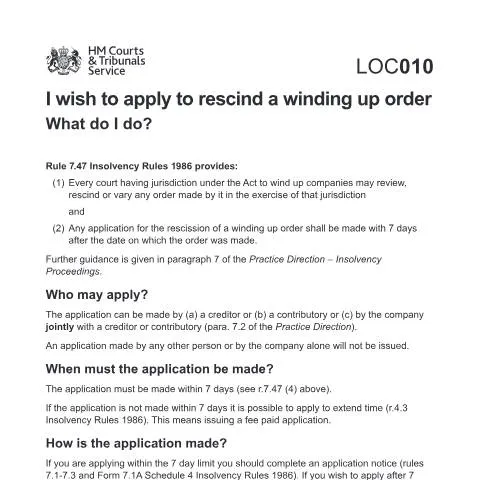
A critical lifeline: Rescinding a winding-up order
The winding-up order can be a daunting situation for any business. Often viewed as a death knell, it signifies that a company is unable to meet its financial obligations. However, there is an opportunity to reverse this trajectory through the Form LOC010. Understanding the implications of this form and the surrounding procedure is critical for those looking to take action.
What happens when a company receives a winding-up order? The court has determined that the company cannot pay its debts, leading to the appointment of an Official Receiver. This order has a significant impact on the company's operations, often resulting in the cessation of trading and the potential liquidation of assets. Yet, under specific circumstances, it is possible to apply for rescission of this order, which can restore the company’s standing.
Who stands to gain from this application?
The application to rescind a winding-up order is not limited to the company itself. It's crucial to identify who can initiate this process:
- Creditors: Any creditor who feels that the winding-up order was unjust or is ready to renegotiate terms has the right to apply.
- Contributories: This includes shareholders or anyone with a financial stake in the company.
- Joint Applications: Sometimes, the company can make a joint application with a creditor or contributory, strengthening the case for rescission.
Notably, applications made by parties outside these categories will not be considered. This restriction emphasizes that the courts are focused on those who have a legitimate interest in the company's financial situation.
Time-sensitive decisions: Understanding the 7-day window
Time is of the essence when addressing a winding-up order. The Insolvency Rules 1986 stipulate that the application must be submitted within 7 days of the order being made. This short timeframe necessitates swift action, underscoring the importance of being prepared.
In the event that more time is needed, there is a provision for extending the deadline under rule 4.3 of the Insolvency Rules. However, this requires a fee-paid application. Thus, if you believe that a rescission is warranted, you must act promptly and without hesitation.
A glimpse into the application process
Completing the application can seem overwhelming, but it is a structured process:
Gather Documentation: Before anything else, collect all necessary evidence that substantiates the claim for rescission. This typically includes a witness statement that outlines the facts relevant to the case, particularly concerning the company's financial position—its assets versus liabilities.
Complete Application Notice: If you are applying within the 7-day window, you will need to fill out an application notice, specifically Form 7.1A as per the Insolvency Rules 1986.
Submission Requirements: Upon completion, the original document must be filed with the court, and copies need to be served to relevant parties, including the Official Receiver, the petitioner, and any supporting or opposing creditors.
Evidence of Service: Prepare for a hearing by ensuring that evidence of service is available, should the Official Receiver or petitioner choose not to attend.
Decoding the key sections of Form LOC010
The LOC010 form is straightforward, but each section must be completed meticulously. Here’s a breakdown of what to look out for:
- Applicant Details: Ensuring that the correct applicant is listed is essential; incorrect details can lead to automatic rejection.
- Grounds for Application: Clearly articulate the reasons for rescission. Vague statements or non-specific reasoning can weaken your case.
- Financial Evidence: It is crucial to showcase the company’s financial health comprehensively. Include balance sheets or recent financial statements where applicable.
One common pitfall is underestimating the importance of comprehensive financial evidence. If the court finds the company to be insolvent, it is unlikely to grant the rescission, regardless of other mitigating factors.
What happens after the application is made?
Once the application is submitted, the court will assess the circumstances surrounding the request. The factors influencing their decision include:
- Exceptional Circumstances: The court only typically rescinds a winding-up order under extraordinary conditions. It's crucial to demonstrate compelling reasons.
- Payment of Debts: Merely demonstrating that debts have been paid will generally not suffice to overturn the order.
- Company’s Solvency: If the company is clearly insolvent, this will likely hinder your chances of success.
The court will give due consideration to the evidence provided and, if necessary, may schedule a hearing for all parties to present their case.
Dealing with potential roadblocks
In the unfortunate event that the court refuses the application, it is essential to understand the implications:
Possible Costs: The applicant may be liable for the costs incurred by the Official Receiver and any petitioners if the application fails. Therefore, weigh the potential financial repercussions against the benefits of pursuing the rescission.
Next Steps: Should your application be denied, it's important to consult with legal counsel to explore alternative avenues. This might include negotiating with creditors or considering restructuring options.
Reapplication Possibilities: Although the road may seem closed, under certain conditions, it may be possible to submit a subsequent application with stronger supporting evidence or a revised rationale.
Engagement with the HM Courts & Tribunals Service
Understanding the role of the HM Courts & Tribunals Service (HMCTS) in this process is pivotal. They provide the platform for filing the application and can offer guidance on procedural queries. However, direct legal advice should be sought elsewhere, as HMCTS is not a legal advisory body.
To track the progress of your application, it is advisable to maintain communication with the court. You can inquire about the status of your application, request hearing dates, and understand any further requirements that may arise during the review process.
The importance of professional guidance
Navigating through the complexities of rescinding a winding-up order can be challenging. Engaging with legal professionals who specialize in insolvency can make a significant difference. They can help:
- Assess Your Situation: Identify the viability of your claim and assist in preparing a robust application.
- Prepare Documentation: They can help ensure that all required forms are filled out correctly and on time.
- Represent You in Court: Legal representation can provide a better chance of success, particularly if the case progresses to a hearing.
In summary, while the winding-up order represents a significant challenge, the opportunity for rescission through the Form LOC010 is a lifeline for those willing to act decisively and thoughtfully. The process demands careful attention to detail, a clear understanding of the legal framework, and often the support of legal expertise to navigate effectively. With the right approach, restoring a company’s operational status is possible, offering a pathway back to stability.
Understanding the Winding Up Order Process
A winding-up order is a court order that leads to the compulsory liquidation of a company. This process is initiated when a company is unable to pay its debts, and creditors seek to recover owed amounts through liquidation. The process is overseen by the High Court in England and Wales, and it is crucial to understand the implications of a winding-up order as it can have severe effects on a company, including the loss of control over its assets and operations.
When a winding-up order is made, a liquidator is appointed, who takes control of the company’s assets and is responsible for distributing them among creditors. However, there are circumstances where a company may seek to rescind, or overturn, this order. This can potentially restore the company’s ability to operate and address its financial obligations effectively.
The application for rescission must be substantiated with clear evidence that the winding-up order was unjust or that the company has since rectified the issues that led to the order’s issuance. Common grounds for rescinding a winding-up order can include showing that the company can pay its debts or demonstrating that the order was made in error.
Filing an Application: Required Documents and Evidence
To successfully file Form LOC010 and apply to rescind a winding-up order, specific documents and evidence must be prepared and submitted to the court. This includes:
- Form LOC010: Ensure that this form is accurately completed and signed. It must clearly outline your reasons for seeking to rescind the order, along with any supporting arguments.
- Evidence of Financial Position: Include recent financial statements, cash flow forecasts, and any other documentation that demonstrates the company’s current financial status. This could include bank statements or contracts that indicate incoming revenue.
- Affidavit: A sworn affidavit may be required to support your claims. This document should detail the facts surrounding the winding-up order and provide any additional context that may help your case.
- Notice of Motion: This document informs the court and other parties about the intention to apply for rescission. It should specify the date and time of the hearing.
- Communication with Creditors: If possible, include any correspondence with creditors demonstrating willingness to negotiate or settle debts, which can support your application.
All documents must comply with the UK Civil Procedure Rules, which govern how court proceedings are conducted. Incomplete or improperly filed applications may lead to delays or rejection of your request.
Preparing for the Court Hearing
The court will schedule a hearing to consider the application to rescind the winding-up order. It is essential to prepare thoroughly for this hearing, as it is your opportunity to present your case before a judge. Here are crucial steps to undertake:
- Review Case Law: Research similar cases where winding-up orders were rescinded. Understanding past judgments can provide insights into how to structure your arguments and what precedents may aid your case.
- Prepare Your Statements: Draft a clear, concise statement that outlines your reasons for the application, the current state of the company, and the measures taken to address financial difficulties. Practicing this statement can help in delivering it confidently during the hearing.
- Gather Witnesses: If applicable, consider having witnesses who can testify to the company’s financial position or operational changes since the winding-up order was imposed. This could include accountants or business partners who can corroborate your claims.
- Consult Legal Counsel: If possible, consult with a solicitor experienced in insolvency law. They can provide tailored advice and support to enhance your application’s likelihood of success. They can also help you navigate court procedures and represent you during the hearing.
Being well-prepared for the hearing can significantly increase your chances of having the winding-up order rescinded. Remember to remain calm and composed during the proceedings, as presenting your case effectively is crucial.