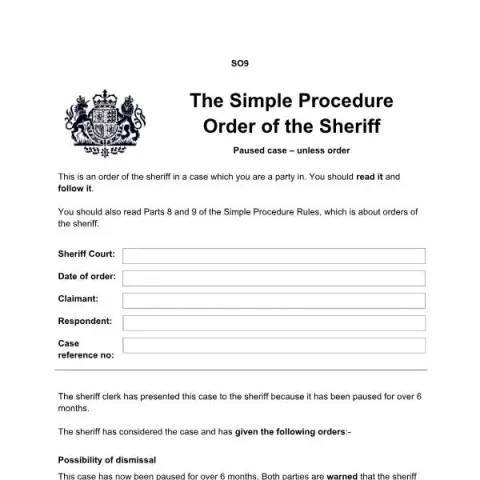
Understanding the Scottish Courts and Tribunals Service Standard Order of 09 March 2023: Paused Case – Unless Order
This official document issued by the Scottish Courts and Tribunals Service (SCTS) pertains to a specific procedural order concerning cases that have been paused for an extended period. It is essential for parties involved in such cases to understand the purpose, implications, and required actions outlined in this order to ensure compliance and to facilitate the progression or proper conclusion of the case.
The Objective of the Order
The primary aim of the Paused case – unless order is to address cases that have remained inactive for over six months. This order serves as a formal notice to the parties involved, warning that unless specific steps are taken, the case may be dismissed. It underscores the importance of active participation and timely communication between the parties and the court to prevent unnecessary delays and to uphold the integrity of the judicial process.
Who Should Read This Document?
- Parties to the case: including claimants and respondents who are directly involved in the proceedings.
- Legal representatives: solicitors or legal advisors representing the parties.
- Court clerks and administrative staff: responsible for managing case files and ensuring procedural compliance.
Key Elements of the Order
Case Details and Identification
The order begins by referencing the specific case, including details such as the claimant, respondent, case reference number, and the date of the order. These details ensure clarity and proper identification within the court’s records.
Reason for the Order
This order is issued because the case has been paused for over six months. The pause might have resulted from procedural delays, pending submissions, or other reasons. The court now seeks to resolve the situation by prompting the parties to take specific actions.
Options Available to the Parties
- Request to continue the pause: Parties may write to the sheriff explaining why they wish the case to remain paused. This is typically relevant if ongoing issues or negotiations justify the delay.
- Request for dismissal: If no action is taken, the sheriff may dismiss the case. This underscores the importance of active engagement to avoid case dismissal.
Interim Hearing or Discussion
Alternatively, the sheriff may decide to hold a discussion with both parties before determining the next steps. This involves a scheduled meeting at the sheriff court, where parties are expected to arrive punctually and be prepared to discuss the case's progress.
Procedural Requirements for Parties
Writing to the Court
Parties wishing to keep the case alive must send a written explanation to the sheriff, detailing their reasons for requesting the case to remain paused or to proceed. This communication should be clear and concise, outlining the circumstances that justify continued inactivity or the need for case progression.
Attending Scheduled Discussions
If ordered to attend a discussion, parties should arrive on time at the specified date, time, and location. Preparation involves reviewing case documents and being ready to discuss the current status and future steps.
Implications of the Order
This order acts as a formal warning that the case’s inactivity could lead to dismissal, which would effectively end the proceedings. Conversely, active participation by the parties can result in the case being resumed or scheduled for further hearings, ensuring the matter is resolved appropriately.
Fill in your form directly online
No printing: type your details into the boxes of the official form, tick, then download the PDF ready to send.
- 1Type into the form boxes
- 2Tick in one click
- 3Save and download the PDF
Contact and Support
For any questions or clarifications regarding this order, parties should contact the sheriff court handling the case. Details of the court’s contact information are typically available on the court’s official website or through the court clerk’s office.
In summary, the Paused case – unless order is a procedural tool designed to encourage active case management, prevent unnecessary delays, and uphold judicial efficiency within the Scottish legal system. Parties involved should carefully review their options and respond promptly to avoid adverse outcomes such as case dismissal.