When Stepping Back from Estate Administration Becomes Necessary
The death of a family member or close friend often brings unexpected responsibilities, particularly when you've been named as an executor in their will. However, circumstances can arise where taking on this role proves impractical, overwhelming, or simply impossible. Form PA15 provides a formal mechanism for those appointed as executors to formally renounce their rights and responsibilities before probate proceedings commence.
This renunciation process serves a crucial function within the probate system, allowing for the smooth transition of estate administration duties to other appointed executors or enabling the court to appoint suitable administrators. The timing of this decision proves critical – once an executor begins intermeddling with the deceased's estate, their options become significantly more limited.
Understanding the Legal Framework Behind Executor Renunciation
The PA15 form operates within established probate law principles that recognise an executor's right to decline their appointment, provided they haven't yet begun administering the estate. This distinction between appointment and acceptance forms the cornerstone of the renunciation process.
An executor gains the legal authority to act from the moment of the testator's death, but they aren't compelled to exercise this authority. The law acknowledges that personal circumstances, health issues, geographical distance, or professional conflicts might make it inappropriate or impossible for someone to fulfil their duties effectively.
The Concept of Intermeddling
Central to the PA15 declaration is the concept of intermeddling – essentially any action taken in relation to the deceased's estate that demonstrates an intention to act as executor. Common examples include:
- Collecting rent from the deceased's properties
- Paying the deceased's debts using estate funds
- Selling or disposing of the deceased's assets
- Opening or closing the deceased's bank accounts
- Instructing solicitors to act on behalf of the estate
The form specifically requires a declaration that the renouncing party has "not intermeddled in the estate of the deceased and will not hereafter intermeddle therein with intent to defraud creditors". This solemn declaration carries legal weight and potential consequences for false statements.
Navigating the Completion Process: Section-by-Section Guidance
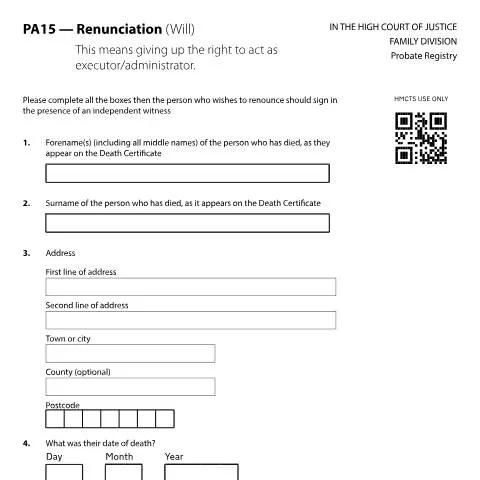
The PA15 form's structure reflects the court's need for precise identification and clear legal declarations. Each section serves a specific purpose in establishing the legal foundation for renunciation.
Deceased Person Identification Requirements
Sections 1-4 require exact replication of details from the death certificate. This includes all forenames and middle names as recorded, ensuring no discrepancies arise that could delay processing. The address recorded should be the deceased's last known residence, which may differ from their address at the time of will-making if they relocated during their lifetime.
Will and Codicil Documentation
Section 5 requires the exact date of the will being renounced. If codicils exist – formal amendments to the original will – section 6 accommodates up to three separate codicil dates. These dates must correspond precisely with the documents held by the Probate Registry, as any discrepancies will trigger queries and potential delays.
| Document Type | Information Required | Common Issues |
|---|---|---|
| Original Will | Exact execution date | Confusion with draft dates |
| Codicil(s) | All amendment dates | Missing subsequent codicils |
| Death Certificate | Full name as recorded | Variations in name spelling |
Executor Status Declaration
Section 8 requires careful consideration of your specific role. The distinction between being a "sole executor" and "one of the executors" affects the subsequent administration process significantly. If you're the sole executor renouncing, the court will need to appoint an administrator, whereas if co-executors remain, they can proceed with probate applications.
The additional designation as "residuary legatee and devisee (in trust)" refers to beneficiaries who inherit the remainder of the estate after specific gifts and debts are settled. This dual role – as both executor and beneficiary – requires separate consideration of whether you're renouncing administrative duties only or also declining your inheritance rights.
The Witnessing Requirements and Legal Formalities
The PA15 form requires execution as a deed, meaning it must be signed in the presence of an independent witness who also signs the document. This witness requirement carries specific legal implications and restrictions that must be carefully observed.
Independent Witness Criteria
The witness must be genuinely independent, meaning they cannot be:
- Related to the person renouncing by blood or marriage
- A beneficiary under the will being renounced
- Someone with any financial interest in the estate
- A minor (under 18 years old)
- Someone lacking mental capacity to understand their role
Suitable witnesses typically include solicitors (though not those acting for the estate), bank managers, doctors, or other professionals. The witness must be physically present when the renouncing party signs and must add their own signature immediately afterwards.
The Deed Execution Process
Unlike simple contract signatures, deed execution requires specific formalities. The person renouncing must sign with the clear intention of creating a deed, and both parties must understand the legal significance of their actions. The witness's signature confirms not just the identity of the signatory, but also that proper deed execution procedures were followed.
Submission Pathways and Processing Timeframes
Once completed, the PA15 form must be submitted to the appropriate Probate Registry office. The choice of registry typically depends on where the deceased lived at the time of death, though certain high-value estates or complex cases may be directed to the Principal Registry in London.
Supporting Documentation Requirements
The renunciation form rarely travels alone. Accompanying documentation typically includes:
- The original will (or a certified copy if the original remains with solicitors)
- Any codicils referenced in the form
- The death certificate (certified copy acceptable)
- Covering letter explaining the circumstances necessitating renunciation
Processing timeframes vary considerably depending on registry workloads and case complexity. Straightforward renunciations with complete documentation typically receive acknowledgment within 2-3 weeks, though the actual recording of renunciation may take longer if it forms part of a broader probate application.
Consequences and Implications of Formal Renunciation
Renouncing executor rights through PA15 creates irreversible legal consequences that extend beyond simply declining administrative duties. Understanding these implications helps ensure the decision aligns with long-term intentions and circumstances.
Loss of Administrative Authority
Once renunciation is recorded, the former executor loses all legal authority to act on behalf of the estate. This includes emergency situations where urgent action might benefit the estate or its beneficiaries. The renouncing party cannot subsequently change their mind and resume executor duties, even if circumstances change dramatically.
Impact on Estate Administration Timeline
Executor renunciation can significantly affect estate administration timelines, particularly in specific scenarios:
| Scenario | Timeline Impact | Required Action |
|---|---|---|
| Sole executor renounces | Substantial delay | Court appointment of administrator |
| One of multiple executors renounces | Minimal delay | Remaining executors proceed |
| All executors renounce | Major delay | Court administrator appointment |
Inheritance Rights Considerations
Importantly, renouncing executor duties doesn't automatically affect inheritance rights. Someone can decline the administrative burden while retaining their entitlement to gifts or legacies under the will. However, if the executor role was coupled with specific trustee responsibilities for their own benefit, careful legal consideration may be necessary.
Alternative Approaches When Renunciation Isn't Appropriate
Situations exist where formal renunciation through PA15 either isn't possible or doesn't address the underlying concerns effectively. Understanding these alternatives helps ensure the most appropriate course of action.
Power Reserved Applications
When an executor needs temporary respite rather than permanent withdrawal, a "power reserved" application allows them to step back temporarily while retaining the right to resume duties later. This approach suits situations involving temporary incapacity, overseas travel, or short-term personal circumstances.
Professional Executor Appointment
Some executors choose to engage professional administrators (solicitors or specialist probate practitioners) to handle day-to-day administration while retaining formal executor status. This arrangement provides professional expertise while maintaining ultimate control and responsibility.
Limited Grant Applications
In complex estates with multiple properties or business interests in different jurisdictions, executors might apply for limited grants covering specific aspects of the estate while renouncing responsibility for other elements.
Registry Processing and Post-Submission Procedures
Understanding how the Probate Registry handles PA15 submissions helps manage expectations and enables appropriate follow-up when necessary. The registry's approach varies depending on whether the renunciation accompanies a probate application or stands alone.
Standalone Renunciation Processing
When submitted independently, the registry records the renunciation and issues confirmation to the renouncing party. This creates a permanent record preventing future attempts to act as executor, but doesn't automatically trigger alternative administration arrangements.
If no other executors remain after renunciation, interested parties (typically beneficiaries or creditors) must separately apply for letters of administration. This can create an administrative gap where no one has authority to act on behalf of the estate.
Renunciation Within Probate Applications
More commonly, PA15 forms accompany probate applications where remaining executors or proposed administrators are simultaneously seeking grants of representation. This streamlined approach minimises administrative gaps and ensures continuity of estate management.
The registry validates the renunciation against the will and death certificate before proceeding with the main application. Any discrepancies or missing information triggers correspondence requesting clarification or additional documentation.
Practical Considerations for Future Estate Planning
The experience of renouncing executor duties often provides valuable insights for future estate planning, both for the renouncing party and others observing the process. These lessons extend beyond immediate administrative concerns to broader questions of responsibility and preparation.
Preventive Measures in Will-Making
Understanding common renunciation triggers helps when creating or updating wills. Appointing multiple executors, considering geographical proximity, and discussing responsibilities with proposed executors before finalising appointments can reduce future renunciation likelihood.
Some testators now include explicit provisions acknowledging executor renunciation rights and specifying alternative arrangements, reducing uncertainty and administrative complications for survivors.
Communication and Contingency Planning
The PA15 process highlights the importance of ongoing communication between testators and their appointed executors. Regular reviews of executor willingness and capability, particularly following major life changes, help identify potential issues before they become problematic.
Effective estate planning increasingly includes contingency discussions about executor succession, professional support availability, and family coordination to ensure smooth administration regardless of individual circumstances that might necessitate renunciation.
Renouncing Executorship Before Grant of Probate: Timing and Strategic Considerations
The timing of your renunciation can significantly impact the estate administration process and your legal position. Form PA15 must be submitted before any grant of probate or letters of administration has been issued by the Probate Registry. Once you've intermeddled in the estate—meaning you've started acting as executor by dealing with assets, paying debts, or making distributions—your right to renounce becomes considerably more complicated.
Intermeddling doesn't require formal probate to have occurred. Simple actions like instructing solicitors to act on behalf of the estate, arranging funeral payments from estate funds, or even collecting mail addressed to the deceased can constitute intermeddling. The Probate Registry takes a strict view on this: if you've begun acting in an executive capacity, you may need to apply to the court for permission to renounce, which involves additional costs and legal complexity.
For named executors in England and Wales, the window for straightforward renunciation typically closes once you've taken any positive steps toward estate administration. However, there are nuanced situations where partial intermeddling might not prevent renunciation. For instance, arranging a funeral doesn't automatically constitute intermeddling if you're acting in your personal capacity rather than as executor, particularly if funeral costs are met from sources other than estate assets.
Professional executors—such as solicitors or bank representatives—face additional considerations. They may have contractual obligations that continue even after renunciation, particularly regarding client confidentiality and the handover of estate documentation. The Law Society's guidance emphasises that professional executors should ensure proper file transfer and may remain liable for any negligent acts committed before renunciation.
When multiple executors are named, the renunciation of one doesn't automatically trigger delays if the remaining executors can proceed effectively. However, if your renunciation leaves only one executor and the estate is particularly complex or valuable, the Probate Registry may require additional safeguards or suggest appointing a replacement. This is especially relevant for estates exceeding £325,000 or involving business interests, where having multiple executors provides important checks and balances.
The strategic timing of renunciation can also affect inheritance tax planning. If you renounce after HMRC has issued inheritance tax assessments or begun investigations, your renunciation won't absolve you of responsibility for any liabilities that arose during your period of potential or actual administration. This creates a window of joint and several liability that continues until formal discharge procedures are completed.
Complex Estate Scenarios: When Renunciation Becomes Particularly Challenging
Certain estate compositions make executor renunciation significantly more complex, requiring careful consideration of ongoing obligations and potential personal liability. Business estates present particular challenges, especially where the deceased held controlling interests in limited companies or partnerships. As a named executor, you may have temporary legal responsibility for business decisions even before probate is granted, particularly if the business requires immediate operational decisions to prevent deterioration of assets.
For estates involving agricultural land or farming operations, the urgency of ongoing management decisions can create a presumption of intermeddling even from minimal involvement. Livestock require daily care, crops may need harvesting, and tenant arrangements often require immediate attention. If you're named as executor of such an estate, renunciation must typically occur within days rather than weeks to avoid inadvertent assumption of management responsibilities.
International assets complicate renunciation considerably. Where the deceased held overseas property, bank accounts, or business interests, multiple jurisdictions may recognise your executor status based on the English will, even before UK probate is granted. Renouncing your UK executorship doesn't automatically terminate your potential responsibilities in other countries, and you may need to take active steps in each relevant jurisdiction to avoid ongoing liability.
Contested wills present another layer of complexity. If you're named as executor but family members are challenging the will's validity, your renunciation might be viewed as taking a position on the will's authenticity. Courts sometimes interpret executor renunciation in contested cases as implicit doubt about the will's validity, which can affect your position if you're also a beneficiary. The Chancery Division has noted in several cases that executors who renounce during will contests may face closer scrutiny regarding their knowledge of circumstances surrounding the will's creation.
Trust estates require particular attention to timing and succession planning. Where the will creates ongoing trusts, your role as executor may naturally transition to trustee responsibilities. Renunciation of executorship doesn't automatically renounce trusteeship, and the two roles have different legal frameworks and liability structures. If you're considering renunciation, you must clarify whether you're also rejecting any trustee appointments, as this requires separate documentation and may affect the trust's ability to function effectively.
For estates involving family businesses, your renunciation can trigger succession planning mechanisms or shareholder agreements that the deceased may have established. Some business partnership agreements contain clauses that activate based on executor identity, and your renunciation might inadvertently trigger buy-sell provisions or change control structures in ways the deceased didn't anticipate.
Post-Renunciation Responsibilities and Ongoing Obligations
Renouncing executorship through Form PA15 doesn't create a complete severance from all estate-related obligations, particularly in circumstances where you possessed relevant information or documentation before renunciation. The Data Protection Act 2018 and UK GDPR create specific obligations regarding personal data you may have accessed in your capacity as named executor, even if you subsequently renounce.
If you received estate-related documentation, correspondence, or gained access to the deceased's personal information before submitting Form PA15, you remain bound by confidentiality obligations that survive your renunciation. This is particularly relevant where you're a family member who naturally had access to personal information about the deceased's affairs. Professional bodies, including the Law Society and Institute of Chartered Accountants, maintain that confidentiality obligations continue indefinitely, regardless of whether formal appointment was completed.
Financial institutions often maintain records of your initial identification as executor, and your renunciation doesn't automatically update their systems. You may need to provide copies of your PA15 submission and subsequent probate documentation to banks, investment companies, and other financial service providers to ensure you're not inadvertently included in future correspondence or decision-making processes. Some institutions require formal notification beyond the standard probate process, particularly for high-value accounts or where you had previous signatory authority.
HMRC's position on renounced executors involves ongoing potential liability for inheritance tax matters that arose before renunciation. If you received any estate-related correspondence from HMRC or were involved in preliminary discussions about estate valuation, your renunciation doesn't automatically terminate your potential liability for providing accurate information. The department's Inheritance Tax Manual makes clear that liability can attach to individuals who had responsibility for estate assets, even briefly, and renunciation must be properly documented to HMRC's satisfaction.
Professional indemnity considerations affect solicitors, accountants, and other professional executors who renounce. Your professional indemnity insurance may require notification of the renunciation, particularly if there were any potential conflicts of interest or concerns about the estate that influenced your decision to renounce. Some insurers treat executor renunciation as a potential claim trigger, requiring full disclosure of circumstances even where no formal complaint has been made.
For family members who renounce executorship, ongoing emotional and practical involvement often continues despite legal renunciation. Courts recognise that family dynamics don't necessarily respect legal boundaries, and if you continue to provide advice, assistance, or make suggestions to the replacement executor, you may inadvertently create ongoing liability. The Family Division has noted cases where renounced executors remained sufficiently involved to attract personal liability for subsequent estate administration decisions.
Property management responsibilities can persist beyond renunciation where you have physical access to estate property or continue to receive mail, deliveries, or correspondence. If the deceased's property remains unsecured or requires ongoing maintenance, your knowledge of security arrangements or utility responsibilities may create moral if not legal obligations that survive your formal renunciation. Insurance companies sometimes maintain that individuals with keys or access codes retain some liability for property security, regardless of their formal legal status.
Document retention obligations require careful consideration post-renunciation. Any estate-related documents in your possession should typically be transferred to the replacement executor or administrator, but you may need to retain copies for your own protection, particularly if there were pre-renunciation transactions or decisions that might later be questioned. The balance between proper handover and self-protection requires careful consideration of what documentation is necessary and proportionate to retain.