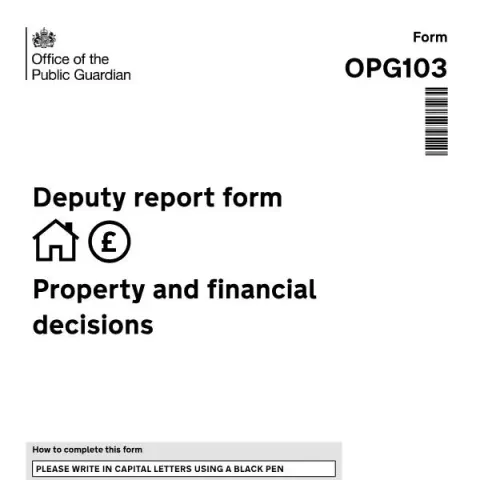
Understanding the OPG103 Deputy Report Form for Property and Financial Decisions
The Office of the Public Guardian (OPG) requires deputies appointed to manage property and financial affairs on behalf of individuals who lack mental capacity to submit a detailed report using the OPG103 form. This official document ensures that deputies are accountable for their decisions and that the best interests of the client are maintained. This article provides an overview of the purpose, structure, and completion process of the Deputy Report Form, helping deputies understand their obligations and the importance of accurate reporting.
Purpose and Scope of the OPG103 Form
The primary aim of the OPG103 form is to document decisions made by deputies over a specified reporting period concerning the client’s property and financial affairs. It captures the nature of decisions such as purchasing or selling property, making gifts, or changing care arrangements. The form also assesses whether the client’s mental capacity to make financial decisions has changed during that period.
This form is essential for maintaining transparency and accountability, especially when decisions impact the client’s assets and wellbeing. It is submitted to the Office of the Public Guardian (OPG), which oversees deputies’ actions and ensures compliance with legal standards.
Who Needs to Complete the OPG103?
The deputy appointed to manage the property and financial affairs of a person lacking mental capacity is responsible for completing this form. If multiple deputies are involved, only one needs to submit a report, provided they have coordinated their actions and shared the necessary information. It is advised that all deputies review the report before submission to ensure consistency and accuracy.
The client refers to the individual for whom the deputy has been appointed. The report reflects decisions made on their behalf, with the deputy acting in their best interests.
Step-by-Step Guidance for Filling Out the Form
Preparation of Necessary Records
Before starting, deputies should gather all relevant documentation, including:
- Bank statements and financial spreadsheets
- Records of decisions made for the client
- Correspondence with professionals or other parties involved in decision-making
Completing Personal and Case Details
The form begins with identifying information, including the reporting period, case number, and contact details of both the deputy and the client. It is crucial to ensure accuracy, as this data links the report to the correct case and facilitates communication if further clarification is needed.
Documenting Decisions and Client Involvement
In the main section, deputies must list all significant decisions made during the reporting period, such as property transactions, gifts, or care arrangements. For each decision, they should specify how the client was involved or, if not involved, explain why. This transparency helps demonstrate that decisions align with the client’s best interests and legal requirements.
Assessing Mental Capacity
The form asks whether the client’s mental capacity to manage financial decisions has changed. If there has been a change, deputies should provide details, including when the last assessment by a professional occurred. If capacity remains unchanged, deputies should confirm this in the relevant section.
Important Deadlines and Submission Considerations
The reporting period is specified in the letter accompanying the form, and deputies must submit the completed OPG103 by the deadline indicated. Timely submission is vital to maintain compliance with legal obligations and to avoid any potential legal repercussions.
Fill in your form directly online
No printing: type your details into the boxes of the official form, tick, then download the PDF ready to send.
- 1Type into the form boxes
- 2Tick in one click
- 3Save and download the PDF
Once submitted, the OPG reviews the report to ensure deputies are fulfilling their duties responsibly. If additional information is required, the OPG may contact the deputy by telephone, email, or in writing.
Post-Submission Responsibilities
After submitting the report, deputies should retain copies of the completed form and supporting documents for their records. They should also prepare for any follow-up inquiries from the OPG and continue to act in accordance with the best interests of the client, maintaining accurate and up-to-date records of all decisions made.
In summary, the OPG103 Deputy Report Form is a critical tool for ensuring transparency and accountability in managing property and financial affairs for individuals lacking capacity. Proper completion and timely submission safeguard the interests of the client and uphold the legal responsibilities of deputies under UK law.