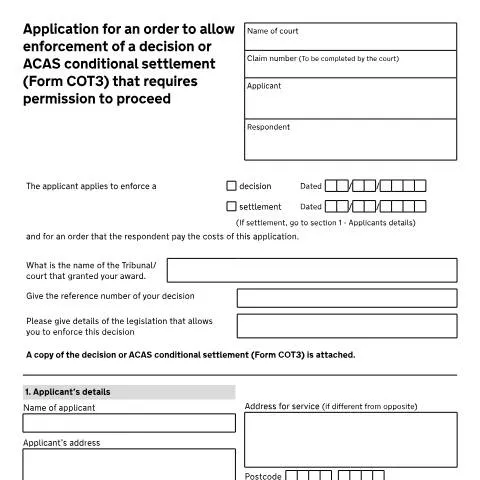
When Employment Tribunals Meet County Court Enforcement: Understanding Form N322A
Winning an employment tribunal case or reaching an ACAS settlement should mark the end of a workplace dispute, yet for many claimants, it represents merely the beginning of another challenge: actually receiving the money awarded. When employers fail to honour tribunal decisions or breach conditional ACAS settlements, the legal route to enforcement runs through the county court system via Form N322A—a document that bridges the gap between employment law victories and practical financial recovery.
This application form serves a crucial function in the English legal system, transforming employment tribunal awards and ACAS conditional settlements into enforceable county court judgments. Unlike standard debt recovery procedures, enforcement of employment awards requires specific judicial permission, reflecting the unique nature of workplace disputes and the protective framework surrounding employment rights.
The Architecture of Employment Award Enforcement
Form N322A operates within a carefully structured legal framework that recognises the distinct nature of employment disputes. The form addresses two primary scenarios: enforcement of tribunal decisions and enforcement of ACAS conditional settlements (Form COT3), each carrying different procedural requirements and legal implications.
Tribunal decisions typically arise from successful claims for unfair dismissal, discrimination, unpaid wages, or redundancy payments. These awards carry the full weight of judicial determination but require county court recognition before standard enforcement mechanisms become available. The legislation governing enforceability varies depending on the nature of the original claim—whether under the Employment Rights Act 1996, Equality Act 2010, or other employment statutes.
ACAS conditional settlements present a more complex enforcement landscape. These agreements, formalised through COT3 forms, often include conditions that must be fulfilled before payment obligations crystallise. The N322A application must demonstrate not only that conditions have been met but also that the respondent has failed to comply with their resulting obligations.
Legislative Foundation and Jurisdictional Requirements
The enforcement process draws its authority from multiple sources, primarily the Employment Tribunals Act 1996 and the Civil Procedure Rules. Applicants must identify the specific legislative provision that grants enforcement rights, as this determines both the court's jurisdiction and the available remedies. The complexity increases when dealing with cross-border enforcement or cases involving multiple jurisdictions within the UK.
| Award Type | Primary Legislation | Enforcement Scope | Interest Provisions |
|---|---|---|---|
| Unfair Dismissal | Employment Rights Act 1996 | Full monetary award | 8% per annum from 42 days |
| Discrimination | Equality Act 2010 | Compensation plus interest | From date of act to calculation date |
| Unpaid Wages | Employment Rights Act 1996 | Outstanding payments | Limited statutory provisions |
| ACAS Settlement | Contract law principles | Terms as agreed | As specified in agreement |
Navigating the Application Process: From Paperwork to Payment
The N322A application demands meticulous attention to detail, with each section serving specific evidentiary and procedural functions. The form's structure reflects the court's need to verify both the legitimacy of the underlying award and the applicant's right to enforce it through county court mechanisms.
Essential Documentation and Supporting Evidence
Success hinges on comprehensive documentation that establishes the chain of legal authority from original claim to enforcement application. The tribunal decision or ACAS settlement must be attached in its entirety, along with any subsequent correspondence demonstrating the respondent's failure to comply. For ACAS settlements, particular attention must be paid to evidencing compliance with any conditions precedent.
Documentary requirements extend beyond the core award. Applicants must provide evidence of service of the original decision, proof of non-payment despite reasonable opportunity, and detailed calculations of any accrued interest. Where settlements include staged payments or conditional elements, chronological evidence of compliance attempts becomes crucial.
Calculating Interest and Ongoing Costs
The financial calculations within Form N322A require careful consideration of applicable interest rates and accrual periods. Employment tribunal awards typically attract statutory interest from specific trigger dates, but the rate and calculation method vary significantly depending on the underlying claim type and governing legislation.
For discrimination awards, interest calculations can be particularly complex, potentially covering periods from the date of discriminatory acts through to judgment and beyond. The form provides space for detailed interest calculations, recognising that these amounts can substantially exceed the original award where enforcement is delayed.
Court fees for N322A applications are set at current Civil Procedure Rules rates, but applicants should be aware that successful applications typically result in cost orders against respondents, making the initial outlay recoverable.
Conditional Settlements: Navigating the COT3 Enforcement Maze
ACAS conditional settlements present unique enforcement challenges that Form N322A addresses through dedicated sections requiring detailed condition analysis. These agreements often include non-monetary conditions—such as reference provision, reinstatement opportunities, or confidentiality obligations—that must be satisfied before payment obligations become enforceable.
Proving Condition Compliance
Section 4 of Form N322A requires applicants to demonstrate compliance with settlement conditions through detailed narrative and supporting evidence. This process demands careful legal analysis, as condition interpretation can significantly impact enforceability. Courts scrutinise whether conditions have been substantially performed and whether any failures constitute material breaches justifying enforcement action.
The certification process extends beyond simple tick-box compliance. Applicants must provide comprehensive details of how each condition has been addressed, including dates, methods of compliance, and evidence of respondent notification. Where conditions remain partially unfulfilled, the application must demonstrate that such non-compliance doesn't prevent enforcement of monetary obligations.
The Declaration Against Double Recovery
Form N322A includes a crucial declaration that no general contract law recovery is being pursued simultaneously. This provision prevents double recovery while acknowledging that ACAS settlements exist within broader contractual frameworks. The declaration requirement reflects the court's need to ensure enforcement proceedings don't conflict with other legal remedies.
Procedural Pathways: Court Processing and Judicial Scrutiny
Once submitted, N322A applications enter a judicial review process that balances efficiency with thorough legal scrutiny. The court examines both procedural compliance and substantive merit, ensuring that employment awards receive appropriate recognition while maintaining proper oversight of enforcement proceedings.
Initial Court Assessment
District judges typically conduct initial assessments on paper, reviewing documentation for completeness and legal sufficiency. This stage focuses on whether the application demonstrates clear entitlement to enforcement rather than revisiting the merits of the underlying employment dispute. However, courts retain discretion to require additional evidence or order hearings where circumstances warrant fuller examination.
The assessment process considers factors including the clarity of the original award, evidence of proper service, reasonable time for voluntary compliance, and accuracy of financial calculations. Applications may be rejected without hearing if fundamental requirements aren't met, though applicants typically receive opportunities to remedy deficiencies.
Contested Applications and Respondent Rights
Respondents receive notification of enforcement applications and may contest them on limited grounds, primarily focusing on procedural defects rather than challenging underlying employment decisions. Common defence grounds include disputes over condition compliance in ACAS cases, challenges to interest calculations, or arguments regarding payment credits not properly acknowledged.
The court's approach to contested applications reflects the policy that employment awards should generally be enforced without reopening substantive disputes. However, genuine procedural concerns receive proper consideration, particularly where complex conditional arrangements create ambiguity about enforcement entitlement.
Strategic Considerations for Different Applicant Profiles
Form N322A serves diverse applicant categories, each presenting distinct strategic considerations that influence application preparation and likely success rates. Understanding these variations helps applicants tailor their approach to maximise enforcement prospects while minimising procedural complications.
Individual Claimants Versus Representative Actions
Individual claimants typically face the most straightforward enforcement scenarios, with clear award calculations and direct respondent relationships. However, they may lack legal representation, making thorough form completion more challenging. Self-represented applicants should pay particular attention to interest calculations and ensure all supporting documentation is properly organised and referenced.
Representative actions involving multiple claimants or group settlements create additional complexity in both award allocation and enforcement logistics. Form N322A must clearly identify individual entitlements within group awards, providing sufficient detail for court verification while maintaining overall coherence of the enforcement request.
Corporate Applicants and Insolvency Considerations
Where enforcement targets insolvent employers, Form N322A applications must address potential complications arising from insolvency proceedings. The timing of enforcement applications becomes crucial, as does understanding the interaction between employment creditor rights and general insolvency procedures.
Corporate applicants pursuing enforcement may face additional scrutiny regarding their authority to bring proceedings and their relationship to the original employment dispute. The form's statement of truth requirements carry particular significance in corporate contexts, where authorisation and knowledge may be distributed across multiple individuals.
Post-Application Procedures: From Order to Recovery
Successful N322A applications result in county court enforcement orders that unlock the full range of civil enforcement mechanisms. This transformation from employment award to county court judgment significantly enhances recovery prospects while providing access to established debt enforcement procedures.
Available Enforcement Mechanisms
Once enforcement orders are granted, applicants gain access to various recovery methods including attachment of earnings orders, charging orders against property, third-party debt orders affecting bank accounts, and warrant of control for goods seizure. The choice of enforcement method depends on the respondent's circumstances and the applicant's knowledge of their assets and income sources.
Attachment of earnings orders prove particularly effective against employed respondents, providing regular payment collection directly from wages. However, these orders require accurate employment information and may be frustrated by job changes or moves to self-employment.
Charging orders against property provide security for larger awards but require property ownership evidence and may face competing creditor interests. The process involves additional court applications and can extend enforcement timelines significantly.
Monitoring Compliance and Ongoing Obligations
Enforcement orders create ongoing obligations for both parties, with respondents required to comply with payment terms and applicants responsible for monitoring and pursuing non-compliance. The court retains oversight jurisdiction, enabling variation applications where circumstances change and ensuring continued enforceability.
Successful enforcement often requires sustained effort over extended periods, particularly where respondents lack immediate means to satisfy awards. Form N322A applications therefore represent the beginning rather than the end of the recovery process, establishing the legal foundation for potentially lengthy enforcement proceedings.
Practical Implications and Recovery Realities
While Form N322A provides essential access to county court enforcement powers, practical recovery success depends on numerous factors beyond legal entitlement. Understanding these realities helps applicants develop realistic expectations and appropriate enforcement strategies tailored to their specific circumstances.
The enforcement landscape has evolved significantly with increased recognition of employment rights, but challenges remain in securing actual payment from reluctant or financially constrained respondents. Form N322A addresses the legal framework for enforcement while leaving practical collection challenges to subsequent enforcement proceedings.
Timing considerations play crucial roles in enforcement success, with early action generally improving recovery prospects before respondents dissipate assets or reorganise their affairs. The form's requirement for detailed financial calculations encourages prompt action while ensuring courts have current information for enforcement decisions.
For many applicants, the symbolic importance of formal enforcement orders extends beyond immediate financial recovery, representing official recognition of employment rights violations and providing closure to often lengthy dispute processes. Form N322A thus serves both practical enforcement functions and broader objectives of employment law effectiveness and workplace justice.
Evidence Requirements and Supporting Documentation
When completing Form N322A, the quality and completeness of your supporting evidence can significantly impact the court's decision. The HM Courts & Tribunals Service requires specific documentation to verify your entitlement to enforce the award and establish the debtor's current circumstances.
Fill in your form directly online
No printing: type your details into the boxes of the official form, tick, then download the PDF ready to send.
- 1Type into the form boxes
- 2Tick in one click
- 3Save and download the PDF
Your primary evidence must include the original award or a certified copy from the issuing tribunal or arbitrator. If the award was made by an employment tribunal, you'll need the tribunal's written judgment and any subsequent orders. For commercial arbitration awards, ensure you have the arbitrator's signed decision and any corrections or clarifications issued subsequently. Translation requirements apply if your award originates from a foreign jurisdiction – you must provide a certified English translation alongside the original document.
Crucially, you must demonstrate that any appeal period has expired or that appeals have been unsuccessful. Employment tribunal awards become enforceable 42 days after the judgment unless an appeal is lodged with the Employment Appeal Tribunal. For arbitration awards under the Arbitration Act 1996, the 28-day challenge period must have elapsed. Include correspondence from the relevant tribunal registry confirming no appeals are pending, or provide documentation showing unsuccessful appeal outcomes.
Financial evidence strengthens your application considerably. If you're seeking to recover legal costs incurred since the original award, provide detailed solicitor's bills and payment receipts. Interest calculations must be supported by clear mathematical workings, referencing the applicable rate – whether contractual, statutory (currently 8% per annum for most tribunal awards), or the court's discretionary rate. Many applicants underestimate the importance of demonstrating enforcement attempts already undertaken. Include copies of statutory demands served under the Insolvency Act 1986, bailiff reports from attempted warrant executions, or correspondence with the debtor's representatives.
For corporate debtors, recent Companies House filings help establish current trading status and registered addresses. Individual debtors' circumstances may be evidenced through credit reference searches (where legally obtained) or publicly available information about employment or assets. However, be cautious about data protection compliance – only include information you're legally entitled to possess and use.
Procedural Variations Across UK Jurisdictions
While Form N322A applies throughout England and Wales, enforcement procedures vary significantly across UK jurisdictions, creating potential complications for cross-border awards. Understanding these differences prevents costly procedural errors and delays.
In Scotland, the equivalent procedure involves different court structures and terminology. Scottish sheriffs' courts handle most enforcement matters, with the Court of Session dealing with higher-value claims. If your original award was made in Scotland but you need to enforce against assets in England, you'll typically need to register the award in the English courts first. This involves separate procedural steps beyond Form N322A, potentially including applications under the Civil Jurisdiction and Judgments Act 1982.
Northern Ireland maintains its own court system with distinct enforcement mechanisms. The Northern Ireland Courts Service operates different forms and procedures, though the underlying legal principles often align with English law. Cross-border enforcement between Northern Ireland and other UK jurisdictions may require additional steps, particularly for employment tribunal awards where different industrial relations frameworks apply.
Brexit has introduced new complexities for awards originating from EU member states. Previously enforceable under the Brussels Regulation, such awards now require assessment under retained EU law or bilateral treaties. The UK's withdrawal from the Brussels regime means that EU arbitration awards may need enforcement through the New York Convention on international commercial arbitration, adding procedural layers and potential challenges to recognition.
Scottish employment tribunal awards present particular considerations. While the Employment Tribunals Act 1996 applies UK-wide, Scottish tribunal procedures incorporate distinct elements of Scots law. When enforcing a Scottish employment award in England using Form N322A, ensure you understand any jurisdictional limitations that might affect enforcement methods. For instance, Scottish concepts of "attachment" differ from English charging orders, potentially influencing your choice of enforcement mechanism.
The Crown Dependencies (Isle of Man, Jersey, Guernsey) operate entirely separate legal systems. UK tribunal awards generally cannot be enforced directly in these jurisdictions without specific reciprocal arrangements. If your debtor has relocated to or holds assets in crown dependencies, you'll likely need separate legal proceedings in the relevant jurisdiction rather than using Form N322A.
Strategic Considerations for Enforcement Timing and Methods
The timing of your Form N322A application can significantly impact enforcement success, requiring careful strategic planning beyond mere legal compliance. Understanding debtor behaviour patterns and seasonal business cycles often determines whether enforcement yields meaningful recovery.
Optimal timing considerations extend beyond the basic limitation periods. While you generally have six years to enforce most awards, acting promptly after the appeal period expires often proves more successful. Debtors' financial circumstances deteriorate over time, and assets may be dissipated or legitimately transferred. However, immediate enforcement isn't always optimal – some debtors need time to arrange payment, and premature aggressive action might trigger insolvency proceedings that could reduce your recovery prospects.
Consider the debtor's business or employment cycle when planning enforcement timing. Seasonal businesses may have better cashflow at specific times of year – construction companies often struggle during winter months, while retail businesses may have improved liquidity after Christmas trading. For individual debtors, employment patterns matter: bonus payments, redundancy settlements, or inheritance receipts might create temporary ability to pay that enforcement can capture.
Enforcement method selection requires matching your approach to available assets and debtor characteristics. Form N322A enables various enforcement mechanisms, each with distinct advantages and limitations. Warrant of control (bailiff action) works effectively against physical assets and trading businesses but proves expensive if unsuccessful. Third-party debt orders target bank accounts and can be highly effective against employed debtors with regular income, but require accurate banking information and timing to coincide with account credits.
Charging orders against property provide long-term security but don't generate immediate payment unless coupled with orders for sale. This approach suits larger awards where immediate payment is unlikely but property equity exists. However, charging order applications involve separate court procedures and potential complications if the property has existing mortgages or is jointly owned.
Attachment of earnings orders offer reliable long-term recovery for employed debtors, automatically deducting payments from salary. These work particularly well for employment tribunal awards where the debtor remains in employment. However, they become ineffective if employment ends, and rates of deduction may be disappointingly low for larger awards.
Consider insolvency implications before enforcement. If your debtor shows signs of financial distress, aggressive enforcement might precipitate formal insolvency proceedings. While this protects creditors collectively, it often reduces individual recovery prospects. Conversely, threatening enforcement might encourage voluntary arrangements or payment plans that achieve better outcomes than formal procedures.
The proportionality principle increasingly influences courts' approach to enforcement applications. Disproportionate enforcement costs relative to the award value may result in adverse costs orders. For smaller awards, consider whether enforcement costs might exceed potential recovery, particularly if multiple unsuccessful attempts have already been made. Sometimes, maintaining the award as a judgment debt while monitoring the debtor's circumstances proves more cost-effective than immediate aggressive enforcement.